
Imagine drinking water that’s not just clean, but truly pure. What if you could have that crystal-clear, refreshing taste right from your own tap, without the hassle of buying bottled water? For many, the quest for the perfect home water filtration system leads them to explore the world of under-sink Reverse Osmosis (RO) filters. But let’s be honest, wading through all the technical jargon and marketing claims can feel overwhelming. You want the best for your family’s health, but the sheer number of choices can leave you scratching your head.
Choosing an under-sink RO system shouldn’t be a headache. That’s why we’ve put together this guide. We’ll break down what makes these systems so effective, what to look for when you’re shopping, and how to find the perfect fit for your kitchen and your needs. By the end of this post, you’ll feel confident and informed, ready to make a smart decision about your home’s drinking water. Let’s dive in and discover how an under-sink RO filter can transform your daily hydration.
Our Top 5 Reverse Osmosis Water Filter Under Sink Recommendations at a Glance
Top 5 Reverse Osmosis Water Filter Under Sink Detailed Reviews
1. iSpring RCC7AK

Rating: 9.2/10
The iSpring RCC7AK is a 6-stage under-sink reverse osmosis water filter system that makes getting clean, healthy drinking water easy. It not only removes tons of impurities but also adds back good minerals and balances the pH to make your water taste great, like natural spring water. Plus, it’s designed to be simple to install and maintain.
What We Like:
- Super easy installation with a patented top-mounted faucet design that lets you do everything from above the counter.
- It adds healthy minerals back into your water and adjusts the pH with its special AK stage, giving you better-tasting and healthier water.
- You can easily see how dirty the first filter is through its clear housing, so you know exactly when to change it.
- It’s fully NSF 58 certified for the whole system, meaning it’s proven to remove 93-99% of many harmful contaminants like lead, PFAS, and chlorine.
- The system uses quick-connect fittings and comes with clear instructions and videos, making it a great DIY project.
- iSpring offers lifetime technical support from their US-based team, so help is always nearby.
- Replacement filters are easy to find and come in different durations (6 months to 3 years), making upkeep simple.
What Could Be Improved:
- While installation is easy, some users might still find connecting the drain line a bit tricky.
- The 75 GPD (gallons per day) capacity is good for most families, but very large households might want to check if it meets their daily water needs.
Overall, the iSpring RCC7AK is a fantastic choice for anyone wanting healthier, better-tasting water at home with minimal hassle.
2. Waterdrop G3P600 Reverse Osmosis System

Rating: 9.0/10
Experience pure, clean water right from your tap with the Waterdrop G3P600 Reverse Osmosis System. This advanced under-sink filter uses an 8-stage process to remove impurities, ensuring your family drinks the best quality water. Its tankless design and smart faucet make it a convenient and modern addition to any kitchen.
What We Like:
- Certified by NSF/ANSI 58, 372, and 42 for trusted water purification, including lead-free materials and reduction of chlorine, bad taste, and odor.
- An 8-stage filtration system effectively removes a wide range of contaminants like TDS, chromium, PFAS, fluoride, and even radioactive substances.
- The smart LED faucet displays real-time water quality (TDS) and tracks filter life, so you know exactly when to replace them.
- Produces a high capacity of 600 gallons per day with an efficient 2:1 pure-to-drain ratio, saving water.
- Fills an 8 oz cup in just 8 seconds, providing fast and stable water flow for drinking and cooking.
- The tankless design saves 70% of under-sink space and allows for a quick, tool-free filter change in just 3 seconds.
- Meets EU and UKCA safety standards.
What Could Be Improved:
- Requires electricity under the sink, so you’ll need an outlet nearby.
- Make sure to measure your cabinet dimensions to ensure the product (18.12″L x 5.67″W x 17.72″H) fits comfortably before purchasing.
The Waterdrop G3P600 offers a superior filtration experience with smart features and a space-saving design. Upgrade your home’s water quality with this efficient and reliable RO system.
3. Waterdrop WD-T3-C Reverse Osmosis Water Filter

Rating: 9.1/10
The Waterdrop WD-T3-C Reverse Osmosis Water Filter is an advanced under-sink system designed to give you pure, great-tasting water right from your tap. It uses an 8-stage filtration process to remove common contaminants, making your water healthier and safer to drink. This tankless system is compact and efficient, saving space and water.
What We Like:
- Advanced 8-stage filtration removes a wide range of impurities like heavy metals and chlorine, ensuring pure and delicious water.
- Fast 450GPD flow rate means you get clean water quickly without waiting.
- Smart alerts tell you exactly when to change filters, making maintenance easy.
- All-in-one cartridges are simple to replace in seconds.
- LED light and auto-flush keep the system running at its best and your water the freshest.
- Excellent 2:1 pure-to-drain ratio saves water, making it an eco-friendly choice.
- Long-lasting filters reduce how often you need to replace them.
- Compact, tankless design saves up to 70% of under-sink space and offers flexible installation.
- NSF/ANSI 372 certified and BPA-free for your peace of mind.
What Could Be Improved:
- Installation of the faucet requires drilling holes in your countertop.
- The system needs an electrical connection to operate.
The Waterdrop WD-T3-C offers a top-notch water filtration experience with its advanced technology and user-friendly design. It’s a smart investment for anyone seeking consistently pure and great-tasting water at home.
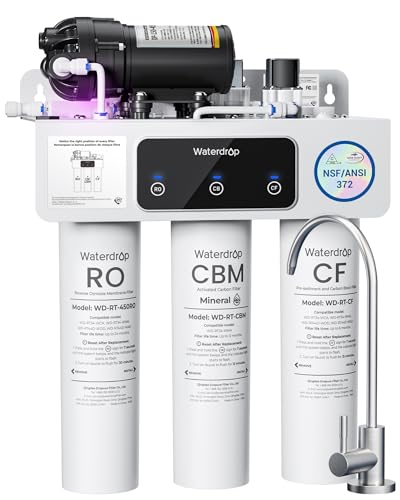
4. Waterdrop WD-T3-M Remineralization Reverse Osmosis Water Filter
Rating: 9.0/10
The Waterdrop WD-T3-M Remineralization Reverse Osmosis Water Filter is a top-notch under-sink system. It gives you pure, healthy water right from your tap. This system uses advanced technology to make your water taste great and is safe to drink.
What We Like:
- It has 9 stages of filtration. This means it removes bad stuff like heavy metals and chlorine.
- The water tastes better because it adds minerals back in.
- It has a fast flow rate of 450 gallons per day.
- The system is eco-friendly with a 2:1 pure to drain ratio. This saves water.
- Filter changes are easy with an all-in-one cartridge.
- Smart alerts tell you when it’s time to change filters.
- It has an LED light and an auto-flush feature. This keeps the water fresh.
- It’s NSF/ANSI 372 certified, so you know it’s safe and reliable.
What Could Be Improved:
- It needs to be plugged in to work.
- You might need to drill a hole in your countertop for the faucet.
This Waterdrop RO system offers excellent filtration and convenience. It’s a smart choice for anyone wanting cleaner, better-tasting water at home.
5. APEC Water Systems ROES-50 Reverse Osmosis Water Filter Essence Series Top Tier 5-Stage WQA Certified Ultra Safe Reverse Osmosis System

Rating: 9.2/10
The APEC Water Systems ROES-50 Reverse Osmosis Water Filter Essence Series is a top-tier, 5-stage system designed to give you incredibly safe and pure drinking water. It’s WQA certified, meaning it meets high standards for water treatment. This system tackles over 1000 impurities, making your tap water or well water clean and refreshing. You’ll enjoy water that tastes better than bottled water, right from your own home.
What We Like:
- Removes up to 99% of impurities like arsenic, chlorine, and lead.
- Handles water with up to 2000 ppm of dissolved solids.
- Works with standard home water pressure (40-85 psi).
- WQA certified for safety and performance.
- Uses premium, long-lasting filters for tap and well water.
- Provides unlimited clean, crisp-tasting water.
- America’s #1 rated water filter brand with a 20-year track record.
- Guaranteed to be trouble-free and noise-free.
- Includes a 100% lead-free designer faucet.
- Uses certified JG premium grade tubing and parts.
What Could Be Improved:
- Installation might require some basic DIY skills.
- Filter replacement costs should be factored into the long-term budget.
This APEC ROES-50 system offers excellent value for its advanced purification capabilities. It’s a smart investment for anyone seeking reliably pure and great-tasting drinking water.
Your Guide to a Sparkling Clean Sip: Under-Sink Reverse Osmosis Water Filters
Tired of tap water that tastes… off? Want to give your family the purest water possible? An under-sink reverse osmosis (RO) water filter might be your perfect solution. These clever systems fit neatly under your kitchen sink, transforming your regular tap water into something refreshingly clean. Let’s dive into what makes a great RO filter and how to pick the right one for your home.
Why Choose an Under-Sink RO Filter?
RO filters are a step above basic water pitchers. They use a special membrane to remove a wide range of contaminants, including dissolved solids, heavy metals, and even some bacteria. This means cleaner, better-tasting water for drinking, cooking, and even your coffee maker.
Key Features to Look For
When shopping for an RO system, keep these features in mind:
- Filtration Stages: Most good RO systems have multiple stages. Look for at least a 4-stage system. This usually includes a sediment filter (to catch big particles), a carbon pre-filter (to remove chlorine and odors), the RO membrane itself (the heart of the system), and a post-carbon filter (to polish the taste). Some advanced systems offer more stages for even better purification.
- Filtration Rate (GPD): This stands for Gallons Per Day. It tells you how much water the system can produce. For a typical family, 50-100 GPD is usually sufficient. A higher GPD means faster water production.
- Storage Tank Size: RO systems produce water slowly, so they need a tank to store purified water. Most come with a 3-4 gallon tank. If you use a lot of water, consider a larger tank.
- Flow Rate: This is how quickly water comes out of your dedicated RO faucet. A good flow rate makes using the filtered water convenient.
- Wastewater Ratio: RO systems create some wastewater to flush out contaminants. A good system will have a 1:1 or 2:1 ratio (purified water to wastewater). Newer, more efficient systems are getting even better.
- Included Faucet: Most systems come with a separate, dedicated faucet for your RO water. Make sure you like its style and finish.
Important Materials
The materials used in your RO system matter for durability and safety.
- Food-Grade Plastics: The housings for the filters and the storage tank should be made from strong, food-grade plastic. This ensures no harmful chemicals leach into your water.
- High-Quality Membranes: The RO membrane is crucial. Look for reputable brands known for their durable and effective membranes.
- Lead-Free Faucet: Your dedicated RO faucet should be made from lead-free materials for your health.
Factors That Improve or Reduce Quality
Several things can impact the quality of your RO system and the water it produces.
- Filter Replacement Schedule: This is vital! If you don’t replace filters on time, the system’s effectiveness drops significantly. Old filters can become breeding grounds for bacteria. Always follow the manufacturer’s recommendations.
- Water Pressure: RO systems need a certain amount of water pressure to work efficiently. If your home has very low water pressure, you might need a booster pump to get the best results.
- Installation: Proper installation ensures no leaks and that the system functions as intended. If you’re not comfortable with DIY, hire a professional.
- Maintenance: Regular checks for leaks and occasional sanitization of the system will keep your water pure and your system running smoothly.
User Experience and Use Cases
Using an under-sink RO filter is pretty straightforward. Once installed, you simply turn on the dedicated faucet to get clean water.
- Drinking Water: This is the most common use. Enjoy pure, crisp water without any funny tastes or odors.
- Cooking: Use RO water for cooking rice, pasta, soups, and more. It can improve the flavor of your food.
- Beverages: Make better-tasting coffee, tea, and ice cubes.
- Pet Water: Some pet owners choose to give their furry friends RO water for better health.
- Aquariums: For sensitive aquarium fish, RO water can be essential as it allows for precise control of water chemistry.
Frequently Asked Questions (FAQ)
Q: How often do I need to replace the filters?
A: Filter replacement schedules vary by system and water usage. Typically, sediment and carbon filters are replaced every 6-12 months, while the RO membrane might last 2-5 years. Always check your manual.
Q: Does RO remove beneficial minerals?
A: Yes, RO filters remove almost everything, including beneficial minerals. Some systems include a remineralization stage to add them back.
Q: Will an RO system make my water taste better?
A: Absolutely! RO systems are excellent at removing chlorine, sulfur, and other impurities that cause bad tastes and odors.
Q: Is it difficult to install an RO system?
A: Installation can range from moderately easy to a bit tricky. Many systems come with clear instructions and are designed for DIY. If you’re unsure, consider professional installation.
Q: How much space does it take up under my sink?
A: Most under-sink RO systems are compact, fitting neatly in a standard cabinet. You’ll need space for the filter housings and the storage tank.
Q: How much water does an RO system waste?
A: Older systems might waste 3-4 gallons of water for every gallon of purified water. Newer, more efficient models have much better ratios, often 1:1 or 2:1.
Q: Do I need a special faucet for RO water?
A: Yes, RO systems usually come with a dedicated faucet because the purified water is delivered at a different pressure and through a separate line.
Q: Can RO water be too pure?
A: For general drinking, RO water is safe. Some people prefer remineralized water for taste and because minerals are essential for the body, though you get most of these from food.
Q: What is the lifespan of an RO system?
A: With proper maintenance and filter replacements, an RO system can last for many years, often 10-15 years or more.
Q: Are RO systems noisy?
A: The system itself is usually quiet. You might hear the tank filling up occasionally, which is a normal sound.
In conclusion, every product has unique features and benefits. We hope this review helps you decide if it meets your needs. An informed choice ensures the best experience.
If you have any questions or feedback, please share them in the comments. Your input helps everyone. Thank you for reading.