
Falls in the kitchen happen often. They can cause bad injuries. You can stop many of these falls. Simple steps make your kitchen much safer. These steps include keeping floors clean and dry, using good mats, and making sure you can see well. Let’s look at how to make your kitchen a safer place for everyone.
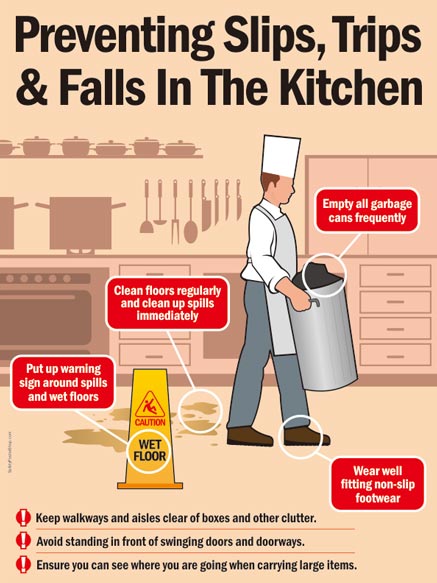
Image Source: www.safetypostershop.com
Why Kitchen Falls Happen
Many things can make you fall in the kitchen. It is good to know what these are. Then you can work to fix them.
Common Dangers on the Floor
The kitchen floor has many risks. Spills are a big one. Water, oil, or food can make the floor very slick. This is a common cause of falls. Loose rugs can also trip you. Old, worn floors might be uneven. These small bumps can cause a stumble.
Bad Habits That Cause Falls
Sometimes, our own actions cause falls. Rushing around is a bad habit. It makes you less careful. Not cleaning spills right away is another. Leaving things out on the floor also adds danger. Not using a safe step stool to reach high items is risky. These small things can lead to a big fall.
Kitchen Floor Safety: Your First Step
The floor is where most falls begin. Making your floor safe is key. It helps you stay steady on your feet.
Kitchen Floor Safety Tips
Keeping your kitchen floor safe is very important. Clean floors prevent many falls. Always wipe up spills fast. Use a good cleaner that does not leave a slippery film. Make sure your floor is dry before you walk on it.
Think about your floor material too. Smooth tiles can be very slick when wet. Some floors have more grip. If you are building or fixing your kitchen, pick a floor that is less slippery. Textured tiles or non-slip vinyl are good choices.
- Clean often: Sweep and mop floors regularly.
- Wipe spills fast: Do not wait to clean up liquids.
- Use dry mops: Make sure the floor dries quickly.
- Choose safe floors: Pick materials that have good grip.
- Check for damage: Fix loose tiles or floorboards at once.
Choosing Non-slip Kitchen Mats
Non-slip kitchen mats add safety. They give you extra grip. Place them where you stand often. This includes near the sink, stove, and fridge. Look for mats with a rubber or silicone backing. This keeps them from sliding.
Choose mats that are easy to clean. You want them to be durable. Mats can get wet or greasy. Wash them often to keep them clean. Make sure the edges of the mat are flat. This stops them from curling up. Curled edges can make you trip.
Table: Best Spots for Non-slip Mats
| Area in Kitchen | Why a Mat Helps | Type of Mat to Use |
|---|---|---|
| Near the Sink | Water splashes, slippery from washing dishes. | Absorbent, thick, non-slip backing. |
| By the Stove | Oil splatters, food drops, hot spills. | Heat-resistant, easy-to-clean, non-slip. |
| In Front of Fridge | Ice cubes, water drips, frequent traffic. | Durable, non-slip, perhaps low-profile. |
| Main Walkways | General traffic, potential for small spills. | Thin, wide, non-slip runner or mat. |
Handling Spills: Act Fast
Spills are a top reason for kitchen falls. Being ready for them saves you from danger. Quick action is best.
Spill Prevention Kitchen
It is better to stop spills before they happen. This means being mindful while cooking. Use lids on pots when boiling water. This stops steam and spills. Do not overfill pots and pans. Carry dishes carefully. If you have a drink, put it in a stable cup.
Keep a cloth or paper towels nearby. This way, you can wipe up small drips right away. Cook in a clean space. A messy counter makes spills more likely. Take your time when moving liquids. Slow and steady wins the race against spills.
- Use pot lids: Stop splashes when cooking.
- Do not overfill: Leave space in cups and bowls.
- Carry items steady: Walk slowly with food or drinks.
- Keep cloths handy: Wipe drips at once.
- Clean as you go: Keep counters clear.
Cleaning Spills Quickly
When a spill happens, act fast. Wet floor hazards kitchen dangers are real. A wet spot can make you fall in a second. Do not leave a spill for later. Grab a towel or mop at once. Clean the area fully. Then, make sure it is completely dry.
You can use a “wet floor” sign if you have one. This warns others. But it is always best to clean the spill fully. Make sure everyone knows the floor is wet. If it is a big spill, use a mop and bucket. Dry the area well with a dry towel.
- Stop what you are doing: Focus on the spill.
- Get cleaning tools: Grab a towel, mop, or sponge.
- Wipe it all up: Clean the entire spill.
- Dry the area well: Make sure no wet spots remain.
- Warn others: Tell family members if the floor is wet.
Safe Footwear for Kitchen Tasks
What you wear on your feet matters. The right shoes can stop falls. The wrong ones can cause them.
Safe Kitchen Footwear
Your shoes in the kitchen should offer good grip. Choose shoes with non-slip soles. Rubber soles are often best. They grip the floor well, even if it is a bit wet. Avoid wearing socks or slippers. These give no grip and can slide easily.
Open-back shoes like flip-flops are also risky. They do not hold your foot well. This can make you trip. Shoes should fit well. Loose shoes can come off. Tight shoes can make you uncomfortable and less steady. Wear shoes that support your feet. This helps you stay balanced.
- Non-slip soles: Look for shoes with good rubber bottoms.
- Closed-toe shoes: Protect your feet from drops and spills.
- Good fit: Shoes should be snug but not too tight.
- Support: Choose shoes that hold your foot well.
- No bare feet or socks: These offer no grip.
Brighten Your Space: Good Lighting
Seeing clearly is vital in the kitchen. Dim light hides dangers. Good lighting helps you see steps, spills, and objects.
Good Lighting Kitchen Safety
Bright light makes your kitchen safe. You can see spills and obstacles easily. Make sure lights are bright enough. Add task lighting over work areas. These include the sink, stove, and counter. Under-cabinet lights are a good choice. They light up your prep space.
Check light bulbs often. Replace any that are dim or out. Clean light fixtures. Dust can dim the light. Use natural light when you can. Open blinds or curtains during the day. A well-lit kitchen reduces shadows. Shadows can hide dangers.
- Bright overall light: Light up the whole room.
- Task lighting: Add lights over work areas.
- Clean fixtures: Wipe dust from lights for best brightness.
- Replace bulbs: Change dim or broken lights fast.
- Use natural light: Let sunlight in during the day.
Keep It Clear: Clutter Reduction
A messy kitchen is a dangerous kitchen. Things on the floor can trip you. Keeping things tidy prevents falls.
Clutter Reduction Kitchen Safety
Clear paths are safe paths. Keep walking areas free of items. Do not leave bags, boxes, or pet toys on the floor. Put things away right after you use them. This is a simple rule. If you take it out, put it back.
Do not stack things too high on counters. They can fall and cause a mess. Store heavy items in lower cabinets. This avoids reaching high and losing balance. Use drawers and cabinets for storage. A place for everything helps keep everything in its place.
- Clear pathways: Keep floors free from objects.
- Put things away: Store items immediately after use.
- Avoid high stacks: Do not pile things up on counters.
- Store heavy items low: Reach for heavy things without strain.
- Use storage wisely: Use cabinets and drawers.
Table: Clutter Hot Spots and Solutions
| Clutter Hot Spot | Common Items Found | Safety Solution |
|---|---|---|
| Kitchen Floor | Shopping bags, shoes, pet bowls, toys, boxes | Put items away in closets or designated spots immediately. |
| Countertops | Small appliances, mail, keys, empty dishes | Use appliance garages, keep only daily essentials out, clear after use. |
| Dining Table | Papers, school supplies, crafts, food items | Designate a “drop zone” elsewhere, clear table before and after meals. |
| Pantry/Cabinets | Overstocked food, unused gadgets, expired items | Organize regularly, use clear bins, label shelves, declutter old items. |
Reaching High Safely: Using Step Stools
Sometimes you need to reach things up high. Doing this safely is very important. A wobbly chair is not safe.
Step Stool Safety Kitchen
A sturdy step stool is a must. Always use one to reach high cabinets. Do not stand on a chair. Chairs are not made for standing. Make sure your step stool is stable. It should have a wide base. Non-slip steps are best.
Place the stool on a flat, dry surface. Never put it on a mat or rug. These can slide. Face the stool when you climb. Hold onto something firm if you can. Do not overreach from the stool. Climb down and move the stool closer if you need to. Get a stool that has a handle. This gives you extra support.
- Use a proper step stool: Never use a chair.
- Check for stability: Make sure the stool is firm.
- Place on flat ground: No mats or rugs under the stool.
- Do not overreach: Move the stool instead of stretching.
- Hold on: Use a handle or counter for balance.
Helping Elders Stay Safe: Special Tips
Older adults face higher risks of falls. Small changes can make a big difference. Focus on ease of use and support.
Elderly Kitchen Fall Prevention
For older family members, extra care helps. Make sure frequently used items are easy to reach. Store them at waist or shoulder height. This avoids bending low or reaching high. Use lightweight dishes and pots. Heavy items are harder to lift safely.
Consider changing cabinet handles. Easy-to-grip handles are better than small knobs. Pull-out shelves make items more accessible. They reduce the need to reach deep into cabinets. Make sure pathways are extra wide. This is good if someone uses a walker or cane.
Kitchen Grab Bars Installation is a key safety feature for elders. Install grab bars near the sink or stove. They offer vital support when standing. Place them where extra balance is needed. Grab bars should be fixed firmly to wall studs. A weak grab bar can cause a fall. They are not just for bathrooms. They can be very useful in a kitchen too.
- Easy access: Keep common items at arm’s reach.
- Lightweight items: Use lighter dishes and cookware.
- Better handles: Change knobs to easier-to-grip handles.
- Pull-out shelves: Make items easier to get from cabinets.
- Wide paths: Ensure clear, wide walkways.
- Install grab bars: Add sturdy supports near work areas.
Table: Fall Prevention Aids for Elders in the Kitchen
| Aid Type | Benefit | Example Use Case |
|---|---|---|
| Grab Bars | Provides strong hand support for balance. | Near sink for dishwashing, by stove for cooking. |
| Reacher Tools | Helps pick up dropped items without bending. | Retrieving a dropped spoon, reaching a low item. |
| Anti-Fatigue Mats | Softens standing surface, reduces leg strain. | In front of the sink or stove for comfort. |
| Automatic Lights | Turns on light when someone enters, prevents fumbling. | At kitchen entrance or in dark pantry. |
| Slide-out Shelves | Brings items out of deep cabinets. | Accessing heavy pots, food storage. |
| Kettle Tippers | Safely pours hot water without lifting kettle. | Making tea or coffee without strain. |
Regular Checks: Keep Your Kitchen Safe
Safety is not a one-time fix. It needs ongoing care. Check your kitchen often for new dangers.
Checking for Dangers
Take a few minutes each month. Look for anything that could cause a fall. Are your non-slip mats still gripping well? Are there any new spills or wet spots? Are your lights still bright? Is clutter building up?
Fix small issues quickly. This stops them from becoming big problems. Ask family members to help. Everyone can look for dangers. Make a small checklist. This helps you remember what to check. A safe kitchen stays safe with regular checks.
- Monthly check: Look for hazards every month.
- Inspect mats: Make sure they are still non-slip.
- Check lighting: Replace any dim bulbs.
- Look for clutter: Clear pathways often.
- Fix problems fast: Repair small issues before they grow.
- Involve family: Ask everyone to help keep the kitchen safe.
Frequently Asked Questions (FAQ)
Q1: How often should I clean my kitchen floor to prevent falls?
A1: You should clean your kitchen floor often. Wipe spills right away. Sweep daily for crumbs and dirt. Mop at least once a week. If you cook a lot, mop more often.
Q2: Can I use any type of mat for fall prevention?
A2: No. You need special mats. Choose non-slip kitchen mats. They have rubber or silicone on the bottom. This stops them from moving. Regular mats can slide and cause falls.
Q3: What kind of shoes are best for kitchen safety?
A3: Wear shoes with non-slip rubber soles. They should be closed-toe. This protects your feet and gives you good grip. Avoid socks, slippers, and open-back shoes like flip-flops.
Q4: Are kitchen grab bars only for older people?
A4: No, kitchen grab bars help anyone needing extra balance. While great for elders, they can also help people with injuries, or anyone wanting more support. Safety is for everyone.
Q5: What is the most important thing to remember for kitchen fall prevention?
A5: The most important thing is to be aware. Always look at the floor. Clean spills at once. Keep paths clear. Use good light. Be mindful of your steps. Small actions make a big difference.