
No, you cannot stand in the kitchen before the ball bounces and hit it. This rule is a core part of pickleball. The area is called the non-volley zone. Many people simply call it the “kitchen.” You cannot hit a volley while your feet are in this zone. A volley is hitting the ball before it bounces. This rule makes the game fairer. It stops players from smashing the ball down from the net. It encourages different types of shots. This zone is seven feet long on each side of the net. It is a very important part of pickleball rules.
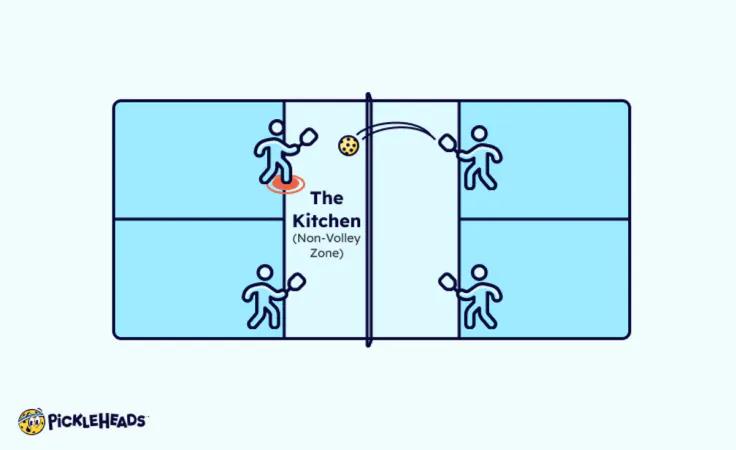
Image Source: cdn.sanity.io
Deciphering The Non-Volley Zone
The non-volley zone is vital in pickleball. It is a key area on the court. It runs from the net. It goes back seven feet. It spans the full width of the court. A line marks its start. This is called the kitchen line. This zone is special. Players cannot hit the ball in the air while standing in it. Hitting the ball in the air is called a “volley.” This rule is put in place for a good reason. It stops players from standing too close to the net. It makes sure players cannot smash the ball down every time. This helps keep the game fun. It forces players to use more skill. They must use soft shots. These soft shots are called “dinks.”
The kitchen rule adds a lot to the game. It makes players think about their position. They must choose shots carefully. They cannot just power hit every ball. It gives all players a fair chance. No one player can just stand at the net. They cannot dominate the game with hard hits. This rule is what makes pickleball unique. It sets it apart from sports like tennis. In tennis, you can volley from anywhere. In pickleball, you must stay out of the kitchen for volleys. This makes strategy important. It makes footwork important too. Players need to move in and out of the kitchen. They do this to hit different kinds of shots. They must learn when they can enter the zone. They must know when they must stay out.
Grasping The Kitchen Line
The kitchen line is very important. It marks the start of the non-volley zone. It is seven feet from the net. All lines on the pickleball court are part of the zone they define. This means if your foot touches the kitchen line, you are in the kitchen. This is true even if just a tiny bit of your foot is on the line. It is like an invisible wall. You cannot cross it if you want to volley the ball.
Imagine you are playing. The ball comes to you. It is a soft shot. You want to hit it before it bounces. You look at your feet. Are they behind the kitchen line? They must be fully behind it. If any part of your foot touches the line, it is a fault. This means you lose the point. It is a strict rule. But it is fair. It makes sure everyone plays by the same rules. It stops any confusion. So, always check your feet. Make sure you are clear of the line. Before you hit that volley, look down. Your feet must be safe.
The Purpose Of The Kitchen Rule
The kitchen rule has a main purpose. It prevents powerful overhead slams. These slams are often called “spikes.” Without this rule, taller or stronger players might stand at the net. They could hit every ball down. This would make the game less fun. It would be hard for others to play. The kitchen rule keeps the game balanced. It forces players to play from further back. They must let the ball bounce. Or they must hit soft shots.
This rule also makes “dink shots” important. A dink shot is a soft shot. It barely clears the net. It lands in the opponent’s kitchen. Because players cannot volley from the kitchen, they must let the dink bounce. Then they must hit it up. This makes it harder for them to hit a strong return. It gives the dinking player an advantage. The kitchen rule helps create long rallies. It makes the game more about skill. It is not just about power. It adds a smart part to the game. Players must think about where to hit the ball. They must think about where to stand. This rule is at the heart of what pickleball is. It makes the game strategic and fun for everyone.
Pickleball Rules: The Core Principles
Pickleball has clear rules. These rules make the game fair. They make it fun. Knowing these rules is key. It helps you play better. It helps you avoid mistakes. It also helps you play safely. You need to know how to serve. You need to know how to return the serve. You need to know where to stand. Most importantly, you need to know about faults. A fault means you lose the point.
The game starts with a serve. The server stands behind the baseline. They hit the ball underhand. The ball must go over the net. It must land in the correct service box. This is on the opposite side. After the serve, the ball must bounce once. Then the return of serve must bounce once. This is called the “two-bounce rule.” Only after these two bounces can players hit volleys. This is a big rule. It makes sure the game starts calmly. It lets players get ready. It stops quick, unfair points. These basic rules are the framework. They build the game. Learning them first is the best way to start. It helps you play with confidence.
Pickleball Serving Protocols
Serving is how every point begins in pickleball. There are specific rules for serving. These rules must be followed. First, the serve must be underhand. You cannot hit it overhand like in tennis. The paddle head must be below your wrist. Your arm must move upwards. You must contact the ball below your waist. This makes the serve less powerful. It helps keep the game fair.
The server must stand behind the baseline. This is the line at the back of the court. At least one foot must be behind this line. No part of your foot can touch the line. You must serve cross-court. This means the ball goes from one side of the court to the service box far away on the other side. The ball must land within the lines of that service box. If it lands out, it is a fault. If it hits the net and does not go over, it is a fault. If it hits the net and lands in, it is a “let” serve. You get to serve again. But this rule changed. Now, a “let” serve is played. If it hits the net and lands in, it is a good serve. The game goes on. This makes the game faster.
When you serve, you have two chances. But this is only if you are the first server for your team. After the first fault, you lose your turn. Your partner then serves. If you are the second server, you only get one chance. If you fault, the other team gets to serve. These pickleball serving rules are strict. But they are easy to learn. They make sure the game starts properly.
Player Positioning After The Serve
After the serve, players need to know where to stand. This is called player positioning. The server’s partner stands near the kitchen line. They wait for the ball. The receiving team also has positions. The player receiving the serve stands deep in their court. They are ready to return the ball. Their partner stands near the kitchen line. They are ready for their turn.
Once the ball is served and returned, the two-bounce rule is done. Then players can move. They can move to the non-volley zone line. This line is very important. It is usually the best place to stand. Standing close to the kitchen line gives you an advantage. You can hit softer shots over the net. You can hit them into your opponent’s kitchen. This is called “getting to the net.” Most good players try to get to the non-volley zone line quickly. It helps them control the point.
However, remember the rule about the kitchen. You cannot step into the kitchen if you hit a volley. So, you must always be aware of your feet. You must know where the line is. You need to keep your body balanced. This helps you stay out of the kitchen when needed. Good player positioning involves both strategy and awareness. It helps you play your best game. It helps you avoid faults.
Serve Return Rules
Returning the serve is a key part of pickleball. The serve return rules are simple. Yet, they are very important. The person who gets the serve must let the ball bounce. They cannot hit it in the air. This is part of the “two-bounce rule.” The server must hit the ball. It bounces. Then the receiver hits it back. This is the first bounce. The ball must then land in the server’s court. After it lands, it must bounce again. This is the second bounce. Only after these two bounces can any player hit a volley.
So, the serving team cannot volley the ball until it bounces on their side. And the receiving team cannot volley the serve itself. They must let it bounce. This rule ensures a rally starts. It makes sure no team gets an easy point right away. It gives both teams a fair chance to get to the net. It prevents quick, aggressive plays right at the start.
The serve return must be strong. It should try to go deep. It should land close to the server’s baseline. This makes it harder for the server to get to the net fast. A deep return gives your team time. It lets you move up to your own kitchen line. A good serve return sets up the point. It gives your team control. So, always aim for depth. Always let the ball bounce. These simple rules are crucial.
Faults In Pickleball: Avoiding Costly Mistakes
Faults are errors in pickleball. When you make a fault, you lose the point. Or your team loses the serve. Knowing common faults helps you play better. It helps you avoid giving away points. Many faults happen around the kitchen. But other faults happen too. Being careful is important.
The most common fault is hitting the ball out of bounds. This means it lands outside the lines. Another common fault is hitting the ball into the net. Both of these lose the point. Not following serve rules is also a fault. For example, serving overhand. Or serving while stepping on the baseline. These are easy mistakes to make. But they cost you the point.
Understanding faults makes you a smarter player. It helps you focus. It helps you play by the rules. This makes the game fair for everyone. Always try to play clean. Always try to avoid faults.
Common Kitchen Faults
Many faults happen near the kitchen. These are often related to the non-volley zone. The most common kitchen fault is hitting a volley while your feet are in the kitchen. This means any part of your foot is on or over the kitchen line. It also means if your momentum carries you into the kitchen after you hit a volley, it is a fault. Even if you hit the ball from outside the kitchen, but then step into it, it’s a fault. This is a very strict rule.
Another kitchen fault happens with dink shots. Sometimes a player hits a dink shot. The ball is low. It is hard to reach. They might step into the kitchen to hit it. If they hit it before it bounces, it is a fault. You can only go into the kitchen if the ball has bounced first. If the ball bounces, you can go into the kitchen. Then you can hit the ball. After you hit it, you must get out of the kitchen as fast as you can. But if you hit a volley in the kitchen, it is always a fault.
It does not matter if you touch the kitchen line for a split second. Even if you step in and out quickly, it is a fault if you vollied the ball. This is why footwork is so important. Players must learn to move around the kitchen line. They need to keep their balance. They need to stay out of the zone when hitting volleys. This takes practice. But it saves you from losing many points.
Rules Violations And Penalties
Any fault in pickleball is a rules violation. The penalty for a rules violation is losing the point. If the serving team makes a fault, they lose the serve. If it is the first server’s fault, the second server gets a turn. If it is the second server’s fault, the serve goes to the other team. If the receiving team makes a fault, the serving team gets the point.
Here is a simple list of common rules violations:
- Serving Faults:
- Hitting the ball above the waist on serve.
- Not hitting underhand.
- Stepping on or over the baseline when serving.
- Serving into the wrong service box.
- Serving the ball out of bounds.
- Hitting the net and the ball does not go over (unless it’s a let serve, which is now played).
- Non-Volley Zone Faults:
- Hitting a volley while your foot (or any part of your body) is on or in the kitchen.
- Stepping into the kitchen due to momentum after hitting a volley.
- Your partner stepping into the kitchen for their shot while you volley.
- Other Play Faults:
- Hitting the ball out of bounds.
- Hitting the ball into the net.
- Not letting the ball bounce on the serve return (receiving team).
- Not letting the ball bounce on the third shot (serving team).
- Hitting the ball twice.
- Hitting the ball before it goes over the net.
- Touching the net with your paddle or body during play.
Each rule is there to keep the game fair. It makes sure everyone has a good time. Following these rules makes you a better player. It shows good sportsmanship.
Pickleball Court Etiquette And Strategy
Playing pickleball is more than just hitting a ball. It involves good behavior. It also involves smart ways to play. This is called court etiquette and strategy. Good court etiquette makes the game fun for everyone. It builds a good spirit among players. Strategy helps you win points. It helps you work with your partner.
Always be fair. Always be kind. This is the main part of court etiquette. Call the ball in or out clearly. Do not argue about calls. If you are not sure, give the benefit of the doubt to your opponent. This means you say it was in. Always say “good shot” or “nice try.” Be a good sport.
Strategy in pickleball often involves the kitchen. It is about how you use the non-volley zone. It is about how you hit dink shots. It is about how you move with your partner. Good strategy helps you control the game. It helps you win points. It helps you enjoy the game even more.
Mastering Dink Shot Strategy
Dink shots are very important in pickleball. They are soft shots. They barely clear the net. They land in the opponent’s kitchen. The goal of a dink is to make the opponent hit the ball up. If they hit it up, you can hit a stronger shot. Dink shots are key because of the kitchen rule. Players cannot volley a ball while in the kitchen. So, if a dink lands in the kitchen, the opponent must let it bounce. They then hit it up. This is a big advantage for you.
To master dink shot strategy, you need to practice. You need to place your dinks well. Aim for the corners of the kitchen. Aim for your opponent’s feet. Make them move. Make them uncomfortable. Try to make them hit a ball that you can hit harder. This is called “setting up the put-away.”
Dinking is a game of patience. It is about waiting for the right moment. You might hit many dinks. This leads to long rallies. But a well-placed dink can force a mistake. It can give you a chance to hit a winning shot. Learning to dink is vital. It changes your game. It makes you a more complete player. It also helps you get to the kitchen line yourself. This puts you in the best spot to win.
Playing With Proper Court Etiquette
Proper court etiquette makes pickleball enjoyable for everyone. It helps games run smoothly. It builds a friendly atmosphere. Here are key parts of good court etiquette:
- Call Lines Clearly: If a ball is out, call it out quickly and loudly. If you are not sure if a ball was out, assume it was in. This is called “giving the benefit of the doubt.”
- Be Fair: Do not cheat. Play honestly.
- Wait for Play to Stop: If a ball from another court rolls onto your court, do not run to get it while a point is being played. Wait until the point ends.
- Respect Others: Do not talk loudly during points on other courts. Do not walk behind a court while a point is being played. Wait until the point is over.
- Manage Your Temper: Do not yell or throw your paddle if you miss a shot. Everyone makes mistakes.
- Share Courts: If people are waiting, do not play too many games in a row. Follow local court rules.
- Introduce Yourself: If you are playing with new people, say hello. Shake hands before and after the game.
- Give Compliments: Say “good shot” to opponents and partners. It makes the game more fun.
- Be on Time: If you have a set time to play, be there.
Following these simple rules makes pickleball a better experience for all. It shows you respect the game and other players. Good etiquette helps build a strong pickleball community.
Advanced Play And Key Questions
As you play more, you will face new situations. You might have more questions about rules. Some moments can be tricky. Knowing how to handle these moments helps you play with confidence. It also helps you avoid mistakes. For example, what if the ball lands right on a line? Or what if someone pushes you into the kitchen? These are common questions. Knowing the answers helps you make the right call during a game.
Pickleball rules are clear. But some situations can feel complex. This section will look at some of these moments. It will help you understand them better. It will help you play like a pro. This means you will know the rules inside and out. It helps you enjoy the game even more.
What If The Ball Bounces On The Line?
This is a very common question. What happens if the ball bounces on the line? In pickleball, the rule is simple: if the ball touches any part of the line, it is considered in. This applies to all lines on the court. It means the baseline, sidelines, and even the kitchen line. So, if a serve lands on the service line, it is in. If a shot lands on the sideline, it is in.
This rule is important for fair play. It means there is no “out by a hair” call. If any part of the ball touches the line, it is good. This makes calls easier. It reduces arguments. Players just need to see if the ball touched the line. If it did, it’s a fair shot. So, when you are playing, assume any ball that touches the line is good. This helps keep the game moving. It keeps it fair.
What If You Are Pushed Into The Kitchen?
Sometimes, you might get pushed into the kitchen. This can happen if you bump into your partner. Or if you lose your balance. What happens if you are in the kitchen, but not by choice, and you hit a volley? The rule is still the same: if you hit a volley while your foot (or any part of your body or paddle) is in the kitchen, it is a fault. It does not matter if you meant to go in or not.
Even if an opponent pushes you, it is still your fault if you make contact with the ball while in the kitchen. The rule is very strict about this. You are responsible for your own position. This means you must always be aware of where you are on the court. You need to keep your balance. You need to avoid contact with your partner. This is part of the challenge of the game. It makes footwork and court awareness very important skills. Always try to stay out of the kitchen when hitting volleys. Even if things get a bit messy, the rule still stands.
Can Your Paddle Cross The Kitchen Line?
Yes, your paddle can cross the kitchen line. This is a common point of confusion. The rule says that your body (meaning your feet, hands, and any part of your body) cannot be in the non-volley zone when you hit a volley. But your paddle is different. If your paddle crosses the kitchen line after you hit the ball, and your feet are still out, it is not a fault.
Think of it this way: you hit the ball. Your feet are behind the line. As you swing, your paddle goes forward. It might go over the kitchen line. This is fine. The key is where your body is at the moment of contact with the ball. And also, where your body lands after you hit the ball. If your momentum takes your body into the kitchen after the volley, it is a fault. But the paddle itself going over the line is not a fault.
This means you can reach far over the kitchen line with your paddle. You can hit a ball that is very close to the net. As long as your body stays out, it is a legal shot. This allows for more aggressive net play. It adds another layer to dink shot strategy. You can reach for those soft dinks. Just be sure your feet stay clear.
Grasping The Game: Final Tips For Play
Learning pickleball rules takes time. It also takes practice. Do not get upset if you make mistakes. Everyone does. The most important thing is to keep playing. Keep learning. The more you play, the better you will understand the rules. The better you will become at the game.
Remember the main points: the kitchen is a no-volley zone. Volleying while in it is a fault. Let the ball bounce twice at the start of a rally. Serve underhand. These are the big rules. Focus on these first. Then, you can learn the finer points.
Practice Makes Perfect
The best way to learn the rules is to play. Practice makes perfect. Play often. Try to play with people who know the rules well. They can help you. They can give you tips. Pay attention to their advice. Play different kinds of games. Play singles. Play doubles. Each helps you learn different things.
Focus on your footwork. Practice moving in and out of the kitchen area. Do drills that make you move around the non-volley zone line. This will make it natural for you to stay out when you volley. It will make it easy to step in when a ball bounces in the kitchen. Repetition builds muscle memory. It helps you react quickly without thinking too much. So, get on the court. Hit some balls. Have fun.
Observe Others And Ask Questions
Watching other players is a great way to learn. Watch experienced players. See how they use the kitchen. See how they hit dinks. Notice where they stand. See how they move. You can learn a lot just by watching. It helps you see how the rules are applied in real games.
Do not be afraid to ask questions. If you are unsure about a rule, just ask. Most pickleball players are happy to help. They want you to enjoy the game too. Asking questions shows you are keen to learn. It shows you want to play by the rules. This helps you get better faster. It also makes you a more respected player.
So, watch, learn, and ask. This path will help you master the game. It will help you master the kitchen. Soon, you will be playing with skill and confidence. You will know exactly where you can stand. You will know exactly when you can hit the ball.
Frequently Asked Questions (FAQ)
Q1: What is the “kitchen” in pickleball?
A1: The “kitchen” is the non-volley zone. It is the area seven feet from the net on both sides of the court. Players cannot hit a volley (hit the ball before it bounces) while standing in this zone.
Q2: Can I step into the kitchen if the ball bounces first?
A2: Yes, you can step into the kitchen if the ball bounces first. Once the ball bounces in the kitchen, you are allowed to enter the zone to hit it. However, you must exit the kitchen as soon as possible after hitting the shot.
Q3: What is the “two-bounce rule”?
A3: The “two-bounce rule” means the serve must bounce once on the receiving team’s side. Then, the return of that serve must bounce once on the serving team’s side. Only after these two bounces can players hit the ball in the air (volley).
Q4: Is it a fault if my partner steps in the kitchen while I volley?
A4: No, it is not a fault if your partner steps into the kitchen while you volley. The rule applies only to the player who is hitting the volley. Your partner’s position does not affect your legal volley, as long as they are not touching you and you are not faulting.
Q5: What if I hit a volley and my momentum carries me into the kitchen?
A5: This is a fault. If you hit a volley, and your momentum causes any part of your body (including your foot) to touch the kitchen line or enter the kitchen, it is a fault. You must remain outside the zone after your volley.
Q6: Can my paddle go over the kitchen line?
A6: Yes, your paddle can go over the kitchen line. The rule applies to your body’s position when hitting a volley. As long as your feet and body are outside the non-volley zone when you contact the ball, your paddle crossing the line during the swing is not a fault.
Q7: What are some common serving faults?
A7: Common serving faults include hitting the ball above the waist, not hitting underhand, stepping on or over the baseline during the serve, and serving the ball out of bounds or into the wrong service box.
Q8: Why is the kitchen rule so important?
A8: The kitchen rule is important because it prevents players from dominating the game with powerful overhead slams from the net. It encourages more strategic play, soft shots (dinks), and longer rallies, making the game more balanced and fun for all skill levels.