
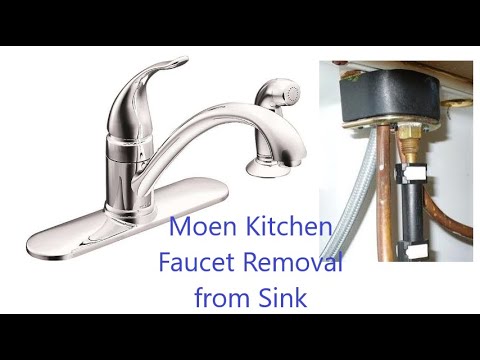
Image Source: i.ytimg.com
How To Uninstall A Moen Kitchen Faucet: Step-by-Step
Can you uninstall a Moen kitchen faucet yourself? Yes, with the right tools and a clear understanding of the process, you can successfully uninstall a Moen kitchen faucet without professional help. This guide will walk you through each step to safely and effectively remove your old faucet, preparing your sink for a new installation or a much-needed repair.
Gathering Your Tools and Supplies
Before you begin to remove Moen faucet components, it’s crucial to have everything you need readily available. This will prevent interruptions and ensure a smoother workflow. Here’s a list of essential tools and supplies:
- Adjustable Wrench or Basin Wrench: This is vital for loosening and tightening nuts in tight spaces, especially those connecting the faucet to the sink. A basin wrench is particularly useful for reaching nuts under the sink.
- Phillips Head Screwdriver: You might need this for specific mounting screws or parts of the faucet assembly.
- Flathead Screwdriver: Useful for prying or dislodging components if they are stuck.
- Bucket or Towels: To catch any residual water that may be in the pipes or the faucet itself when you disconnect Moen faucet lines.
- Safety Glasses: Protect your eyes from debris or dripping water.
- Gloves: To protect your hands and provide a better grip.
- Penetrating Oil (Optional): If some nuts or fittings are corroded or stuck, a penetrating oil can help loosen them.
- Cleaning Supplies: Rags and perhaps a mild cleaner for wiping down the sink area after removal.
- Camera or Smartphone: To take pictures of the existing plumbing connections before you disconnect them. This can be a helpful reference if you plan on doing a Moen faucet replacement steps later.
Step 1: Shutting Off the Water Supply
This is the most critical first step when you uninstall Moen faucet plumbing. Failure to do this can lead to significant water damage.
Locating the Shut-Off Valves
Look under your kitchen sink. You should see two water supply lines connected to the faucet – one for hot water and one for cold water. Each line should have its own shut-off valve. These valves typically have a small handle.
- Handle Types: Valves can have a round handle or a lever-style handle.
- Turning Direction: To shut off the water, turn the handles clockwise. If you have lever-style handles, a quarter turn so the handle is perpendicular to the pipe will shut off the water.
Testing the Water Shut-Off
After turning off the valves, turn on the faucet handles (both hot and cold). A small amount of water will likely drain out, but the flow should stop completely. If water continues to run, you may need to find the main water shut-off valve for your house and turn that off instead.
Step 2: Disconnecting the Water Supply Lines
Now that the water is off, you can safely disconnect Moen faucet supply lines.
Releasing Pressure
With the faucet still in the “on” position, run it for a few seconds to drain any remaining water from the lines and relieve any built-up pressure.
Detaching the Supply Lines from the Faucet
- Place your bucket or towels directly under the connections to catch any drips.
- Using your adjustable wrench, carefully loosen the nuts connecting the flexible supply lines to the faucet shanks (the threaded pipes extending down from the faucet body).
- Turn the nuts counter-clockwise. Be prepared for a small amount of water to drip out.
Detaching the Supply Lines from the Shut-Off Valves (If Necessary)
In some cases, you might need to disconnect the supply lines from the shut-off valves themselves, especially if you’re replacing the valves as well, or if the lines are integrated into the faucet unit in a way that requires this. Follow the same procedure as above, using your wrench to loosen the nuts at the valve end.
Step 3: Removing the Mounting Hardware
This is often the most challenging part of the Moen kitchen faucet removal guide, as the nuts and clips are typically in a tight, awkward space under the sink.
Locating the Mounting Nuts or Clips
Look at the underside of your sink where the faucet is mounted. You will see the threaded shanks of the faucet extending through the sink or countertop. There will be nuts or clips holding the faucet in place.
Using a Basin Wrench
A basin wrench is specifically designed for this task. Its long shaft and swivel head allow you to reach and turn nuts in confined areas.
- Position the jaws of the basin wrench onto the mounting nut.
- Turn the nut counter-clockwise to loosen it.
- If the nuts are particularly stubborn, you can try applying a penetrating oil and letting it sit for a few minutes before trying again.
Dealing with Different Mounting Types
Moen faucets can have various mounting mechanisms:
- Threaded Shnks with Nuts: This is the most common. You’ll be unscrewing large nuts onto the threaded pipes.
- Mounting Plates with Clips: Some Moen faucets use a plate with clips that secure the faucet. You might need to use a screwdriver to pry these clips open or slide them off.
Removing the Old Mounting Hardware
Once the nuts are loosened, unscrew them completely by hand or with the wrench. If there are any washers or sleeves, remove those as well. For clip-based systems, carefully detach the clips.
Step 4: Taking Apart the Faucet from the Sink
With the plumbing disconnected and the mounting hardware removed, you can now take apart Moen faucet from its position.
Lifting the Faucet
Gently pull the faucet upwards from the top of the sink. It might feel a bit stuck due to old putty, sealant, or mineral deposits.
- Wiggle the faucet gently from side to side to help break any seals.
- If it’s very stuck, you might need to use a flathead screwdriver to carefully pry around the base. Be cautious not to damage the sink or countertop.
Cleaning the Sink Surface
Once the faucet is free, there will likely be a ring of old putty or sealant around the faucet base on the sink.
- Scrape away any old caulk or putty using a putty knife or plastic scraper.
- Clean the area thoroughly with a mild detergent and water, then dry it. This ensures a clean surface for any future installation.
Step 5: Removing the Sprayer (If Applicable)
Many Moen kitchen faucets come with a side sprayer or a pull-down/pull-out sprayer. This component has its own hose that needs to be disconnected.
Locating the Sprayer Hose Connection
Under the sink, find where the sprayer hose connects to the faucet body or a dedicated diverter valve. There’s usually a quick-connect fitting or a threaded connection.
Disconnecting the Sprayer Hose
- Quick-Connect: If it’s a quick-connect fitting, there’s usually a small tab or button to press to release the hose. Refer to your faucet’s manual if you’re unsure about the specific mechanism.
- Threaded Connection: If it’s threaded, use your adjustable wrench to loosen the nut holding the hose in place.
Removing the Sprayer from the Sink Hole
Once the hose is detached, the sprayer head can usually be lifted out from the hole in the sink or countertop. There might be a washer or nut securing it from underneath that you’ll need to remove.
Step 6: Removing the Escutcheon or Deck Plate (If Present)
Some faucets come with a decorative plate, often called an escutcheon or deck plate, that covers extra holes in the sink or countertop.
Detaching the Escutcheon
- These plates are typically held in place by the same mounting hardware as the faucet itself.
- Once the main faucet mounting nuts are removed, the escutcheon should lift away with the faucet.
- If it feels stuck, it might be sealed with plumber’s putty or silicone. Carefully work it free as described in Step 4.
Step 7: Final Checks and Cleanup
Before you finish, ensure all parts are removed and the area is clean.
Checking for Leftover Parts
Double-check under the sink and around the faucet base to make sure no mounting nuts, washers, or clips have been missed.
Cleaning the Work Area
Wipe down all the components you removed, especially if you plan to reuse them or sell them. Clean up any spilled water and dispose of old putty or sealant.
Advanced Considerations for Moen Faucet Disassembly
Sometimes, you might need to take apart Moen faucet components beyond just removing it from the sink. This is usually for repair or replacement of internal parts like cartridges. While this guide focuses on complete removal from the sink, here are some points for deeper Moen faucet disassembly:
Identifying Faucet Model
Knowing your specific Moen faucet model is key to finding repair parts or understanding its unique disassembly process. Look for a model number on the faucet body, handle, or sometimes on the supply lines. You can then search for the manual online.
Cartridge Removal
The cartridge is the heart of the faucet, controlling water flow and temperature.
- Handle Removal: Most Moen faucet handles are held on by a set screw, often hidden under a decorative cap. Pry off the cap to reveal the screw, then loosen it with an Allen wrench.
- Accessing the Cartridge: After removing the handle and any trim pieces, you’ll typically see a retaining clip or nut holding the cartridge in place.
- Cartridge Puller: For stubborn cartridges, Moen often recommends a specific cartridge puller tool, which can be rented or purchased. This tool helps you extract the cartridge without damaging the faucet body.
How to Remove Faucet Base Moen
When looking at how to remove faucet base Moen, it usually refers to detaching the main body of the faucet from the spout or the valve assembly. This is typically done after the handle and other exterior parts are removed, exposing the internal mechanisms. The specific steps will vary greatly depending on the faucet design.
Preparing for Moen Faucet Replacement Steps
Once your old Moen faucet is successfully removed, you’re ready for the next phase. Whether you’re installing a new faucet or simply cleaning the area, a clean slate is essential.
Inspecting the Sink and Countertop
Take this opportunity to thoroughly inspect your sink and countertop for any damage that might have been hidden by the old faucet. Check for cracks, chips, or worn seals.
Planning Your Next Steps
- New Faucet Installation: If you’re installing a new faucet, gather all the tools and parts required for that specific model. Refer to the new faucet’s installation manual.
- Cleaning and Maintenance: If you’re not replacing the faucet, clean the sink thoroughly and ensure all plumbing connections are properly capped if they are no longer in use.
Troubleshooting Common Issues During Removal
- Stuck Nuts: As mentioned, penetrating oil and a good basin wrench are your best friends. Patience is also key.
- Corroded Pipes: If the supply lines themselves are corroded or fragile, you might need to cut them. Ensure the water is completely shut off before attempting to cut any pipes.
- Leaking After Shut-Off: If you still get a drip after turning off the valves, it might indicate a faulty valve. In this case, you’ll need to shut off the main water supply to the house.
- Damaged Sink/Countertop: If you’re having trouble loosening the faucet and fear damaging the sink, it might be time to call a plumber.
Frequently Asked Questions (FAQ)
Q1: How do I know which Moen faucet model I have?
A1: Look for a model number or name printed on the faucet body, handle, spout, or underneath the sink. You can also often identify it by comparing it to images on the Moen website.
Q2: Do I need special tools to remove a Moen faucet?
A2: While a standard adjustable wrench is helpful, a basin wrench is highly recommended for reaching nuts in tight spaces under the sink.
Q3: What if the shut-off valves under my sink don’t work?
A3: If the valves won’t turn off the water, you will need to locate and turn off the main water supply valve for your entire house. This is typically found in a basement, crawl space, utility closet, or near the water meter.
Q4: How do I remove an old faucet that’s stuck to the sink?
A4: Gently try to wiggle the faucet. If it’s sealed with putty or caulk, you may need to carefully use a putty knife or plastic scraper around the base to break the seal. Avoid using excessive force that could damage your sink or countertop.
Q5: Can I reuse my old supply lines when installing a new faucet?
A5: It’s generally recommended to replace supply lines when replacing a faucet, especially if the old ones are several years old, kinked, or show any signs of wear or corrosion. New supply lines ensure a reliable connection and can prevent future leaks.
Q6: What is plumber’s putty and why is it used?
A6: Plumber’s putty is a soft, pliable compound used as a sealant to create a watertight seal between plumbing fixtures (like faucets or drains) and the surface they are mounted on (like sinks or countertops). It helps prevent water from leaking through the mounting holes.
Q7: How do I disconnect the water supply Moen faucet if the lines are integrated?
A7: If the supply lines are directly connected to the faucet body without separate shut-off valves, you’ll need to shut off the main water supply to your house. Then, you can usually disconnect the integrated lines from the wall pipes using your adjustable wrench.
This comprehensive guide should equip you with the knowledge and confidence to tackle the task of removing your Moen kitchen faucet. Remember to work methodically, prioritize safety, and don’t hesitate to consult your faucet’s specific manual for any unique instructions.