
Can you divide a kitchen and living room without building walls? Yes, you can effectively separate a kitchen and living room using various design techniques, furniture placement, and decorative elements, especially within an open concept floor plan. This approach allows for space definition and creating distinct areas without compromising the sense of openness. This guide will explore smart design tips for achieving this separation, focusing on functional and aesthetic solutions.
The allure of the open concept floor plan is undeniable. It fosters a sense of spaciousness, encourages family interaction, and makes entertaining a breeze. However, for many, the seamless flow between the kitchen and living room can also lead to challenges. The lingering smell of cooking, the visual clutter of kitchen appliances, or the desire for a more intimate living space can prompt a need for separation. Fortunately, building permanent partition walls isn’t the only answer. Modern interior design offers a plethora of creative and effective ways to achieve zoning techniques and visual separation between these two essential areas, transforming your home into a more functional and visually appealing sanctuary.
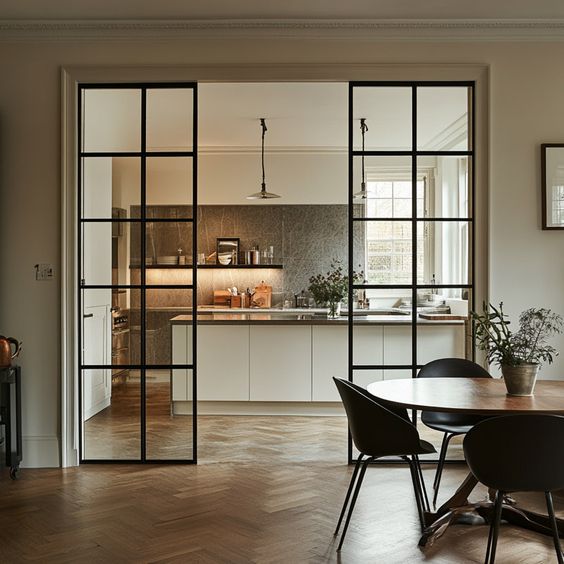
Image Source: andorwillow.com
The Nuance of Separating Cohesive Spaces
Separating a kitchen from a living room isn’t about creating hard boundaries; it’s about establishing a subtle yet effective distinction. It’s about fostering multi-functional spaces that can serve different purposes simultaneously while maintaining a sense of flow. The key lies in employing thoughtful design strategies that acknowledge the adjacency of these zones without forcing them into rigid boxes. This approach allows for the best of both worlds: the communal feel of an open layout and the defined functionality of separate rooms.
Why Define These Zones?
There are several practical and aesthetic reasons for wanting to separate your kitchen and living room:
- Odor Control: The kitchen is a hub of culinary activity, and the aromas, while sometimes pleasant, can permeate the living space. Separation helps contain cooking smells.
- Noise Reduction: Kitchen appliances and cooking noises can be distracting in the living room, especially if you’re trying to relax or work.
- Visual Clutter Management: The kitchen often contains visible appliances, utensils, and pantry items that can contribute to visual clutter if not managed. Separation can help shield the living area from this.
- Creating Ambiance: Different activities call for different moods. A cozy living room might feel out of place next to a bustling kitchen. Separation allows for distinct atmospheres.
- Privacy: In some layouts, the kitchen might be directly visible from the main entrance or a primary seating area, which some homeowners prefer to avoid.
- Enhancing Functionality: Clearly defining zones can make each space feel more purposeful and easier to use.
Smart Design Strategies for Separation
The beauty of separating a kitchen and living room in an open concept floor plan lies in the versatility of the solutions. You don’t need to invest in heavy construction. Instead, focus on zoning techniques that use existing elements or easily implemented features.
1. Furniture Arrangement: The Foundation of Space Definition
Furniture arrangement is perhaps the most accessible and impactful way to establish creating distinct areas. By strategically placing furniture, you can create visual and physical cues that delineate one zone from another.
Creating Zones with Sofas and Seating
- The Sofa as a Barrier: Place your sofa with its back to the kitchen area. This acts as a natural, soft barrier, guiding the eye and flow of traffic away from the kitchen and into the living space.
- Sectionals for Definition: A well-placed sectional sofa can powerfully define the living room area. The L-shape or U-shape of a sectional naturally carves out a living space, creating a sense of enclosure.
- Rugs to Ground Zones: A large area rug is a classic way to anchor the living room seating area. It visually separates the living space from the kitchen floor and adds warmth and texture. Ensure the rug is large enough to encompass most of the main seating furniture.
Dining Tables as Transition Pieces
- The Dining Table as a Buffer: A dining table placed between the kitchen and living room acts as a natural transition zone. It’s a functional element that also serves to visually separate the two spaces.
- Island as a Peninsula: If you have a kitchen island, extending it into a peninsula can create a significant division. This often incorporates seating, further solidifying its role as a separator and providing a casual dining or social spot.
Table: Furniture Placement Examples
| Living Room Goal | Kitchen Separation Strategy | Recommended Furniture Placement |
|---|---|---|
| Cozy Gathering Space | Soft visual barrier | Place sofa with back to kitchen, with an area rug defining the living zone. Add a console table behind the sofa for a more finished look. |
| Defined Entertainment | Clear delineation of activity zones | Use a sectional sofa to create a distinct living room “peninsula.” Position the dining table as a buffer between the kitchen and living area. |
| Flow and Functionality | Transition and practical use of space | Place a console table behind the sofa, perpendicular to the kitchen island, to create a visual line. Use floor lamps to illuminate seating areas. |
2. Strategic Use of Room Dividers
Room dividers are versatile tools that can provide a more pronounced separation without the commitment of permanent walls. They offer flexibility and can be chosen to complement your décor.
Freestanding Dividers
- Screens: Folding screens, often made of wood, fabric, or bamboo, offer a lightweight and easily movable solution. They can be artful in themselves, adding decorative flair.
- Open Shelving Units: Bookshelves or open shelving units work wonderfully as room dividers. They provide space definition while still allowing light and a sense of airiness to pass through. They also offer valuable storage and display space.
- Tall Plants or Planters: A series of tall potted plants can create a natural, living screen. This brings life into the space and offers a softer visual separation.
Built-in and Semi-Permanent Dividers
- Low Walls or Half Walls: A half-wall, extending partway up the room, can offer a sense of separation without completely blocking sightlines or light. This is a popular choice for modern open concept floor plan designs.
- Sliding Doors: Frosted glass or wooden sliding doors can offer a more substantial, yet still flexible, separation. They can be closed when needed for privacy or noise reduction and opened to blend the spaces.
- Curtains and Drapes: Heavy fabric curtains can be a beautiful and effective way to create a temporary or adjustable division. They add texture, color, and can also help with acoustics.
Artistic Dividers
- Slatted Wood Panels: These offer a contemporary and sophisticated look, providing visual separation while allowing light and air to flow.
- Pegboards or Lattice: These can be used to create a more open, airy division, often used to display plants or decorative items.
3. Lighting as a Zoning Technique
Lighting plays a crucial role in space definition and establishing different moods. By varying light sources and intensity, you can effectively create distinct zones within an open concept floor plan.
- Ambient Lighting: General overhead lighting for both spaces.
- Task Lighting: Focused lighting in the kitchen for cooking and prep work (e.g., under-cabinet lights, pendant lights over an island).
- Accent Lighting: In the living room, use floor lamps, table lamps, and wall sconces to create a warmer, more intimate ambiance for relaxation.
- Statement Fixtures: A dramatic pendant light over a dining table can act as a visual anchor for that transitional zone.
4. Flooring Transitions for Visual Separation
A change in flooring can be a powerful zoning technique. While it might seem like a larger undertaking, it’s a highly effective way to signal a shift from one area to another.
- Material Change: Transitioning from hardwood or laminate in the living room to tile or a different material in the kitchen is a classic approach.
- Area Rugs: As mentioned earlier, area rugs are excellent for defining the living room zone and creating a distinct textural and visual boundary.
- Level Changes: In some cases, a small step up or down between zones can clearly demarcate their separation, though this requires more significant renovation.
5. Ceiling Treatments and Architectural Elements
Subtle changes to the ceiling can also contribute to space definition without introducing physical barriers.
- Dropped Ceilings: A slightly lower ceiling in the living area can create a more intimate feel compared to a potentially higher or more open kitchen ceiling.
- Tray Ceilings or Coffered Ceilings: These add architectural interest and can help delineate the living room space.
- Paint Color or Wallpaper: While not a physical separation, using different paint colors or wallpaper patterns on adjacent walls can create a subtle visual cue. A bolder color in the living room can differentiate it from a more neutral kitchen.
6. The Role of Color and Texture
Color and texture are powerful tools for creating distinct areas and influencing the perception of space.
- Kitchen Palette: Often, kitchens benefit from brighter, more utilitarian colors or finishes that are easy to clean.
- Living Room Palette: The living room can embrace warmer, softer colors and a wider range of textures (velvet, wool, natural wood) to promote comfort and relaxation.
- Transitional Colors: Use colors that bridge the two palettes in the transitional zone, such as the dining area, to create a harmonious flow.
Incorporating Multi-Functional Elements
In modern homes, especially those with an open concept floor plan, maximizing functionality is key. The separation strategies should ideally incorporate elements that serve multiple purposes.
- Islands with Seating and Storage: A kitchen island can serve as a prep surface, a casual dining spot, and a visual divider. Incorporating cabinets or drawers on the living room side of the island adds valuable storage.
- Console Tables Behind Sofas: These can house lamps, decorative items, and even provide a surface for drinks, while the sofa’s back acts as a divider.
- Storage Units as Dividers: As mentioned with shelving units, these provide both division and much-needed storage for books, decor, or even kitchen overflow items.
Design Considerations for Different Layouts
The best approach to separating a kitchen and living room will depend heavily on your specific layout ideas and the overall flow of your home.
Narrow and Long Layouts
In a long, narrow space, the kitchen might be at one end and the living room at the other.
- Dining Table Placement: Position the dining table in the middle to act as a clear divider.
- Runner Rugs: Use runner rugs in the hallway or central pathway to guide movement, and a larger rug to define the living area.
- Shorter Dividers: Opt for shorter room dividers like low bookshelves or a half-wall to avoid making the space feel too enclosed.
Square or Rectangular Layouts
In a more balanced square or rectangular space, you have more flexibility.
- Central Island: A central kitchen island is often the focal point and can naturally divide the space if positioned correctly.
- L-Shaped Furniture: An L-shaped sectional can effectively carve out the living room in one corner.
- Full-Height Dividers (with caution): If you desire more separation, consider partial-height partition walls or decorative screens that don’t completely block the view.
Open Concept with a Walkway
If there’s a natural walkway between the kitchen and living area.
- Sofa Placement is Crucial: Ensure the back of your sofa or a console table guides traffic away from the living room’s main seating.
- Distinct Rugs: Use separate, appropriately sized rugs for each zone to reinforce their individual identities.
- Lighting as a Separator: Use different lighting styles to highlight each area’s function and mood.
Frequently Asked Questions (FAQ)
Q1: What is the most effective way to separate a kitchen and living room in an open concept home?
A1: The most effective way often involves a combination of strategies. Furniture arrangement, particularly using the back of a sofa or a well-placed dining table, is a strong starting point. Adding an area rug to define the living room and employing room dividers like open shelving or decorative screens can provide further space definition and visual separation.
Q2: Can I use partition walls without major construction?
A2: Yes, there are several ways to achieve a similar effect without heavy construction. Options include freestanding room dividers like folding screens or bookshelves, semi-permanent solutions like sliding doors or half-walls, or even substantial curtains. These offer flexibility and are less intrusive than full partition walls.
Q3: How do I prevent cooking smells from entering the living room?
A3: Good ventilation is key. Ensure your range hood is powerful and used consistently while cooking. Strategically placed room dividers, especially those with a solid base or that create a more enclosed feel, can also help trap odors. Closing doors or curtains can also be effective if you have them.
Q4: What are some budget-friendly zoning techniques?
A4: Furniture arrangement is the most budget-friendly. Using existing furniture creatively, adding a large area rug, or incorporating affordable freestanding room dividers like a simple screen or a budget-friendly bookshelf can make a big impact without breaking the bank. Even strategic lighting adjustments can help define spaces affordably.
Q5: How do I ensure the separation doesn’t make the space feel smaller?
A5: The key is to maintain visual connection and light flow. Use room dividers that are not solid walls, such as open shelving, slatted panels, or glass partitions. Keep color palettes cohesive, and utilize mirrors to reflect light and create an illusion of more space. Avoid overly bulky furniture that can obstruct sightlines.
Q6: What is a good transitional piece between a kitchen and living room?
A6: A dining table or a kitchen island with an extended countertop (peninsula) are excellent transitional pieces. They serve a functional purpose while acting as a natural visual and physical buffer between the two zones.
Q7: How important is consistency in layout ideas when separating zones?
A7: While you are creating distinct areas, maintaining a sense of overall cohesion is important. This means ensuring the styles, color palettes, and materials used in both zones complement each other. Think of it as creating two beautifully coordinated rooms that happen to be next to each other, rather than two completely unrelated spaces.
Separating a kitchen and living room in an open concept floor plan is an art form that blends functionality with aesthetics. By employing thoughtful zoning techniques, creative furniture arrangement, and versatile room dividers, you can successfully achieve space definition and creating distinct areas that enhance both the utility and beauty of your home. Remember to consider your unique layout ideas and personal style to craft a living environment that perfectly balances openness with defined purpose.