
The standard depth for kitchen upper cabinets is typically 12 inches. This depth is the most common and offers a good balance between storage space and clearance for countertops below.
Let’s dive into the details of kitchen upper cabinet depth, exploring the “why” behind the standard, variations, and crucial considerations for your kitchen design.
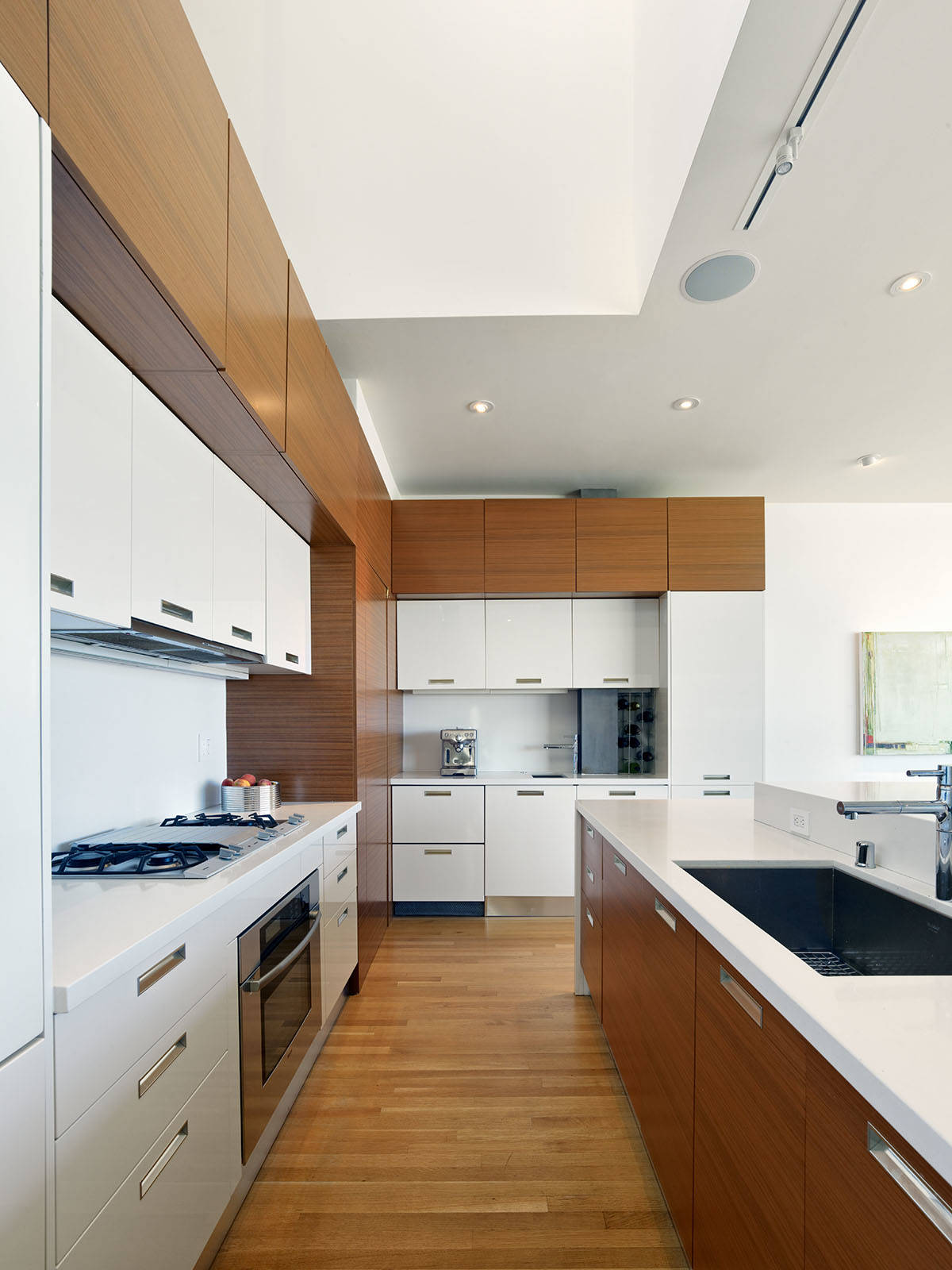
Image Source: st.hzcdn.com
Deciphering Kitchen Upper Cabinet Dimensions
When planning a kitchen renovation or even just looking to refresh your current setup, understanding the various kitchen cabinet depth options is essential. This isn’t just about aesthetics; it directly impacts functionality and how you use your kitchen space. Upper cabinets, also known as wall cabinets, play a vital role in providing accessible storage above your countertops.
What Are Standard Upper Cabinet Dimensions?
The industry standard for standard upper cabinet dimensions is a depth of 12 inches. This measurement refers to the depth of the cabinet box itself, from the front face frame to the back panel. However, this is just the starting point. Other dimensions like height and width also come into play, but for this discussion, we’re focusing specifically on depth.
How Far Out Do Upper Cabinets Stick?
The question of ” how far out do upper cabinets stick?” is directly related to their depth. Since the standard depth is 12 inches, they generally extend 12 inches from the wall. This projection is a critical factor when considering your kitchen layout and how much space you have to work with on your countertops.
Optimal Upper Cabinet Depth for Functionality
While 12 inches is the standard, the concept of optimal upper cabinet depth can vary based on individual needs and kitchen design. The goal is to maximize storage without compromising safety or accessibility.
Factors Influencing Optimal Depth:
- Countertop Depth: Standard kitchen countertops are typically 25.5 inches deep. This leaves 13.5 inches of clearance between the front of the upper cabinet and the front of the countertop (25.5 inches – 12 inches = 13.5 inches). This ample clearance is crucial for comfortable and safe use of the countertop.
- User Height: Taller individuals might appreciate slightly deeper cabinets, as it can provide more accessible storage without requiring excessive reaching. However, this needs to be balanced with the risk of bumping one’s head.
- Storage Needs: If you have specific items you need to store, like larger serving platters or small appliances that you want to keep off the counter, you might consider a slightly deeper cabinet.
- Kitchen Size and Layout: In smaller kitchens, maximizing every inch is key. In larger kitchens, there might be more flexibility to experiment with slightly deeper or shallower depths.
The Crucial Role of Kitchen Cabinet Spacing
Proper kitchen cabinet spacing is paramount for both aesthetics and functionality. This includes the distance between upper and lower cabinets (the backsplash area) and the placement of upper cabinets relative to walls and other obstructions.
Backsplash Clearance:
The standard and recommended clearance between the bottom of upper cabinets and the countertop is 18 inches. This 18-inch space is your primary workspace. It’s where you chop vegetables, mix ingredients, and place appliances. This spacing ensures you have enough room to work comfortably and safely.
- 18-inch Clearance Benefits:
- Ample room for most kitchen tasks.
- Space for small countertop appliances like toasters or blenders.
- Allows for easier cleaning of the backsplash area.
- Prevents users from hitting their heads on cabinet bottoms while working.
Wall Cabinet Placement and Clearance:
The placement of upper cabinets is also about upper cabinet clearance. This refers to the space around the cabinets, ensuring they don’t obstruct walkways or create hazards.
- Walkway Clearance: Ensure that cabinet projections do not impede necessary walkway widths within the kitchen. This is especially important in tighter spaces.
- Appliance Clearance: Consider the swing of appliance doors (refrigerators, dishwashers) when placing upper cabinets to avoid collisions.
The Standard Depth: 12 Inches and Its Implications
The ubiquitous 12-inch depth for upper cabinets is not an arbitrary choice. It’s a well-established standard that has evolved to meet the practical needs of most kitchens.
Why 12 Inches is the Standard Depth:
- Countertop Compatibility: As mentioned, the 12-inch depth perfectly complements standard countertop depths, leaving a comfortable 18 inches of backsplash space.
- Storage Efficiency: This depth effectively stores most kitchen essentials. Think about everyday dishes, glasses, bowls, and pantry staples. It offers a good balance between capacity and not overextending into the room.
- Accessibility: Items stored in 12-inch deep cabinets are generally within easy reach, even for those of average height. You don’t need to over-extend or use reachers for most items.
- Aesthetics and Proportion: The 12-inch depth generally looks proportionate on most kitchen walls. Deeper cabinets can sometimes make a kitchen feel smaller or more cramped, especially in compact spaces.
- Cost-Effectiveness: Standardized sizes often lead to more efficient manufacturing processes, which can translate to lower costs for consumers.
How Deep Are Wall Cabinets? Revisiting the Standard
To reiterate, the answer to ” how deep are wall cabinets?” is overwhelmingly 12 inches for the vast majority of manufactured and custom cabinets. This consistency across the industry makes planning and purchasing much simpler.
Variations from the Standard:
While 12 inches is the norm, there are some situations where you might encounter or opt for different depths:
- Shallow Cabinets (e.g., 9 or 10 inches): These are sometimes used in narrow kitchens or above specific areas where a full 12 inches would be too intrusive. They offer less storage but can be a design solution for space constraints.
- Deeper Cabinets (e.g., 14 or 15 inches): Less common for standard upper cabinets, deeper options might be considered for very specific storage needs, but they require careful planning to avoid creating safety hazards or making the kitchen feel claustrophobic.
Exploring Upper Cabinet Overhang
The term ” upper cabinet overhang” primarily refers to the extent to which the cabinet box protrudes beyond the face frame. However, in the context of depth, it’s more about how much the entire cabinet unit extends from the wall.
What is the Upper Cabinet Overhang?
The ” upper cabinet overhang” is essentially the kitchen cabinet depth itself when measured from the wall. So, a 12-inch deep cabinet will have an “overhang” of 12 inches from the wall surface.
Considerations for Overhang:
- Countertop Protrusion: It’s important to note that the countertop itself will typically extend slightly beyond the face of the cabinet. Standard countertops often have a 1-inch overhang, meaning the countertop will stick out about 1 inch past the cabinet’s front edge. This gives a finished look and provides a slight lip.
- Obstructions: Ensure that the cabinet’s “overhang” (its depth from the wall) does not interfere with any existing features or necessary clearances in your kitchen.
Kitchen Cabinet Installation Depth: Precision Matters
The actual kitchen cabinet installation depth needs to be precise to ensure proper fit, function, and safety. This involves not just the cabinet box but also how it’s mounted to the wall.
Mounting and Installation Factors:
- Wall Studs: Upper cabinets are typically mounted directly into wall studs for maximum support. The installer needs to locate these studs accurately.
- Leveling: Cabinets must be installed perfectly level and plumb. Even slight deviations can affect how doors and drawers operate and how the overall kitchen looks.
- Securing: Heavy items are stored in upper cabinets, so secure mounting is crucial for safety. Manufacturers provide specific instructions on how to attach cabinets to the wall.
- Trim and Molding: Any decorative trim or molding added to the top or bottom of cabinets can slightly alter the overall projection from the wall.
Measuring for Installation:
When measuring for kitchen cabinet installation depth, you’re generally concerned with the cabinet box depth plus any decorative elements. However, the critical measurement for clearance is the depth from the wall to the front edge of the cabinet box.
- Start with the Wall: Measure from the finished wall surface to where you want the front of your cabinets to be.
- Account for Backsplash: Remember the 18-inch clearance needed above the countertop.
- Consider Appliances: If you have appliances that might interfere with cabinet placement (e.g., a refrigerator door swing), factor that into your measurements.
Kitchen Cabinet Spacing: Making the Most of Your Space
Effective kitchen cabinet spacing is a cornerstone of a well-designed kitchen. It’s not just about how much space there is, but how that space is utilized.
Backsplash Area: The Workspace
The 18-inch vertical space between the upper and lower cabinets is your primary workspace.
Maximizing the Backsplash Area:
- Task Lighting: Install under-cabinet lighting to illuminate your work surfaces. This is crucial for safety and efficiency.
- Backsplash Materials: Choose a backsplash material that is durable, easy to clean, and visually appealing.
- Open Shelving: Consider incorporating some open shelving within this space for frequently used items or decorative pieces.
- Pot Racks or Hooks: For some kitchens, strategically placed hooks or small racks can be useful for hanging utensils or small pots, but ensure they don’t obstruct movement.
Horizontal Spacing and Layout:
- Traffic Flow: Ensure that cabinet placement doesn’t create bottlenecks or impede movement through the kitchen.
- Appliance Accessibility: Make sure appliance doors can open fully without hitting cabinets.
- Corner Cabinets: Properly addressing corner cabinet transitions is key to maximizing usable space and avoiding dead zones.
Fathoming Upper Cabinet Clearance and Measurements
Getting upper cabinet clearance and accurate upper cabinet measurements right is vital for both safety and usability.
Key Clearance Measurements:
- Wall to Cabinet Front: This is the kitchen cabinet depth, typically 12 inches.
- Countertop to Bottom of Cabinet: The standard 18 inches.
- Cabinet Depth vs. Countertop Depth: Ensure the cabinet depth doesn’t create an excessive overhang of the countertop or vice versa, which can lead to tripping hazards or awkward reach.
Accurate Upper Cabinet Measurements:
When measuring for new cabinets or assessing your current ones, be thorough:
- Measure Depth from the Wall: Measure from the wall to the front edge of the cabinet box.
- Check Cabinet Box Dimensions: Ensure the stated depth matches the actual cabinet box depth.
- Consider Doors and Hardware: While the box depth is key, the overall projection from the wall might be slightly more with door styles that have raised panels or hardware that extends further.
- Measure Multiple Points: Walls aren’t always perfectly flat. Measure depth in a few places to get an average or to identify any irregularities.
Deeper Cabinets: Pros and Cons
While 12 inches is standard, let’s look at what happens if you deviate.
Deeper Cabinets (e.g., 14-15 inches):
Pros:
- Increased Storage: Offers significantly more storage capacity for larger items or a greater quantity of smaller items.
- Accommodates Larger Appliances: Can be useful for storing specific items like stand mixers or larger sets of dishes.
Cons:
- Reduced Countertop Clearance: If installed at the standard 18-inch vertical height, deeper cabinets significantly reduce the effective workspace depth. If you still want 18 inches of clearance, you’ll need to mount them higher, which impacts accessibility.
- Accessibility Issues: Items stored at the back of deeper cabinets can be harder to reach, especially without specialized pull-out shelves or organizers.
- Aesthetic Impact: Deeper cabinets can make the kitchen feel smaller and more enclosed, particularly in smaller or galley-style kitchens. They can also create a more imposing visual presence.
- Potential for Head Bumping: If mounted lower to maintain reach, the increased depth can become a head-bumping hazard for shorter individuals.
- Cost: Non-standard depths may be more expensive due to custom manufacturing.
Shallower Cabinets (e.g., 9-10 inches):
Pros:
- More Countertop Space: Frees up more of your countertop by having a shallower projection from the wall.
- Increased Clearance: If maintaining the 18-inch vertical spacing, shallower cabinets provide more room between the cabinet bottom and the countertop, making the workspace feel more open.
- Aesthetic in Narrow Spaces: Can be a good choice for very narrow kitchens or hallways where a full 12-inch cabinet would feel too dominant.
Cons:
- Limited Storage: Significantly less storage capacity compared to standard 12-inch deep cabinets.
- Restricted Item Size: May not accommodate larger dishes, platters, or small appliances.
Tables: Standard vs. Deeper/Shallower Depths
Here’s a quick comparison to help visualize the impact of different depths.
| Feature | Standard 12-inch Depth | Deeper (e.g., 15-inch) Depth | Shallower (e.g., 10-inch) Depth |
|---|---|---|---|
| Storage Capacity | Good | Excellent | Limited |
| Counter Clearance | Standard (18 inches) | Reduced if mounted at standard height, requires higher mounting for 18 inches | Increased if mounted at standard height |
| Reachability | Good | Potentially difficult at the back | Excellent |
| Aesthetics | Proportional | Can feel imposing/make kitchen smaller | Can feel lighter/less dominant |
| Cost | Standard/Lower | Potentially Higher | Potentially Higher |
| Common Use | Most kitchens | Specific storage needs | Narrow kitchens, specific design needs |
Common Scenarios and Solutions
Let’s consider some specific situations and how depth plays a role.
Scenario 1: Small Kitchens
In a small kitchen, the temptation to go deeper for more storage is strong, but the optimal upper cabinet depth might still be 12 inches.
- Solution: Instead of deeper cabinets, focus on maximizing efficiency within the standard 12-inch depth. Use pull-out shelves, organizers, and tiered racks. Consider open shelving in some areas to reduce the visual bulk. Ensure good under-cabinet lighting to make the space feel brighter and larger.
Scenario 2: High Ceilings
If you have very high ceilings, you might be tempted to mount upper cabinets higher to utilize vertical space.
- Solution: While mounting cabinets higher is an option, ensure that the top cabinets remain accessible. Consider a tiered approach with standard 12-inch deep cabinets, potentially adding a smaller, shallower cabinet or open shelving above them for less frequently used items. Deep cabinets mounted very high can become difficult to reach and a storage dead zone.
Scenario 3: Specific Storage Needs
You have a collection of large serving platters or bulky kitchen gadgets that don’t fit well in standard cabinets.
- Solution: This is where a custom solution might be considered. You could opt for a few strategically placed deeper cabinets (e.g., 14 or 15 inches) but carefully plan their placement. Ensure they don’t interfere with workflow or create safety issues. Consider installing them at a slightly higher vertical position to maintain adequate counter clearance if needed, but be mindful of reachability.
Frequently Asked Questions (FAQ)
Q1: Can I put deeper upper cabinets in my kitchen?
A1: Yes, you can, but it requires careful planning. Consider the impact on counter clearance, accessibility, and the overall feel of the kitchen. Deeper cabinets can make a kitchen feel smaller. It’s often best to consult with a kitchen designer.
Q2: What is the minimum clearance between upper and lower cabinets?
A2: The minimum recommended clearance is 18 inches. While some installations might go slightly lower, it significantly compromises workspace and can be a safety hazard.
Q3: How deep should upper cabinets be if I have a shallow countertop?
A3: If you have a non-standard, shallower countertop (e.g., 24 inches deep instead of 25.5 inches), you might want to consider shallower upper cabinets (e.g., 10 inches) to maintain adequate clearance and avoid the upper cabinets protruding too far into the room. However, standard 12-inch deep cabinets can still work, but the workspace will feel more compact.
Q4: What are the standard heights for upper cabinets?
A4: Standard heights typically range from 30 to 42 inches, with 30 inches and 36 inches being the most common. The height is chosen based on ceiling height and desired storage capacity.
Q5: Does the depth of the cabinet affect the installation?
A5: Yes, the depth can affect installation, especially in relation to existing wall structures or when creating a flush look with adjacent cabinets. Accurate kitchen cabinet installation depth measurements are crucial for a professional finish.
Q6: How do I measure for upper cabinets?
A6: Measure the width and height of the wall space where the cabinets will go. Measure the depth from the wall to the desired front edge of the cabinet, remembering the standard 12-inch depth and the required 18-inch backsplash clearance.
Q7: Is there an overhang for upper cabinets?
A7: The upper cabinet overhang typically refers to how far the cabinet box extends from the wall, which is dictated by its depth. The countertop will then have its own overhang, usually about 1 inch, extending past the cabinet’s front edge.
By carefully considering standard upper cabinet dimensions, kitchen cabinet spacing, and upper cabinet clearance, you can design a kitchen that is both beautiful and highly functional, ensuring every measurement contributes to a space you’ll love.