
Can you step into the kitchen in pickleball? You cannot step into the kitchen, also known as the pickleball non-volley zone (NVZ), and hit a ball that has not bounced first. If you hit the ball before it bounces (a “volley”) while any part of your body or clothing is touching the kitchen line or is inside the kitchen, it is a foul. This means you lose the point. However, you can step into the kitchen if the ball has bounced there first.
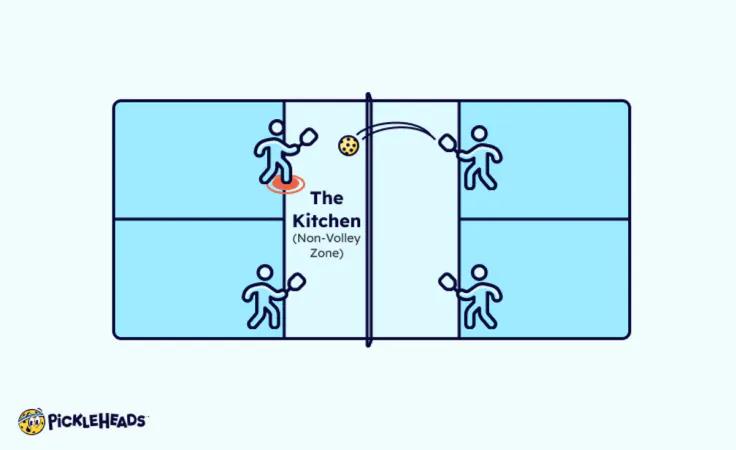
Image Source: cdn.sanity.io
The Kitchen: A Special Spot on the Court
Pickleball is a fun game. It is easy to learn. But it has one key rule. This rule is about a special area. This area is called the “kitchen.” Its real name is the non-volley zone, or NVZ. It is seven feet long on each side of the net. This area is very important. Many new players get confused by it. Knowing about the kitchen is key. It helps you play well. It helps you win.
What is the No-Volley Zone Definition?
The no-volley zone definition is simple. It is the part of the court close to the net. It is seven feet from the net. It is on both sides. It runs from sideline to sideline. Lines mark it clearly. These lines are part of the zone. So, touching a line is like being in the zone.
Why Do We Have a Pickleball Non-Volley Zone?
The kitchen is there for a good reason. It stops players from standing too close to the net. If players stood too close, they could hit every ball down. This would make the game less fun. It would be hard to return shots. The kitchen makes players stay back. It makes them hit soft shots. These soft shots are called “dinks.” The kitchen makes the game fair. It adds more skill. It makes rallies longer.
NVZ Rules Pickleball: The Core Idea
The main rule for the kitchen is this: You cannot hit a volley while in the kitchen. A volley means hitting the ball before it bounces. So, if you hit a ball that is still in the air, you cannot be in the kitchen. This includes touching the line. This is a very important rule in pickleball.
When is a Ball a Volley?
A volley is a shot that you hit. You hit it before it touches the ground. If the ball bounces first, it is not a volley. It is a groundstroke. You can hit a groundstroke from anywhere. You can hit it from inside the kitchen. But if it does not bounce, it is a volley. And you cannot volley in the kitchen.
What Happens if You Break the Rule?
If you hit a volley while in the kitchen, it is a foul. A foul means you lose the point. If your team served, you lose the serve. The other team gets the point. If the other team served, they get the point. You do not want to make this mistake. It is easy to do by accident.
Specifics of a Pickleball Kitchen Violation
There are many ways to break the kitchen rule. It is not just about where your feet are. It is about your whole body. It is also about your actions. Any part of you or your things touching the kitchen counts.
Kitchen Line Foot Fault: A Common Mistake
A kitchen line foot fault happens often. This is when your foot touches the kitchen line. Or your foot goes into the kitchen. This happens when you are hitting a volley. Even if just your toe touches, it is a fault. This can be hard to avoid. Especially when you reach for a ball.
What Counts as Touching?
- Your foot: If any part of your foot touches the line or ground in the kitchen.
- Your paddle: If your paddle touches the line or ground in the kitchen.
- Your clothing: If your shirt, shorts, or hat touch the line or ground in the kitchen.
- Your body: If any part of your body (hand, elbow, etc.) touches the line or ground in the kitchen.
It is important to remember this. The kitchen line itself is part of the kitchen. So, touching the line is the same as being inside.
Crossing the Kitchen Line After a Volley
Another important rule is about momentum. Sometimes you hit a volley. You hit it from outside the kitchen. This is fine. But your body keeps moving. Your momentum carries you forward. If you step into the kitchen after volleying, it is still a fault. This is true even if the ball is dead. It is true even if the ball is out.
Stepping into NVZ After Volley: An Example
Imagine you are standing just outside the kitchen line. A fast ball comes. You jump up. You hit a great volley. The ball flies over the net. Your feet land. They land inside the kitchen. This is a fault. You hit the ball outside the kitchen. But your body entered the kitchen right after. This is called “stepping into NVZ after volley.” It means you lose the point. You must stay out of the kitchen after hitting a volley. This applies until the ball bounces. It applies until the point ends.
Volleys in the Kitchen: Never Allowed
To be clear: you cannot hit a volley while you are in the kitchen. This is the main point of the rule. You cannot stand in the kitchen and hit a ball that has not bounced. This is the “no-volley” part of the zone.
What if the Ball Bounces in the Kitchen?
This is a key difference. If the ball bounces inside the kitchen, you CAN go in. You can hit the ball. This is not a volley. It is a groundstroke. So, if your opponent hits a short shot that lands in your kitchen, you can step in. You can run into the kitchen. You can hit the ball after it bounces. This is perfectly legal. You can even stay in the kitchen after hitting it. This is because you hit a groundstroke. You did not hit a volley.
Summary of Kitchen Rules
Let’s make it simple.
| Action | Is it a Foul? | Explanation |
|---|---|---|
| Volleying while in the kitchen | Yes | You hit the ball before it bounces. Any part of your body or clothing is in the kitchen or on the line. |
| Volleying and then stepping into NVZ | Yes | You hit the ball outside the kitchen. But your momentum carries you into the kitchen after the hit. |
| Touching the kitchen line during a volley | Yes | The line is part of the kitchen. Touching it while volleying is a fault. |
| Hitting a ball that bounced in the kitchen (groundstroke) | No | This is allowed. You can enter the kitchen to hit a ball after it bounces. You can stay in there too. |
| Reaching into the kitchen to hit a volley | Yes | Your paddle can cross the plane of the net. But your body or feet cannot touch the kitchen. |
Dink Shot Rules and the Kitchen
Dink shots are very important in pickleball. A dink is a soft shot. It barely goes over the net. It lands in the opponent’s kitchen. The goal of a dink is to make the opponent run forward. It makes them hit an upward shot. This gives you a chance to hit a winning shot.
Why Dink Shots Are Key
Dink shots are often played from the kitchen line. Players try to hit dinks that land just over the net. They want them to land in the other team’s kitchen. This forces the opponent to come forward. They must go into their kitchen. They must hit the ball after it bounces. They must hit it up. This is because they are hitting from a low position. This is how you win points with dinks.
Hitting a Dink
When you hit a dink, you are usually outside the kitchen. You aim for the opponent’s kitchen. If the opponent lets the ball bounce in their kitchen, they must go in to get it. They then hit it back. They cannot hit a volley from inside their kitchen. This rule creates the “dink battle.” This is a key part of high-level pickleball.
Pickleball Rules Near Net: Where to Stand
Where you stand near the net matters a lot. It affects how you play. It affects your chance of making a kitchen violation.
The “Oche” Line
Many players stand close to the kitchen line. They stand just outside it. This spot is called the “oche.” It is a good place to be. From here, you can hit dinks. You can hit volleys. You are also in a good spot to hit groundstrokes if the ball bounces. But you must be careful. You must not step over the line.
Importance of Footwork
Good footwork is vital. You need to move quickly. You need to stay balanced. You need to know where your feet are. This is especially true near the kitchen. If you reach too far, you might step in. If you jump, you might land in. Always be aware of the lines.
Strategies to Avoid Kitchen Violations
Breaking the kitchen rule is frustrating. It gives away points. Here are ways to avoid it.
Stay Outside Unless the Ball Bounces
This is the golden rule. Do not go into the kitchen unless the ball has bounced there. If the ball is in the air, stay out. If you are going to hit a volley, make sure your feet are outside the kitchen. Make sure your feet are behind the kitchen line. This includes after you hit the ball.
Practice Your Footwork
Train your feet. Practice moving forward and backward. Practice stopping quickly. Practice moving sideways. Do drills where you hit a shot and then recover. Recover means moving back to a safe spot. This helps you stay out of the kitchen.
Use Your Brain, Not Just Your Reflexes
Sometimes, a ball is too far. It is too close to the net. You might be tempted to reach. You might jump in. Stop and think. Is it a volley? If yes, can I reach it without stepping in? If not, let it go. It is better to lose the point this way. It is better than getting a kitchen violation. A kitchen violation is a foul.
Keep Your Distance After a Volley
This is hard for new players. You hit a great volley. You want to rush the net. But if you step into the kitchen, it’s a fault. Remember the “stepping into NVZ after volley” rule. After you hit a volley, stop. Make sure your feet stay out. You can even take a small step backward. Wait to see where the ball goes. Wait until the point is over. Then you can go into the kitchen.
The “Paddle Plane” Rule
You can reach your paddle into the kitchen. This is okay. For example, a ball might be just over the net. It is in the air. You can reach your paddle over the net. You can hit the ball. But your feet must stay outside the kitchen. They must stay behind the line. Your body must also stay out. Only your paddle can cross the plane of the net. This means only your paddle can go past the net. This rule is part of pickleball rules near net play.
Drills to Master the Kitchen Rule
Practice makes perfect. Here are some simple drills. They help you master the kitchen rule.
Drill 1: Kitchen Line Taps
- How to do it: Stand just outside the kitchen line. Have a partner stand on the other side. They hit balls to you. They hit them short. You must hit them back as dinks. Focus on keeping your feet out. But also try to hit the ball softly. Make it land in their kitchen.
- Focus: Stay behind the line. Hit a soft dink.
Drill 2: Volley and Retreat
- How to do it: Stand a few feet behind the kitchen line. Your partner hits fast balls to you. These balls are volleys. Hit them back. After you hit, quickly take a small step back. This helps you avoid stepping into the kitchen.
- Focus: Hit the volley. Then move back quickly. Do not let momentum carry you forward.
Drill 3: Bounced Ball in Kitchen
- How to do it: Your partner hits soft balls. These balls land in your kitchen. You must run in. You must let the ball bounce. Then you hit it. You can stay in the kitchen after you hit it. This drill teaches you to tell the difference. It teaches when you can enter.
- Focus: Wait for the bounce. Go into the kitchen. Hit the ball.
Common Mistakes and How to Fix Them
Even good players make kitchen mistakes. Knowing these mistakes helps you avoid them.
Mistake 1: Reaching Too Far
- What it looks like: You stretch your body to hit a short ball. Your foot slides over the line. Or you hit a volley. Then you fall forward into the kitchen.
- How to fix: Improve your footwork. Take smaller steps. Do not lunge. If the ball is too far, let it go. It is better to lose a point clean. Do not give away a foul.
Mistake 2: Forgetting Momentum
- What it looks like: You hit a strong volley. Your body keeps moving forward. You step into the kitchen right after hitting the ball. This is the “stepping into NVZ after volley” violation.
- How to fix: After hitting a volley, stop your movement. Try to take a small step back. Or just hold your position firmly. Make sure you are balanced. Do not let your body drift forward.
Mistake 3: Thinking the Line is Safe
- What it looks like: You stand with your toe just on the kitchen line. You hit a volley. You think it is okay. But the line is part of the kitchen. So, touching it is a fault.
- How to fix: Always stay a few inches behind the kitchen line. Give yourself some room. This way, you are safe. Your toe will not slip over.
Mistake 4: Not Knowing When to Enter
- What it looks like: You are scared of the kitchen. You never go in. Even when the ball bounces there. This makes it hard to return short shots.
- How to fix: Remember: if the ball bounces in the kitchen, you can go in. You can hit it. Practice going into the kitchen. Practice hitting balls that bounce there. This will make you more confident.
The Role of the Kitchen in Strategy
The kitchen rule is not just about fouls. It shapes how the game is played. It creates a lot of the game’s strategy.
The “Soft Game”
Because of the kitchen, players use dinks a lot. This creates the “soft game.” Players try to hit dinks. They want them to land in the opponent’s kitchen. This forces the opponent to come forward. It makes them hit a ball that goes up. This sets up an attack. The kitchen makes this soft play very important.
The “Third Shot Drop”
This is a key shot in pickleball. After the serve, the serving team hits the third shot. Often, this shot is a dink. It is called a “third shot drop.” The goal is to make it land softly in the opponent’s kitchen. This lets the serving team move up to the net. They can then play the soft game. Without the kitchen, this shot would not be as important.
Net Play and Aggression
The kitchen rule stops players from being too aggressive at the net. They cannot just stand there and smash every ball. They must respect the seven-foot zone. This means rallies last longer. It makes the game more about skill and touch. It is less about just power.
Interpreting the Rules: Fair Play
The rules are there for fair play. Most of the time, kitchen violations are clear. But sometimes, there are close calls.
Self-Calling Fouls
In pickleball, players often call their own fouls. If you think you touched the line, call it on yourself. This is good sportsmanship. It makes the game more fun for everyone.
Asking for a Line Call
If you are not sure, you can ask for a line call. This means asking your opponent if they saw it. Or asking your partner. The goal is to be fair. Not to cheat.
Grasping the Nuances of the NVZ
The non-volley zone is simple in its main rule. But its effects are far-reaching. It shapes the whole game. It makes pickleball unique.
Why Seven Feet?
The seven-foot distance is carefully chosen. It is far enough from the net. It stops easy put-aways. But it is close enough. It still allows for good net play. It balances defense and offense.
The “Dink Battle”
The kitchen is central to the “dink battle.” This is when both teams hit dinks back and forth. They try to make the other team hit a ball high. They try to make the other team step into the kitchen. This strategic exchange is a hallmark of pickleball. It is only possible because of the kitchen rule.
Staying Safe and Legal
Always play safely. Always play by the rules. The kitchen rule is a big one. It takes practice to master. But once you do, your game will get much better. You will lose fewer points to faults. You will also be able to play better dinks. You will know when to step in. You will know when to stay out.
Frequently Asked Questions (FAQ)
H4 Can you touch the kitchen line in pickleball?
No, you cannot touch the kitchen line if you are hitting a ball that has not bounced (a volley). The kitchen line is part of the kitchen. So, if any part of your body or clothing touches the line while volleying, it is a foul.
H4 Can you stand in the kitchen in pickleball?
Yes, you can stand in the kitchen. But only if the ball has bounced first. You cannot stand in the kitchen and hit a ball that is still in the air. This is a common pickleball kitchen violation.
H4 What is a “dink” shot in pickleball?
A dink shot is a soft shot. It is hit with little power. It barely clears the net. It is meant to land in the opponent’s kitchen. The goal is to make the opponent run forward. This makes them hit an upward shot.
H4 Is it a fault if my momentum carries me into the kitchen after I hit a volley?
Yes, it is a fault. If you hit a volley from outside the kitchen, but then step into the kitchen because of your momentum, it is a foul. This is the “stepping into NVZ after volley” rule. You must stay out of the kitchen after hitting a volley until the ball bounces or the point ends.
H4 Can I reach my paddle into the kitchen to hit a volley?
Yes, your paddle can go into the kitchen. You can reach over the net. But your feet and body must stay outside the kitchen. They must stay behind the kitchen line. Only your paddle can cross the plane of the net.
H4 What happens if I hit a ball that bounces in the kitchen?
If the ball bounces in the kitchen, you can go in and hit it. This is not a volley. It is a groundstroke. You can stay in the kitchen after hitting it. This is perfectly legal.
H4 How far is the kitchen line from the net?
The kitchen line is seven feet from the net on each side. It runs across the court. This area is the non-volley zone.
H4 Why is the kitchen rule so important?
The kitchen rule is very important. It stops players from standing too close to the net. It makes the game fair. It adds more strategy. It makes players use soft shots like dinks. This makes rallies longer and more fun.