
A standard kitchen counter is usually 25 inches deep. This depth includes a small front edge, known as an overhang. This size works well for most homes. It gives you enough room for cooking and lets common kitchen tools fit easily. This depth also matches well with standard base cabinet depth, which is often 24 inches. This guide will show why this size is common and what other sizes you might find.
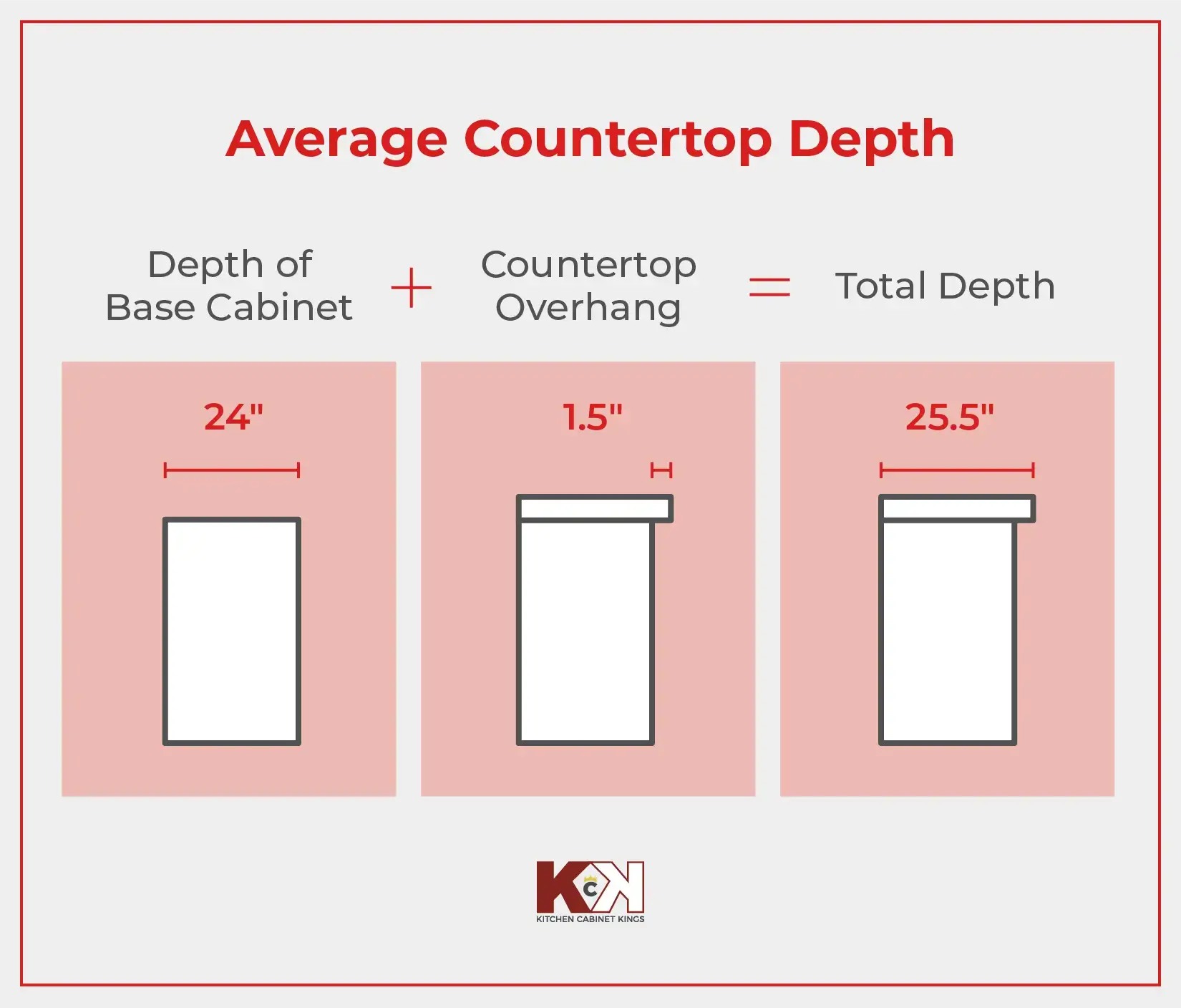
Image Source: cdn.kitchencabinetkings.com
The Standard Countertop Depth Explained
The standard countertop depth of 25 inches is not a random number. It is a key part of kitchen design. This size helps your kitchen work well. It makes sure you have space for many tasks. It also helps fit common items and your body well.
Why 25 Inches is the Norm
Several reasons make 25 inches the go-to size for standard countertop depth. These reasons involve how people use kitchens and how kitchens are built.
For People and Tasks
- Room to Work: A 25-inch depth gives you a good work area. You can chop food, mix batter, and put down hot pans. It offers enough space without making you reach too far.
- Appliance Fit: Many small kitchen appliances are made to fit on a counter this deep. Toasters, coffee makers, and blenders sit well on a 25-inch counter. Their cords can go behind them without issues.
- Comfort for Users: This depth is often called ergonomic kitchen counter depth. It means it is good for the body. You can stand close to the counter. This helps your back and shoulders. You do not have to lean too far forward.
For Cabinets and Walls
- Matching Base Cabinets: Most kitchen cabinet depth is 24 inches. This is the size of standard base cabinets. The extra inch of countertop depth creates a small overhang. This overhang has important uses.
- Wall Space: The counter needs to meet the wall smoothly. The 25-inch depth means the counter can sit firmly on top of the 24-inch cabinet. It also leaves room for wall bumps or uneven spots.
- Pipe and Wire Space: Sometimes, pipes or wires run behind the base cabinets. The slight extra depth of the counter helps hide these. It makes the kitchen look cleaner.
Kitchen Cabinet Depth and Its Link to Counters
The depth of your kitchen cabinets is key to countertop dimensions. Standard base cabinet depth sets the stage for the counter.
Standard Base Cabinet Depth
Most base cabinets, the ones below your counter, are 24 inches deep. This depth does not include the cabinet doors. The doors add a bit more. This 24-inch depth is common for many reasons.
- Appliance Matching: Many large appliances, like dishwashers and ranges, are made to be 24 inches deep. This lets them fit flush with the cabinet fronts.
- Storage Space: A 24-inch deep cabinet gives good storage. You can put plates, pots, and pans inside. You can reach items at the back without too much trouble.
- Material Use: Cabinet makers use standard wood sheet sizes. A 24-inch depth makes good use of these materials. This helps keep costs down.
The Counter Overhang: More Than Just Looks
The counter overhang is the part of the counter that sticks out past the base cabinets. For a 25-inch counter on a 24-inch cabinet, this is usually one inch at the front. It has several roles:
- Protection: The overhang protects cabinet doors and drawers. It stops spills from dripping directly onto them. This helps keep your cabinets clean and lasting longer.
- Looks: It adds a finished look to the kitchen. It gives the counter a bit more visual weight.
- Comfort: The overhang gives space for your feet when you stand at the counter. You can stand closer to your work. This makes cutting and preparing food easier on your body.
- Opening Cabinets: It also helps when opening cabinet doors or drawers. Your fingers have space to grip the pulls or edges.
Here is a simple table of standard depths:
| Item | Standard Depth (Inches) | Why This Depth? |
|---|---|---|
| Standard Countertop | 25 | Work space, appliance fit, comfort, cabinet match |
| Standard Base Cabinet | 24 | Appliance fit, storage, material use |
| Counter Overhang (Front) | 1 | Protection, looks, comfort, access |
Kitchen Design Standard Measurements Beyond Depth
While depth is vital, other kitchen design standard measurements also work with it. These include counter height and width.
Standard Counter Height
Most kitchen counters sit at 36 inches from the floor. This height is also chosen for comfort. It allows most adults to work without bending too much. It also works with standard appliance heights.
Standard Counter Width (Length)
Counter widths depend on your kitchen’s layout. They vary greatly. They can be just a few feet for a small section. Or they can be many feet for a long stretch of counter. Kitchen island depth requirements also play a part here.
When Depth Changes: Special Cases and Customization
While 25 inches is standard, not all kitchen counters are this deep. Some kitchens need different depths for specific reasons.
Kitchen Island Depth Requirements
Kitchen islands often have different depth rules. Their depth is less fixed than wall counters.
- Working Islands: An island used for cooking or washing might be 25 inches deep. This matches standard counter work areas.
- Dining or Seating Islands: If an island has seating, it needs a deeper counter. People need legroom. A common depth for a seating overhang is 12 to 18 inches. So, an island with seating might be 36 to 42 inches deep overall (24-inch cabinet + 12 to 18-inch overhang).
- Storage Islands: Some islands are just for storage. They might be deeper, like 30 inches, to allow for more storage from both sides.
- Minimum Kitchen Island Depth: For a basic island with no seating and just one side for access, 25 inches might be the minimum kitchen counter depth. However, islands usually need more space around them.
- Overall Depth Depends: The total depth of an island depends on what it will be used for. It might hold a sink, a cooktop, or just be a place to eat.
Deeper Counters for Specific Needs
Some people choose deeper counters. This might be for special tools or more workspace.
- 30-Inch Deep Counters: These counters give more room behind a sink or cooktop. They can also hold larger appliances. Some people like them for more open space when cooking.
- Benefits of Deeper Counters:
- More space for large cutting boards.
- Room for more small appliances.
- Can hide outlets or wires better.
- Might be preferred by taller cooks.
Shallower Counters for Small Spaces
Sometimes, a kitchen is very small. In these cases, a shallower counter might be needed.
- 22-Inch Deep Counters: These are less common in kitchens but can be found in small apartments or laundry rooms.
- Limitations: They offer less work space. Many standard appliances might not fit well. There is less room for an ergonomic counter depth.
- Minimum Kitchen Counter Depth: While 25 inches is standard, a functional kitchen needs at least enough depth for a sink and basic tasks. This often means a minimum of 22-24 inches is practical for a primary prep area.
ADA Kitchen Counter Depth Guidelines
The Americans with Disabilities Act (ADA) has rules for kitchen design. These rules help make kitchens usable for people with disabilities, including those who use wheelchairs.
- Sink Area: For a sink area, the counter depth must allow someone in a wheelchair to get close. This means space below the sink for knees and toes. The countertop itself still needs to be deep enough for a sink bowl, so the overall counter depth usually stays around 25 inches. However, the approach to the counter is key.
- Knee and Toe Clearance:
- Knee Clearance: At least 27 inches high, 30 inches wide, and 17 inches deep.
- Toe Clearance: At least 9 inches high, 30 inches wide, and 17 inches deep.
- Counter Height: ADA guidelines also suggest adjustable or varying counter heights. Some counters might be lower (around 34 inches) for easier reach.
- Forward Approach: The main idea for ADA kitchen counter depth is that a person can approach the counter head-on. This means no cabinets directly below the working part of the counter, especially at the sink or cooktop.
Parts of Countertop Dimensions and How They Fit
When you think about countertop dimensions, it’s not just the depth. It’s how the different parts fit together.
The Core Surface
This is the main flat part of the counter. It is where you do all your kitchen work. Its depth, typically 25 inches, defines your workspace.
Edges and Finishes
The edges of a counter are how it looks and feels. They can be rounded, straight, or fancy. The way the edge is made does not change the core depth of the counter. But it adds to the overall look.
Backsplash Integration
A backsplash is the material on the wall behind the counter. It protects the wall from splashes. The counter depth allows room for the backsplash to sit against the wall. The counter must be deep enough so the backsplash does not push it forward too much.
Picking the Right Depth for Your Kitchen
Choosing the right counter depth means thinking about how you use your kitchen.
Think About Your Needs
- Who uses the kitchen? Are you tall or short? Do you use a wheelchair?
- What do you do? Do you cook a lot? Do you bake? Do you need a lot of prep space?
- What appliances do you have? Do you have many small appliances? Do you plan to add more?
- How big is your kitchen? A small kitchen might need to stick to standard sizes or even go a bit shallower.
Planning for the Future
It is wise to think ahead. Will you add more tools later? Will your family grow? Picking a versatile depth now can save trouble later.
Professional Help
A kitchen designer can help you pick the best countertop dimensions. They know about kitchen design standard measurements. They can help you with tricky spots like kitchen island depth requirements or minimum kitchen counter depth for your space.
Building Your Counter: Materials and Methods
The material of your counter also plays a small part in its depth. Most materials can be cut to any depth. But how they are installed matters.
- Stone (Granite, Quartz, Marble): These are heavy. They need strong cabinets below. The depth is cut from large slabs.
- Laminate: These are often pre-cut. They might come in standard 25-inch depths. Custom depths are possible but might cost more.
- Solid Surface (Corian): These can be custom-made to nearly any shape and depth.
- Wood/Butcher Block: These can also be custom-cut. They offer warmth and a natural look.
No matter the material, the idea of a standard countertop depth of 25 inches remains central. This depth helps ensure your kitchen is practical, comfortable, and looks good. It is a well-thought-out dimension that helps kitchens work for daily life.
Frequently Asked Questions (FAQ)
Q1: What is standard countertop depth?
A1: The standard countertop depth is 25 inches. This includes a small overhang.
Q2: How deep are kitchen cabinets?
A2: Standard kitchen cabinet depth (for base cabinets) is 24 inches. This is measured from the front of the cabinet box to the back, not including the doors.
Q3: Can I get a kitchen counter deeper than 25 inches?
A3: Yes, you can. Many custom options are available. Some people choose 30-inch deep counters for more work space or to fit large items.
Q4: Is a 22-inch deep counter too shallow for a kitchen?
A4: A 22-inch deep counter is often too shallow for a main kitchen. It offers less work room. Many common sinks and appliances might not fit well. It is often a minimum kitchen counter depth only for very small or special use areas.
Q5: Why does a counter overhang exist?
A5: A counter overhang protects cabinet fronts from spills. It also gives foot room when standing at the counter. This makes working more comfortable. It also adds to the finished look of the kitchen.
Q6: What is ergonomic kitchen counter depth?
A6: Ergonomic kitchen counter depth refers to a depth that is comfortable and efficient for the user. The standard 25 inches is often considered ergonomic. It lets you stand close to the counter. This helps prevent back strain.
Q7: Do kitchen island depth requirements differ from wall counters?
A7: Yes, they often do. Kitchen islands can be deeper. This is especially true if they have seating (needing 12-18 inches more for legroom). Or if they are used from both sides. Standard kitchen island depth can vary from 25 inches to over 40 inches. This depends on its use.
Q8: What are ADA kitchen counter depth rules?
A8: ADA rules for kitchen counter depth focus on access. They require knee and toe clearance under the counter (at least 27 inches high for knees, 9 inches for toes). This allows wheelchair users to get close to the counter, especially at sinks and cooktops. The counter itself is often still 25 inches deep. But the cabinet below might be open or removable.
Q9: Do all countertop materials come in the same depth?
A9: Most countertop materials can be cut to standard or custom depths. Laminate might be easier to find in standard 25-inch sizes. Stone and solid surfaces are often cut from larger slabs. This means they can be made to many depths.
Q10: Where can I find kitchen design standard measurements?
A10: You can find kitchen design standard measurements from kitchen designers, cabinet makers, and online design guides. Building codes also have some standard measurements. These guides help ensure your kitchen is both safe and useful.