
How much weight can a kitchen cabinet hold? Kitchen cabinets can hold a good amount of weight. Most wall cabinets can safely hold between 100 and 200 pounds. Base cabinets, which sit on the floor, can hold much more, often 500 to 600 pounds or even more. The exact weight depends on many things. These include how the cabinet is made, what it is made of, and how it is put in place. Knowing these limits helps keep your kitchen safe. It also stops damage to your cabinets.
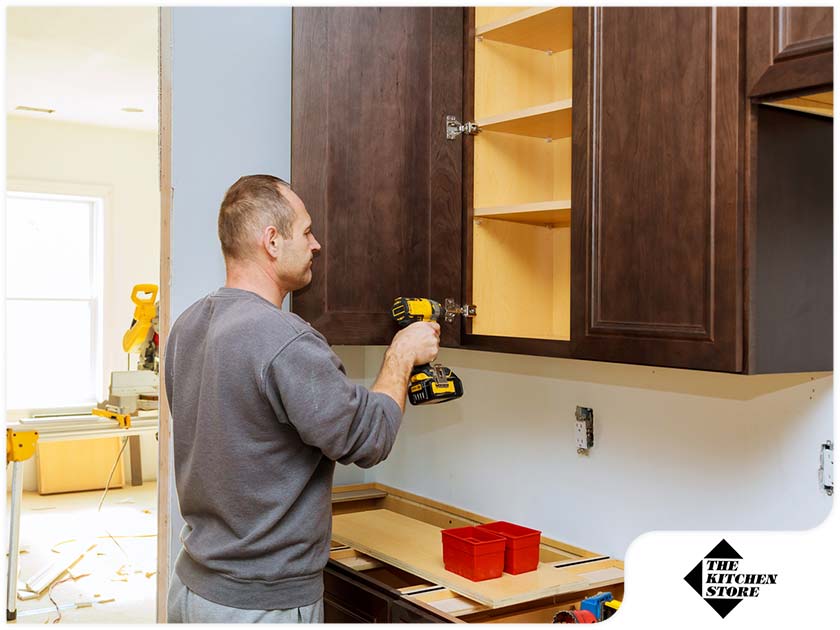
Image Source: www.thekitchenstore.net
Cabinet Weight Limits Explained
Kitchen cabinets are built to hold everyday items. But not all cabinets are the same. Their ability to hold weight changes a lot. This depends on their type and how they are used.
Wall Cabinet Weight Limit: What to Expect
Wall cabinets hang on the wall. They are usually above your counters. These cabinets hold less weight than base cabinets. This is because they rely on wall studs and mounting screws for support. A typical wall cabinet, 30 to 36 inches wide, can hold about 100 to 200 pounds.
This limit includes the weight of the cabinet itself. It also includes all the items inside. So, a cabinet holding 200 pounds needs strong parts. It also needs to be fixed to the wall very well. Heavy dishes, glassware, and small appliances add up fast. So, it is important to know this limit. Overloading wall cabinets is risky. It can make them pull away from the wall. This can cause big damage and even harm people.
Base Cabinet Weight Capacity: The Foundation
Base cabinets sit on the floor. They are the strongest cabinets in your kitchen. They support your countertops. They also hold heavy items. A standard base cabinet can hold 500 to 600 pounds or more. Some are even stronger. Their design helps them hold more weight. They sit directly on the floor. This gives them a very stable base. They do not hang from the wall.
This high weight capacity makes them great for heavy pots. You can also store pans, small appliances, and food items in bulk. When we talk about base cabinet weight capacity, we mean a lot of strength. This strength comes from good construction. It also comes from how they sit on the floor. They can handle heavy kitchen work.
How Much Weight Can Kitchen Shelves Hold: Shelf Specifics
Inside cabinets, shelves do the actual work of holding things. The strength of these shelves varies greatly. It depends on their material, thickness, and how they are supported.
- Material:
- Plywood shelves: These are strong. They can hold a lot of weight. They are good for heavy items.
- Solid wood shelves: These are also very strong. They are good for heavy use.
- Particle board shelves: These are less strong. They can bend or sag under heavy weight. They are often used in cheaper cabinets.
- MDF (Medium-Density Fiberboard) shelves: These are stronger than particle board. But they are not as strong as plywood or solid wood. They can also sag over time.
- Glass shelves: These are used for lighter items. They are often in display cabinets. They break easily if overloaded.
- Thickness: Thicker shelves can hold more weight. A 3/4-inch thick shelf is better than a 1/2-inch shelf.
- Support: Shelves often rest on small pins. More pins mean more support. Supports on the front and back edges are best. A long shelf with only end supports will sag.
For example, a 24-inch wide, 3/4-inch thick plywood shelf can hold about 70 to 100 pounds. A particle board shelf of the same size might only hold 30 to 50 pounds. Knowing how much weight can kitchen shelves hold is key. It helps you avoid bowing or breaking shelves.
Maximum Weight for Kitchen Cupboards: An Overview
When we talk about maximum weight for kitchen cupboards, we mean the total weight. This includes the cabinet box, shelves, doors, and all contents. For wall cabinets, think roughly 100-200 pounds total. For base cabinets, think 500-600 pounds total. These are general guides. Always check your specific cabinet’s limits if you can. Overloading any cupboard is dangerous. It can cause them to fail.
Pantry Cabinet Strength: Storing Bulk Safely
Pantry cabinets are often tall. They are made to hold a lot of food. Many pantries are base cabinets with extra shelves. So, they share the strong base cabinet weight capacity. This means they can hold hundreds of pounds. But, the shelves inside still matter a lot. A tall pantry with many shelves needs strong shelves.
- Heavy items: Put heavy food cans and jars on lower shelves. The lowest shelves in a pantry can handle the most weight.
- Shelf support: Make sure shelves are well-supported. Add extra shelf pins if needed. Consider adding a center support for very wide pantry shelves. This stops sagging.
- Reinforced pantries: Some pantries are built extra strong. They might have thicker shelves or special supports. These are good for bulk buying.
Making sure your pantry cabinet strength is enough is important. It keeps your food storage safe. It also protects your cabinet investment.
Factors Affecting Cabinet Weight Limits
Many things change how much weight a cabinet can hold. It is not just about the type of cabinet. The materials, how it is built, and how it is put in place all matter.
Cabinet Material Weight Tolerance
The stuff a cabinet is made from plays a big part. Different materials have different strengths. This is called cabinet material weight tolerance.
- Solid Wood: This is very strong. It can hold heavy loads well. Maple, oak, and cherry are strong wood types. They resist bending and breaking.
- Plywood: Plywood is made of thin wood layers glued together. It is also very strong. It resists warping better than solid wood. It is a top choice for cabinet boxes and shelves.
- MDF (Medium-Density Fiberboard): MDF is made of wood fibers pressed with glue. It is smooth and good for painted finishes. But it is not as strong as solid wood or plywood. It can sag or swell if it gets wet. It is not ideal for heavy items.
- Particle Board: This is made of wood chips glued together. It is the weakest and cheapest material. It breaks easily. It swells badly if wet. Particle board shelves will sag quickly under weight.
- Stainless Steel: Metal cabinets are very strong. They are good for heavy-duty storage. They are common in commercial kitchens.
A cabinet made from plywood will hold more than one made from particle board. This is a simple rule to remember.
Cabinet Construction Quality
How a cabinet is put together is as important as the material. Good cabinet construction quality makes a cabinet strong.
- Joints:
- Dovetail joints: These are very strong. They look like puzzle pieces fitting together. They are used for drawer boxes.
- Dado or Rabbet joints: These are strong and common for cabinet boxes. They involve grooves that fit together.
- Butt joints: These are the weakest. Two pieces of wood are simply butted together and glued or screwed. They are less stable.
- Back Panel: A thick, full-size back panel helps a wall cabinet stay square and strong. It adds much support. Thin or small back panels make a cabinet weak. They can twist or collapse.
- Frame vs. Frameless:
- Framed cabinets: These have a solid wood frame around the front opening. This frame adds strength and stability. They are often stronger.
- Frameless cabinets: These do not have a face frame. They are just a box. They rely on thicker box material for strength. They offer more storage space. But their strength depends more on the material used.
Well-made cabinets with strong joints and thick backs will always hold more. They will last longer too.
Proper Cabinet Installation Weight Bearing
Even the strongest cabinet will fail if not installed right. Cabinet installation weight bearing is critical. This means how the cabinet is attached to the wall or floor.
- Finding Wall Studs: Wall cabinets must be screwed into wall studs. Studs are the strong wooden beams inside your walls. Drywall alone cannot hold heavy cabinets. Use a stud finder to locate them.
- Using the Right Fasteners: Long, strong screws (like 2.5 to 3-inch cabinet screws) are best. They need to go deep into the studs. Small nails or short screws will not hold.
- Number of Screws: Use at least two screws per stud. Space them out. This spreads the weight.
- Level and Plumb: Cabinets must be level and plumb. This means straight and even. An uneven cabinet puts stress on certain points. This can weaken it over time.
- Shims: Use shims to fill gaps behind the cabinet. This makes sure the cabinet is tight against the wall. It also helps it be level.
- Professional Installation: Hiring a professional is often worth it. They know how to install cabinets correctly. They make sure they are safe and strong.
Poor installation is a common cause of cabinet failure. A cabinet that pulls away from the wall is a huge danger.
Shelf Design and Support
We talked about shelf material and thickness before. But how shelves are designed and supported also matters greatly.
- Shelf Thickness: As mentioned, 3/4-inch thick shelves are much better for strength than 1/2-inch shelves. This is especially true for wide shelves.
- Front Edge Support: A shelf with a solid front edge or banding adds strength. This stops the shelf from bending downwards at the front.
- Number and Type of Shelf Pins: Most shelves rest on small metal or plastic pins. Metal pins are stronger than plastic ones. More pins (e.g., four pins per shelf) spread the weight better. If you have only two pins per shelf, it can be weak.
- Length of Shelf: Long shelves sag more easily. Even a strong material will sag if the span is too wide without support. For wide cabinets (30 inches or more), consider a center support. This can be an extra partition or a strong vertical brace. This greatly improves shelf capacity.
Thinking about shelf design is vital for how much weight can kitchen shelves hold. It prevents costly sagging and breakage.
Safe Loading Kitchen Cabinets: Best Practices
Knowing how much weight your cabinets can hold is just the first step. You also need to load them safely. This helps prevent damage and keeps your kitchen safe.
Distributing Weight Evenly
It is not just about total weight. Where you put the weight matters too.
- Heavy items low and back: Always put your heaviest items on the lowest shelves. This is true for base cabinets and pantry cabinets. For wall cabinets, place heavy items closer to the back. Also, spread them out across the shelf. This puts the weight closer to the wall where it is attached.
- Avoid concentrating weight: Do not stack all your heavy plates in one tall pile on one side of a shelf. Spread them out across the shelf. This stops the shelf from bending or breaking in one spot.
- Use base cabinets for bulk: Store large, heavy bags of flour, sugar, or pet food in base cabinets or the bottom of your pantry. Wall cabinets are not built for such heavy bulk items.
Evenly distributing weight helps prevent stress points. It extends the life of your cabinets and shelves.
Items Too Heavy for Cabinets
Some items are simply too heavy for most cabinets.
- Large stacks of plates: While a few plates are fine, a full stack of 12-16 ceramic plates can be very heavy. Be careful in wall cabinets.
- Small appliances: A stand mixer, food processor, or heavy blender can weigh 10-20 pounds. Keep these in base cabinets. If they must go in a wall cabinet, put them low and in the middle.
- Bulk food storage: Large quantities of canned goods, bottled drinks, or bulk grains are very heavy. These belong in a pantry with strong shelves or in base cabinets.
- Books and files: Kitchen cabinets are not bookshelves. Books are surprisingly heavy. Avoid storing them in kitchen cabinets.
Always think before you load. When in doubt, use a base cabinet or a pantry.
Signs of Overloaded Cabinets
Your cabinets will often tell you if they are overloaded. Look for these warning signs:
- Sagging Shelves: This is the most common sign. The middle of the shelf will bend downwards. This means it is struggling with the weight.
- Doors Not Closing Right: If cabinet doors do not close smoothly or seem out of alignment, the cabinet box might be warping. This can happen from too much weight.
- Cabinet Pulling Away from Wall: This is a serious sign. You might see a small gap between the top of the wall cabinet and the wall. Or you might see cracks in the drywall around the cabinet. This means the screws are pulling out. Empty the cabinet immediately.
- Cracks or Warping: Look for cracks in the cabinet box itself. Look for any parts of the cabinet that look bent or twisted.
- Loose Hinges: Heavy doors or heavy items stored on cabinet doors can make hinges loose. This is less about total weight but still a sign of stress.
Do not ignore these signs. They mean your cabinet system is under too much stress.
How to Fix or Strengthen Cabinets
If you see signs of overloading, you can often fix or strengthen your cabinets.
- Add Extra Shelf Supports: For sagging shelves, add more shelf pins. You can drill new holes if needed. Place pins closer together.
- Reinforce Shelves: If a shelf is weak, replace it with a thicker, stronger material like 3/4-inch plywood. You can also add a support strip of wood to the front edge of a sagging shelf.
- Re-secure to Studs: If a wall cabinet is pulling away, empty it. Then, re-secure it to the wall studs with longer, stronger screws. Make sure the screws hit the center of the stud. You might need to add more screws.
- Add Corner Braces: For very heavy wall cabinets, you can add metal corner braces inside. These give extra support.
- Use Cabinet Jacks (for installation): When installing new cabinets, use cabinet jacks. These temporarily support the cabinet. They help you install it level and secure. This is crucial for good cabinet installation weight bearing.
Prevention is best. But if problems happen, act fast to fix them.
Deciphering Kitchen Cabinet Load Capacity Ratings
Many people wonder about their specific kitchen cabinet load capacity. It can be hard to find exact numbers. But some sources can give you clues.
Where to Find Capacity Information
- Manufacturer Specifications: If you bought new cabinets, check the manufacturer’s website or product manual. They often list load capacities. Look for terms like “weight rating” or “maximum load.”
- Retailer Information: Stores that sell cabinets might have this data. Ask their sales staff.
- Installation Guides: Sometimes, installation guides will mention weight limits or best practices for loading.
- Building Codes (General): While not specific to a brand, building codes sometimes give general guidelines for structural elements. But this is rare for individual cabinet units.
If you cannot find an exact number, use the general guidelines. Be safe and load less, not more.
Interpreting Load Ratings
When you find a load rating, it is important to interpret load ratings correctly.
- Gross Weight vs. Net Weight: Some ratings might be for the “gross weight.” This means the cabinet box plus its contents. Others might just be for the “net weight” of the contents. Assume gross weight if not specified.
- Per Shelf vs. Total Cabinet: A rating might say “50 lbs per shelf.” This means each shelf can hold 50 pounds. It does not mean the whole cabinet can only hold 50 pounds. A cabinet with three shelves, each holding 50 pounds, has a total shelf capacity of 150 pounds. The overall cabinet might have a separate total limit.
- Dynamic vs. Static Load: This is often not stated for kitchen cabinets. But “static load” means a constant weight. “Dynamic load” means moving weight (like someone leaning on it). Cabinets are rated for static load. Do not climb on or lean heavily on cabinets.
Always be cautious. If a rating seems too high or too low, use common sense. When in doubt, load lighter. This ensures safe loading kitchen cabinets.
Frequently Asked Questions (FAQ)
Q: Can I put heavy dishes in upper cabinets?
A: You can put heavy dishes in upper cabinets. But be careful. Place them on lower shelves in the cabinet. Spread them out. Do not stack too many plates in one spot. It is safer to keep very heavy dish sets in base cabinets.
Q: How much weight can a particle board shelf hold?
A: A particle board shelf is not very strong. A 24-inch wide, 3/4-inch thick particle board shelf might hold only 30-50 pounds. It will sag under heavy items. It is best to use particle board shelves for light items only. Think plastic containers or light glassware.
Q: What is the average weight of kitchen items?
A: Kitchen items vary a lot in weight.
* A set of 4 dinner plates: 5-8 pounds.
* A large stack of 12 dinner plates: 15-25 pounds.
* A standard glass drinking cup: 0.5-1 pound.
* A large cast iron pot: 10-20 pounds.
* A stand mixer: 15-25 pounds.
* A 5-pound bag of flour or sugar: 5 pounds.
* A can of soup: about 1 pound.
These weights add up quickly inside your cabinets.
Q: How can I tell if my cabinets are installed correctly?
A: Check a few things. First, open and close all doors and drawers. They should move smoothly. Second, look for gaps between the wall and the top or back of the wall cabinets. There should be no gaps. Third, gently push on the bottom of wall cabinets. They should feel solid and not move. Lastly, use a stud finder. Make sure screws go into studs. If you are unsure, have a professional check them.
In conclusion, knowing how much weight can a kitchen cabinet hold is vital for a safe and lasting kitchen. Pay attention to the type of cabinet, its materials, and how it is built. Most importantly, ensure proper cabinet installation weight bearing. Load your cabinets wisely. Spread out heavy items. Watch for signs of stress. By doing these things, your kitchen cabinets will serve you well for many years.