
The standard kitchen counter height in the United States is 36 inches from the finished floor to the top of the counter. This measurement is crucial for ensuring a comfortable and efficient workspace for the average adult.
When designing or renovating your kitchen, the height of your countertops is more than just an aesthetic choice; it’s a fundamental aspect of ergonomics and functionality. Getting the kitchen counter height right can transform your cooking experience, making tasks easier and more comfortable. This in-depth guide will delve into the standard sizes, explore variations, and discuss how to choose the perfect height for your needs.
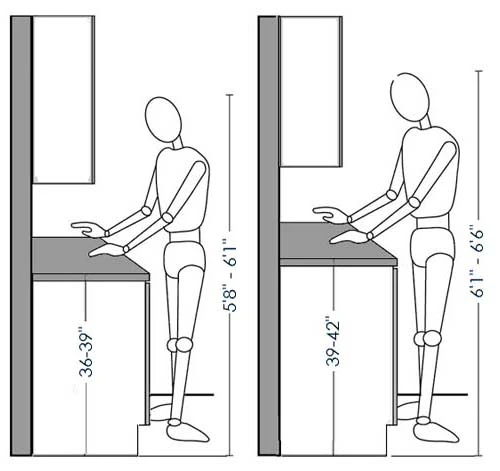
Image Source: www.regattaexports.com
Standard Kitchen Counter Height: The Foundation of Your Kitchen
The most common and widely accepted standard countertop height in the United States is 36 inches. This height has become the default for several compelling reasons, primarily rooted in ergonomics and catering to the average adult population.
Why 36 Inches? The Ergonomic Rationale
The 36-inch kitchen work surface is designed to strike a balance between several key factors:
- Elbow Height: For the majority of adults, a 36-inch counter aligns with their natural elbow height when standing. This allows for comfortable chopping, kneading, and other food preparation activities without excessive bending or reaching. A counter that is too high can strain the shoulders and arms, while one that is too low can lead to back pain.
- Appliance Integration: Many standard kitchen appliances, such as dishwashers and base cabinets, are designed to fit beneath a 36-inch countertop. This ensures a seamless and cohesive look in the kitchen.
- Accessibility: While specific considerations are needed for accessible kitchens, the 36-inch height is a good starting point for many users, providing a reasonable balance for a broad range of individuals.
Key Countertop Dimensions: More Than Just Height
Beyond height, other countertop dimensions play a significant role in usability.
- Counter Depth: The standard counter depth is typically 24 inches. This depth provides ample space for appliances like a standard-sized dishwasher or range, as well as sufficient room for prep work. For base cabinets, this is also the standard depth.
- Countertop Thickness: Countertop thickness can vary significantly depending on the material. Laminate countertops are usually around 1.5 inches thick, while granite, quartz, and marble can range from 1.25 inches to 2 inches or even thicker. The thickness influences the overall perceived sturdiness and aesthetic of the countertop.
- Overhang: A standard countertop overhang is usually 1.5 inches. This overhang provides space to open cabinet doors and drawers without obstruction and offers a more comfortable edge to lean against.
Exploring Different Kitchen Counter Heights: Variations on a Theme
While 36 inches is the standard, several other heights are common, especially in specific kitchen zones or for particular purposes.
Island Counter Height: A Versatile Workspace
Kitchen islands often feature different countertop heights to serve multiple functions.
- Standard Island Height: Many islands mirror the main kitchen counter height of 36 inches, providing an extension of the primary workspace.
- Bar Height Countertop: Some islands incorporate a higher section, often referred to as a bar height countertop. This typically measures 40 to 42 inches. This elevated surface is perfect for casual dining, serving food and drinks, or providing a standing workspace for quick tasks. It creates a distinct zone within the kitchen.
- Table Height: Less common for primary prep but seen in some designs, an island might have a section at table height (around 28-30 inches). This creates a more relaxed seating area, like a breakfast nook.
Accessible Kitchen Counter Height: Designing for Everyone
Creating an accessible kitchen counter height is vital for individuals with mobility challenges or those who use wheelchairs. The goal is to provide a comfortable and functional workspace at a lower level.
- Wheelchair Accessible Height: The recommended kitchen counter height for wheelchair users is typically between 28 and 34 inches. This allows for comfortable reach and maneuverability from a seated position. Crucially, there should be ample knee space underneath, often requiring a specially designed base cabinet or open space.
- Clearances: Beyond the height, ensuring adequate clearance around accessible counters is essential. This includes sufficient turning radius for wheelchairs and clear pathways.
Custom Kitchen Counter Height: Tailoring to Your Needs
For many homeowners, a custom kitchen counter height is the ideal solution. This allows you to fine-tune the workspace height to perfectly suit your individual needs and preferences.
Factors Influencing Custom Heights:
- Your Height: The most significant factor. Taller individuals might prefer slightly higher counters, while shorter individuals may opt for lower ones.
- Primary Users: Who will be spending the most time in the kitchen? Consider the heights of all primary users.
- Specific Tasks: Do you do a lot of baking that requires extensive kneading? A slightly lower counter might be beneficial. Do you have a lot of high-shelf storage? A slightly higher counter might make it easier to see over.
- Aesthetics: While ergonomics should be primary, you might also consider how a different height integrates with the overall design of your kitchen.
What is the ideal kitchen counter height for baking?
For baking, especially tasks like kneading dough, a slightly lower counter can be more ergonomic. Aiming for a workspace height that allows your elbows to be bent at a 90-degree angle when your hands are on the counter is a good guideline. This might mean a countertop that is 1-3 inches lower than the standard 36 inches, depending on your height.
Can I have different kitchen counter heights in the same kitchen?
Absolutely! It’s not only possible but often recommended to have different kitchen counter height zones within the same kitchen. For example, you might have a standard 36-inch main prep area, a lower 30-inch baking station, and a higher 42-inch bar area on an island for seating. This creates a more dynamic and functional layout.
Ergonomics and Kitchen Design: A Closer Look
The ergonomics of your kitchen design directly impact your comfort, efficiency, and even your health.
The Science of Workspace Height
The ideal workspace height is the one that minimizes strain and maximizes comfort. For kitchen tasks, this generally means:
- Elbow Alignment: As mentioned, a good rule of thumb is to have your kitchen work surface at a height that allows your elbows to be bent at roughly a 90-degree angle when your hands are resting on the counter.
- Reduced Bending and Reaching: Proper counter heights reduce the need for constant bending, which can lead to back strain, and reaching, which can cause shoulder and neck discomfort.
- Task-Specific Heights: Different tasks may benefit from slightly different heights. For instance, activities requiring a lot of downward force, like chopping tough vegetables or kneading dough, are often more comfortable on a slightly lower surface. Tasks that involve more vertical movement, like whisking or using a stand mixer, might feel better at a standard or slightly higher height.
Impact of Countertop Materials on Height Considerations
While the material itself doesn’t dictate the standard height, it can influence how you perceive and utilize the workspace height.
- Thicker Materials: Very thick countertops (3 inches or more) can make a standard 36-inch height feel higher. Conversely, thinner materials might make the counter feel lower.
- Edge Profiles: The type of edge profile can also subtly affect the perceived height and comfort of the kitchen work surface. A rounded or beveled edge can feel more comfortable to lean against than a sharp, square edge.
Planning Your Kitchen Layout: Considering All Heights
When planning your kitchen, think about each zone and its intended use.
The Main Prep Zone
This is where the majority of your cooking and food preparation happens. The standard countertop height of 36 inches is usually the best choice here, offering a good balance for most users.
The Baking Station
If you frequently bake, consider a dedicated baking area with a slightly lower counter. This could be a section of your main counter or a dedicated island section.
The Dining/Social Zone
For islands or peninsulas used for seating, a bar height countertop (40-42 inches) or even a table height (28-30 inches) can create distinct functional areas.
Who is your kitchen for?
Consider the primary users of your kitchen. If you have children who will be helping in the kitchen, you might consider a lower prep zone or even a pull-out step stool integrated into the cabinetry. For an accessible kitchen, specific ADA guidelines for accessible kitchen counter height must be followed.
Calculating Your Ideal Counter Height
To determine your ideal custom kitchen counter height, you can use a simple measurement.
The Elbow Test:
- Stand upright with your feet flat on the floor.
- Relax your shoulders and bend your elbows to a 90-degree angle.
- Have someone measure the distance from the floor to your bent elbow.
- Subtract 3-6 inches from this measurement. This will give you a good starting point for your ideal workspace height. For example, if your elbow height is 45 inches, subtracting 5 inches would suggest an ideal counter height of 40 inches.
It’s always a good idea to test this measurement by standing at a similar height and performing some mock kitchen tasks.
Common Questions About Kitchen Counter Heights
Here are some frequently asked questions about kitchen counter height and related dimensions.
What is the standard counter depth for kitchen cabinets?
The standard counter depth is 24 inches, which typically corresponds to the depth of standard base cabinets.
Can I have different countertop heights on my island?
Yes, it’s common and often beneficial to have different island counter height sections to accommodate various activities, such as a standard prep height and a bar height countertop for seating.
What are the dimensions of a standard kitchen island?
Standard kitchen island dimensions vary greatly, but common lengths range from 3 feet to 6 feet, and widths from 2 feet to 4 feet. The height often aligns with the main kitchen counter height of 36 inches, though variations for seating or prep are common.
How much overhang should a countertop have?
A typical countertop overhang is 1.5 inches, providing clearance for cabinet doors and a comfortable edge.
What is the ideal kitchen counter height for someone who is 5’2″?
For someone 5’2″, a standard 36-inch kitchen counter height might feel a bit high. Measuring their elbow height and calculating a custom height, likely between 31-33 inches, would be recommended for optimal comfort and ergonomics.
What are the ADA guidelines for accessible kitchen counters?
The Americans with Disabilities Act (ADA) suggests a maximum kitchen counter height of 34 inches for accessible kitchens, with a minimum clear knee space of 27 inches high, 30 inches wide, and 19 inches deep.
What is a good workspace height for chopping vegetables?
For chopping vegetables, a workspace height that allows your elbows to be at a comfortable angle, typically around 36 inches for the average adult, is ideal. If you’re shorter or taller, adjust accordingly.
What is the difference between standard height and bar height countertops?
Standard countertop height is 36 inches, while bar height countertop is typically 40-42 inches, designed for bar stools and casual dining.
How do I choose the right countertop dimensions for my kitchen?
Consider the size of your kitchen, the intended use of each counter space, and the heights of the primary users. The countertop dimensions, including depth and thickness, should complement the overall layout and functionality.
Conclusion: Finding Your Perfect Kitchen Counter Height
The kitchen counter height is a critical element in creating a functional and comfortable kitchen. While 36 inches remains the standard for good reason, don’t be afraid to explore variations and custom kitchen counter height options. By considering your own ergonomics, the intended use of each kitchen work surface, and the needs of all users, you can design a kitchen that is not only beautiful but also a joy to work in. Remember to consider factors like counter depth and how different heights can be integrated for a truly personalized and efficient space.