
Yes, you can absolutely build your own kitchen cabinet pull-out shelves! It’s a fantastic way to upgrade your kitchen storage and make accessing items in the back of cabinets much easier. This DIY project is a smart solution for retrofitting kitchen cabinets, transforming cluttered spaces into efficient, custom kitchen storage systems. By following these steps, you’ll learn how to craft homemade pullout drawers and improve your DIY cabinet organizers.
Kitchen cabinets, especially those in the lower sections, can become black holes where items get lost and are difficult to reach. Installing pull-out shelves is a game-changer for maximizing kitchen space. It brings everything within easy view and reach, making meal preparation and tidying up a breeze. This guide will walk you through the process, from choosing the right pullout shelf hardware to the final cabinet pullout installation.
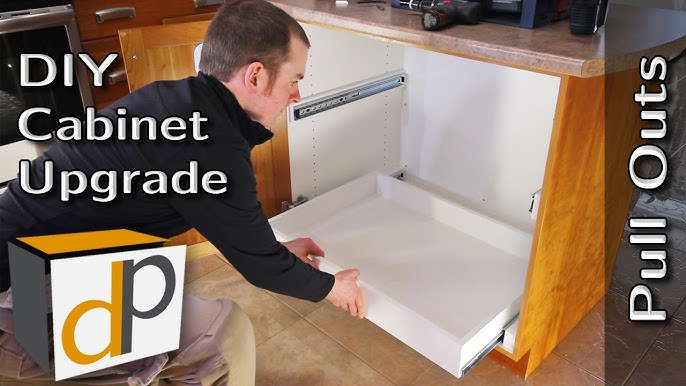
Image Source: i.ytimg.com
Why Install Pull-Out Shelves?
Before we dive into the “how,” let’s talk about the “why.” The benefits of having pull-out shelves in your kitchen are numerous:
- Accessibility: No more bending down and rummaging in the back. Everything slides out to you.
- Visibility: You can see everything at a glance, preventing items from being forgotten or expiring.
- Organization: They create neat, designated spaces for your cookware, pantry items, cleaning supplies, or small appliances.
- Space Efficiency: You can often fit more into a cabinet with pull-outs because they utilize the full depth effectively.
- Ergonomics: They are much easier on your back and knees, especially for heavy items.
- Aesthetic Appeal: They give your kitchen a modern, organized, and updated look.
Planning Your Pull-Out Shelves
Good planning is key to a successful DIY project. Let’s break down the essential steps:
Measure Your Cabinets
Accurate measurements are crucial for selecting the right materials and ensuring a perfect fit.
- Cabinet Interior Dimensions:
- Measure the width of the cabinet opening.
- Measure the height of the cabinet interior.
- Measure the depth of the cabinet interior.
- Clearance for Slides:
- You need to account for the width of the kitchen drawer slides. Standard heavy-duty slides are typically about 1/2 inch to 3/4 inch wide on each side.
- Subtract the combined width of the slides from your cabinet’s interior width to determine the maximum width for your pull-out shelf.
- Ensure there’s enough clearance at the front and back for the slides to operate smoothly.
Decide on Shelf Design
Consider what you’ll be storing on your shelves. This will influence the material, thickness, and any special features.
- Material: Plywood (birch, maple, oak) or solid wood are excellent choices for durability and aesthetics. MDF can be used but is less durable and susceptible to moisture.
- Thickness: For most kitchen items, 1/2 inch or 3/4 inch plywood is sufficient. For heavier items like small appliances, 3/4 inch is recommended.
- Depth: You’ll want your shelves to be slightly shorter than the cabinet’s interior depth to allow for the slides. A common rule is to subtract 1 to 2 inches from the cabinet depth.
- Width: Your shelf width will be the cabinet’s interior width minus the width of the slides on both sides.
- Height: The height of your shelves will depend on what you’re storing. You can create multiple levels within a cabinet by adjusting shelf heights. Ensure enough clearance between shelves for items.
Choose Your Drawer Slides
The type of kitchen drawer slides you choose will significantly impact the functionality and weight capacity of your pull-out shelves.
- Ball-Bearing Slides: These are the most common and provide smooth operation. They come in various weight capacities, from light-duty (50 lbs) to heavy-duty (up to 200 lbs). For kitchen use, aim for at least 100-150 lbs capacity.
- Full Extension: These allow the shelf to pull out completely, giving you access to the entire shelf. This is highly recommended for kitchen cabinets.
- Partial Extension: These only extend about 3/4 of the way, leaving some of the shelf inaccessible.
- Undermount Slides: These are mounted beneath the shelf and are virtually invisible when the drawer is closed. They offer a cleaner look but are typically more expensive and can be trickier to install.
- Comparison Table of Drawer Slides:
| Feature | Ball-Bearing Slides (Side Mount) | Undermount Slides |
|---|---|---|
| Visibility | Visible on the sides of the shelf. | Hidden beneath the shelf. |
| Installation | Generally easier to install. | More complex, requires precise alignment. |
| Cost | More affordable. | More expensive. |
| Weight Capacity | Wide range available, often very high. | Good weight capacity, but may be less than heavy-duty ball-bearing. |
| Aesthetics | Functional, but not as sleek as undermount. | Very sleek and modern. |
| Best Use | Budget-friendly, high-traffic areas, heavy loads, most DIY projects. | High-end kitchens, minimalist design, showcasing contents. |
For most DIY projects, heavy-duty ball-bearing slides are the best choice due to their ease of installation, affordability, and excellent weight capacity, perfect for sliding pantry shelves or DIY cabinet organizers. Look for pullout shelf hardware rated for at least 100 lbs.
Gather Your Materials and Tools
Here’s a list of what you’ll likely need:
Materials:
- Plywood or solid wood for shelves (1/2″ or 3/4″)
- Drawer slides (full-extension, heavy-duty ball-bearing recommended)
- Wood screws (appropriate length for your wood thickness and slide mounting)
- Wood glue
- Sandpaper (medium and fine grit)
- Wood finish (stain, paint, or polyurethane)
- Optional: Drawer slides mounting brackets or shims (if your cabinet interiors aren’t perfectly square)
Tools:
- Tape measure
- Pencil
- Safety glasses
- Hearing protection
- Circular saw or table saw (for cutting wood)
- Jigsaw (optional, for cutting notches if needed)
- Drill/driver with drill bits and driver bits
- Level
- Clamps
- Screwdriver
- Utility knife
- Optional: Router (for edge profiling)
Building Your Pull-Out Shelves: Step-by-Step
Now, let’s get building!
Step 1: Cut Your Shelves
Using your measurements from the planning phase, cut your plywood or wood to the desired shelf dimensions.
- Width: Cabinet interior width – (slide thickness x 2) – 1/8″ to 1/4″ clearance on each side.
- Depth: Cabinet interior depth – 1″ to 2″ (to accommodate the slides).
Example Calculation:
If your cabinet interior is 24″ wide and 3/4″ thick, and you’re using slides that are 1/2″ thick:
Shelf Width = 24″ – (0.5″ x 2) – 0.25″ = 24″ – 1″ – 0.25″ = 22.75″
If your cabinet interior depth is 23″:
Shelf Depth = 23″ – 1.5″ = 21.5″
So, your shelf dimensions would be approximately 22.75″ wide x 21.5″ deep. Always double-check your slide specifications for exact clearance needs.
Step 2: Sand and Finish the Shelves
Before installing the slides, it’s much easier to sand and finish your shelves.
- Sand: Start with medium-grit sandpaper to smooth out any rough edges or imperfections. Follow up with fine-grit sandpaper for a smooth finish.
- Clean: Wipe down the shelves thoroughly with a tack cloth or damp rag to remove all dust.
- Finish: Apply your chosen wood finish (stain, paint, or polyurethane). Follow the manufacturer’s instructions for application and drying times. A durable finish is recommended for kitchen use. Applying a finish before slide installation prevents accidental drips onto the slides.
Step 3: Prepare the Cabinet Interior
This is where you’ll prepare the cabinet to receive the slides.
- Clear the Cabinet: Remove all existing shelves and anything stored inside.
- Mark Slide Placement: This is the most critical step for proper cabinet pullout installation.
- Vertical Alignment: The slides need to be mounted perfectly level within the cabinet. Use your level to draw a horizontal line at the desired height for the bottom of the slide. Repeat for the other side.
- Horizontal Alignment: The front of the slide should be positioned to allow the shelf to sit flush with the cabinet face when closed, or slightly recessed depending on your preference and cabinet design. Again, use your level to ensure it’s perfectly parallel to the cabinet front.
- Manufacturer’s Instructions: Always refer to the specific mounting instructions provided by your pullout shelf hardware manufacturer. They often provide templates or detailed diagrams.
Tip: If your cabinet interiors aren’t perfectly square or plumb, you may need to create custom mounting surfaces. This can involve attaching thin strips of wood (cleats) to the cabinet sides that are perfectly level and plumb, and then mounting the slides to these cleats. This is essential for custom kitchen storage that looks professional.
Step 4: Install the Drawer Slides
This step requires precision.
- Separate the Slides: Most drawer slides consist of two main parts: the cabinet member (which attaches to the cabinet) and the drawer member (which attaches to the shelf). They usually separate by a small lever or clip.
- Mount Cabinet Members:
- Position the cabinet member of the slide against your marked lines inside the cabinet.
- Ensure it’s flush with the front of the cabinet or according to your plan.
- Pre-drill pilot holes through the slide’s mounting holes into the cabinet side.
- Secure the slide using wood screws. Use screws that are long enough to grip securely but not so long that they go through the other side of the cabinet material.
- Repeat for the other side, ensuring the slides are perfectly parallel and at the same height. Use a level extensively!
- Mount Drawer Members:
- On your prepared pull-out shelf, position the drawer member of the slide.
- Align it so it is flush with the edge of the shelf and the correct distance from the front (refer to slide instructions).
- Ensure it’s perfectly parallel to the shelf edge.
- Pre-drill pilot holes and secure the drawer members with screws.
Important: Double-check that the left and right slides are mounted correctly and are the mirror images of each other.
Step 5: Attach the Shelves to the Slides
Now for the satisfying part!
- Align the Shelf: Carefully align the drawer members on the shelf with the cabinet members inside the cabinet.
- Engage the Slides: Gently push the shelf into the cabinet, allowing the slide members to engage. You might need to gently lift or push a lever to fully seat them.
- Test the Movement: Carefully pull the shelf out. It should slide smoothly. If it sticks or binds, you may need to adjust the slide alignment. This is where those extra few millimeters of clearance make a big difference for sliding pantry shelves.
Step 6: Add Front Facing or Support (Optional)
For a more finished look or added support, you can add a front facing to your pull-out shelf.
- Front Facing: Cut a piece of wood to match the width of your shelf and the desired height. Attach it to the front edge of the shelf using wood glue and screws (from the underside of the shelf). This can hide the front edge of the plywood and give it a more substantial appearance.
- Drawer Box: For a more robust solution, you can build a simple drawer box to house the pull-out shelf. This is excellent for homemade pullout drawers that need to contain items. You would then mount the drawer slides to the sides of this drawer box.
Step 7: Final Touches
- Test Load: Place some weight on the shelves to ensure the slides can handle the load.
- Adjustments: If any shelf isn’t sliding perfectly, you might need to slightly loosen, adjust, and re-tighten the slide screws.
- Repeat: If you’re outfitting multiple cabinets, repeat the process for each one.
Advanced Tips for Custom Kitchen Storage
- Adjustable Cabinet Shelves: While this guide focuses on fixed pull-out shelves, consider how you might incorporate adjustable features in the future. For now, focus on precise placement for your current needs.
- Dividers and Organizers: Once your pull-out shelves are installed, you can further enhance DIY cabinet organizers by adding drawer dividers, containers, or risers to keep things neat and tidy.
- Heavy-Duty Shelves: For storing heavy appliances like stand mixers or large pots and pans, ensure you use the highest weight-rated slides available and consider reinforcing your shelves.
- Soft-Close Slides: For a premium feel, consider investing in soft-close drawer slides. These are slightly more expensive but prevent slams and add a touch of luxury.
- Full Cabinet Drawers: For deeper cabinets or for making the most of vertical space, you might opt to build full-depth drawer boxes rather than just shelves. This requires more advanced woodworking skills but offers even greater custom kitchen storage possibilities.
Frequently Asked Questions (FAQ)
Q1: How much weight can pull-out shelves hold?
A1: The weight capacity depends entirely on the drawer slides you choose. Light-duty slides might hold around 50 lbs, while heavy-duty ones can support 150-200 lbs or more. Always check the product specifications.
Q2: What type of wood is best for pull-out shelves?
A2: Plywood (like birch or maple) is generally a good choice for its stability and cost-effectiveness. Solid hardwoods like maple or oak are more durable and aesthetically pleasing but also more expensive.
Q3: How far back should the pull-out shelf go into the cabinet?
A3: You need to leave enough space for the drawer slides themselves. Typically, you’ll subtract 1 to 2 inches from the cabinet’s interior depth to allow the slides to fully retract and prevent the shelf from hitting the back of the cabinet.
Q4: Can I install pull-out shelves in upper kitchen cabinets?
A4: Yes, you can, but it’s less common. Upper cabinets are usually accessed by reaching, and the added weight and complexity of slides might not be necessary. However, if you have particularly deep upper cabinets and struggle to reach items, it’s certainly an option.
Q5: What if my cabinet interiors are not perfectly square?
A5: This is a common issue in older kitchens. You can fix this by creating “sub-fronts” or “cleats” – thin strips of wood that you attach to the cabinet sides, ensuring they are perfectly level and plumb. You then mount the drawer slides to these new, true surfaces. This is crucial for a smooth operation and professional look.
Q6: How do I prevent my pull-out shelves from tipping forward when extended?
A6: Ensure you use good quality, full-extension drawer slides that are properly installed and rated for the weight you intend to carry. If you’re still experiencing tipping with heavy loads, you might need to upgrade to even heavier-duty slides or consider a locking mechanism if available for your slide type. Proper alignment during installation is also key.
Q7: Is it worth hiring a professional for cabinet pullout installation?
A7: If you’re not comfortable with precise measurements, drilling, or working with tools, hiring a professional can save you time and potential frustration. However, for the DIY-savvy individual, this is a very achievable and rewarding project. Many companies also offer pre-made pull-out shelf systems that are easier to install.
Q8: What is the difference between drawer slides and shelf slides?
A8: For the most part, they are the same product used for different applications. The term “drawer slides” is more common, but they function identically when used to create pull-out shelves within cabinets. The critical factors are weight capacity, extension type (full vs. partial), and mounting style.
By following these detailed instructions, you can successfully build and install pull-out shelves in your kitchen. This project is a fantastic way to enhance functionality, improve accessibility, and truly start maximizing kitchen space for a more organized and enjoyable cooking experience. Happy building!