
What does it mean to disassemble a Moen kitchen faucet? Disassembling a Moen kitchen faucet means taking it apart, piece by piece, usually to fix a problem, replace a part, or perform thorough cleaning. Can I do this myself? Yes, with the right tools and this guide, you can successfully disassemble your Moen kitchen faucet. Who is this guide for? This guide is for homeowners and DIY enthusiasts who want to tackle their own Moen faucet repair or maintenance.
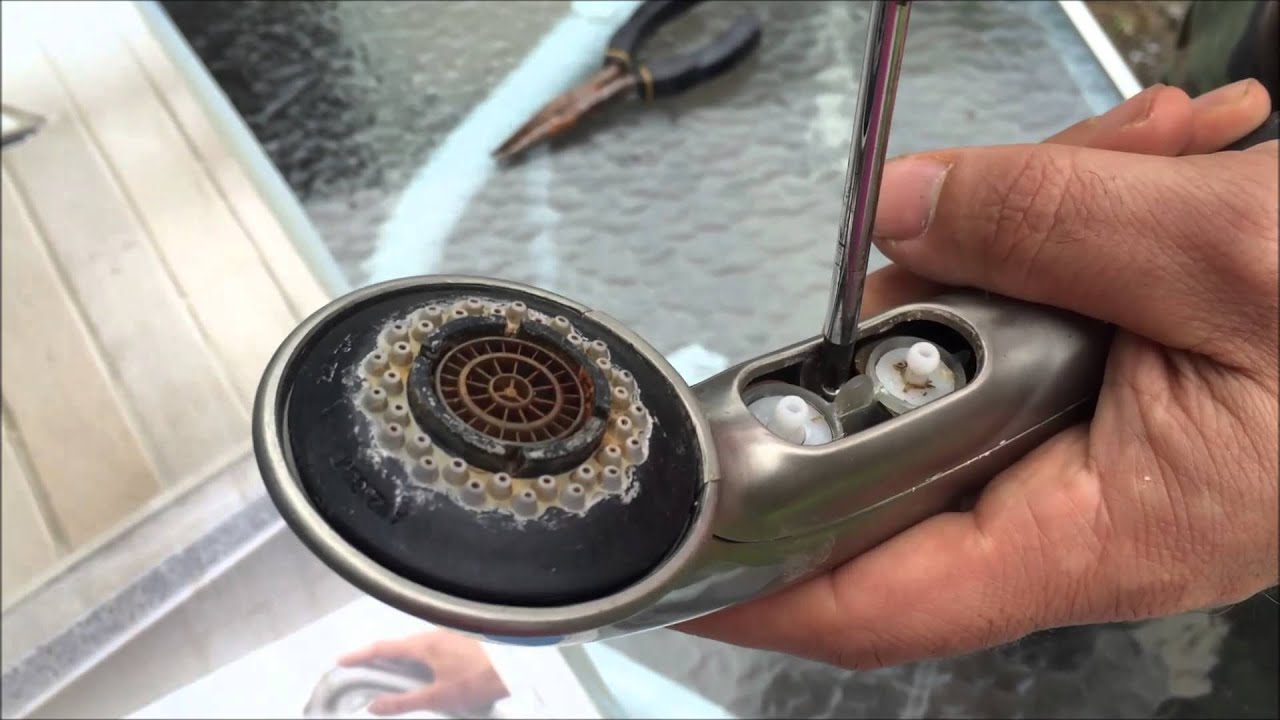
Image Source: i.ytimg.com
Preparing for Your Moen Faucet Disassembly
Before you start taking your Moen kitchen faucet apart, it’s crucial to be prepared. This means gathering the necessary tools and understanding the basics of your faucet’s anatomy. Proper preparation ensures a smoother process and minimizes the risk of damage.
Essential Tools for Moen Faucet Disassembly
Having the right tools at hand makes the job much easier. Here’s a list of common items you’ll likely need:
- Adjustable Wrench: For loosening and tightening various nuts and fittings.
- Phillips Head Screwdriver: For removing screws.
- Flathead Screwdriver: Also for screws, and sometimes for gently prying components.
- Allen Wrench Set: Many Moen faucet handles are secured with a small set screw that requires an Allen wrench.
- Pliers: Needle-nose pliers can be helpful for grasping small parts or O-rings.
- Plumber’s Grease or Silicone Lubricant: Essential for lubricating O-rings and moving parts during reassembly.
- Rags or Towels: To wipe down parts and catch any dripping water.
- Bucket or Bowl: To place disassembled parts for organization.
- Safety Glasses: To protect your eyes from debris or water.
- Penetrating Oil (Optional): For stubborn parts that might be corroded or stuck.
Identifying Your Moen Faucet Model
Moen offers a wide variety of kitchen faucet styles. Knowing your specific model can greatly simplify the process of finding the correct Moen faucet parts and understanding the disassembly sequence.
- Check the Faucet Base: Look for a Moen logo or model number often found on the underside of the spout or around the base.
- Look for a Serial Number: Sometimes, the serial number can also help identify the model.
- Consult Your Manual: If you still have the original installation or owner’s manual, it will clearly state the model number.
- Moen Website: The Moen website has a helpful “Identify Your Faucet” tool where you can upload a photo or describe its features to find your model.
Understanding Basic Faucet Components
Before you begin, familiarize yourself with the main parts of a typical Moen kitchen faucet:
- Handle: The lever or knob you use to control water flow and temperature.
- Spout: Where the water comes out.
- Aerator: The small screen at the tip of the spout that mixes air with water.
- Cartridge: The internal mechanism that controls water flow and mixing. This is often the culprit for leaks and is a common item for Moen faucet cartridge replacement.
- Escutcheon or Bonnet Nut: A decorative cover or a retaining nut that holds the cartridge in place.
- Mounting Hardware: Nuts and brackets that secure the faucet to the sink or countertop.
- Supply Lines: Hoses that connect the faucet to the water shut-off valves.
Step-by-Step Moen Faucet Disassembly
This section provides a general Moen faucet disassembly guide. Keep in mind that specific steps might vary slightly depending on your faucet model.
Step 1: Shutting Off the Water Supply
This is the most critical first step. Never attempt to disassemble a faucet without turning off the water.
- Locate Shut-Off Valves: Look under the sink for two valve handles (one for hot, one for cold) connected to the supply lines of your faucet.
- Turn Off Valves: Turn both valve handles clockwise until they are snug. Do not overtighten.
- Test: Turn on the faucet to ensure the water is completely shut off. A small amount of residual water might drip out, but there should be no steady flow.
Step 2: Releasing Water Pressure
Even after shutting off the valves, there will be some water left in the faucet.
- Open Faucet Handles: Turn on both the hot and cold handles of your faucet to drain any remaining water from the lines.
Step 3: Removing the Faucet Handle
This is often where the disassembly begins. The method for Moen faucet handle removal varies by design.
- Locate the Set Screw: Most Moen faucet handles are secured by a small set screw. This screw is usually hidden.
- Under a Decorative Cap: Look for a small cap on the front or side of the handle. Gently pry this cap off with a flathead screwdriver or a utility knife to expose the set screw.
- Under the Handle Itself: Some handles have the set screw accessible from the underside or back of the handle.
- Loosen the Set Screw: Use the appropriate size Allen wrench to turn the set screw counterclockwise. You don’t need to remove the screw completely, just loosen it enough to free the handle.
- Remove the Handle: Once the set screw is loose, the handle should lift straight up and off the valve stem. If it’s stuck, try gently wiggling it or tapping it lightly with the handle of a screwdriver.
Step 4: Removing the Handle Cover or Bonnet Nut
After the handle is off, you’ll typically find a decorative cover or a metal bonnet nut that needs to be removed to access the internal components.
- Decorative Cover: If there’s a decorative cover, it might unscrew by hand or require a wrench for a gentle turn.
- Bonnet Nut: This is usually a hexagonal nut. Use your adjustable wrench to carefully turn it counterclockwise and remove it. Be sure the wrench is snug on the nut to avoid stripping it. Protect the finish by wrapping the nut with a cloth if you are concerned about scratches.
Step 5: Accessing and Removing the Cartridge
The cartridge is the heart of your faucet. This is where Moen faucet cartridge replacement is typically done.
- Identify the Cartridge Retainer: Depending on your Moen faucet model, the cartridge may be held in place by a threaded bonnet nut or a retaining clip.
- Bonnet Nut: If you just removed a bonnet nut in Step 4, the cartridge may now be accessible.
- Retaining Clip: Some models use a small metal clip to hold the cartridge. You might need needle-nose pliers to pull this clip straight out. Make a note of its orientation for reassembly.
- Remove the Cartridge:
- If it’s a threaded bonnet nut: Once the bonnet nut is off, the cartridge should pull straight up. It might be a snug fit.
- If there’s a retaining clip: After removing the clip, the cartridge should pull straight out.
- Stubborn Cartridges: If the cartridge is difficult to remove, Moen often provides a special cartridge removal tool for specific models. Check if your faucet requires one. You can also try gently wiggling the cartridge with pliers (being careful not to damage the faucet body) or applying a small amount of penetrating oil if it’s severely stuck.
Step 6: Replacing or Cleaning the Cartridge and Other Parts
This is where you perform the actual repair or maintenance.
- Cartridge Replacement: If you suspect the cartridge is faulty, this is the time to replace it. Ensure you have the correct Moen faucet cartridge replacement for your specific model. Take the old cartridge with you to a hardware store or plumbing supply shop to match it.
- O-Ring Replacement: While the faucet is disassembled, inspect all O-rings and rubber seals. These can harden and crack over time, leading to leaks. Replace any that look worn or damaged. You can find Moen kitchen sink faucet parts kits that include all necessary O-rings and seals.
- Spout Replacement: If you are addressing a leak from the spout base or a problem with the spout itself, you will likely need to remove it after the cartridge is out. The spout is often held in place by a mounting nut or clip underneath the sink. Once loosened, the spout can be lifted off. You might need to replace O-rings at the base of the spout. This is a common step for Moen faucet spout replacement.
- Cleaning: Clean all the parts you’ve removed. Use a soft cloth and mild soap. You can also use a vinegar solution to gently clean away mineral deposits.
Step 7: Reassembly
Reassembly is essentially the reverse of disassembly.
- Install New Cartridge (if applicable): Ensure the new cartridge is oriented correctly. There are usually notches or tabs on the cartridge that align with corresponding slots in the faucet body.
- Secure Cartridge: Reinstall the retaining clip or tighten the bonnet nut to secure the cartridge.
- Lubricate: Apply a thin layer of plumber’s grease or silicone lubricant to O-rings and threads before reassembly. This helps create a good seal and makes future disassembly easier.
- Reattach Handle: Slide the handle back onto the valve stem, ensuring it’s properly aligned.
- Tighten Set Screw: Re-tighten the set screw to secure the handle. Replace the decorative cap if applicable.
- Reinstall Spout (if removed): Place the spout back, secure any mounting hardware, and replace O-rings as needed.
Step 8: Testing the Faucet
After reassembly, it’s time to check your work.
- Turn Water Supply Back On: Slowly turn the shut-off valves back on by turning them counterclockwise.
- Check for Leaks: Inspect all connections and around the faucet for any signs of dripping.
- Test Faucet Operation: Turn on the faucet to check the water flow, temperature control, and ensure there are no leaks from the spout, handle, or base.
Common Moen Kitchen Faucet Issues and Solutions
Many homeowners undertake faucet disassembly for specific problems. Here are some common issues and how disassembly can help.
Faucet Leaks
Leaks are the most frequent reason for disassembling a faucet.
- Leaking from the Spout: This often indicates a worn-out cartridge or a problem with the O-rings in the spout assembly.
- Leaking from the Handle Base: This usually points to worn O-rings or seals around the cartridge stem.
- Leaking from Under the Sink: This could be due to loose supply line connections or a problem with the mounting hardware.
Table: Common Leak Sources and Solutions
| Leak Location | Probable Cause | Solution |
|---|---|---|
| Spout Drip | Worn Cartridge, Damaged Spout O-rings | Replace Cartridge, Replace Spout O-rings |
| Handle Base Leak | Worn O-rings around Cartridge, Loose Bonnet Nut | Replace O-rings, Tighten Bonnet Nut |
| Under Sink Leak | Loose Supply Line Connections, Damaged Seals | Tighten Connections, Replace Supply Lines or Seal Kits |
| Aerator Leak (trickle) | Loose Aerator, Worn Aerator Seal | Tighten Aerator, Replace Aerator Seal or Aerator |
Low Water Pressure
Low water pressure can be frustrating.
- Aerator Clog: The aerator at the tip of the spout is a common place for mineral deposits to build up, restricting flow. Disassemble the spout tip, remove the aerator, and clean it.
- Cartridge Issues: A damaged or partially clogged cartridge can also reduce water flow. A Moen faucet cartridge replacement might be needed.
- Supply Line Obstructions: Although less common, debris can sometimes get lodged in the supply lines or the inlet ports of the faucet.
Handle Difficulties
A stiff or loose handle can be a sign of internal wear.
- Stiff Handle: Mineral buildup around the cartridge or a lack of lubrication can make the handle stiff. Cleaning and lubricating the cartridge and associated parts can help.
- Loose Handle: If the handle feels wobbly, the set screw may have loosened. Tightening it should resolve the issue. If the handle itself is damaged or stripped, you may need to replace it.
Finding Moen Faucet Parts and Resources
When you need to replace a component, having access to the right Moen faucet parts is essential for a successful Moen kitchen faucet maintenance or repair.
Where to Buy Moen Faucet Parts
- Authorized Moen Dealers: Plumbing supply stores often carry a wide range of Moen parts.
- Home Improvement Stores: Large retailers like Home Depot and Lowe’s usually have a selection of common Moen parts.
- Online Retailers: Websites like Amazon, FaucetDirect, and dedicated plumbing parts sites offer a vast inventory of Moen kitchen sink faucet parts. Always ensure you are purchasing from a reputable seller.
Using Moen’s Resources
- Moen Website: The Moen website is an invaluable resource. You can find product manuals, troubleshooting guides, parts diagrams, and even identify your faucet model.
- Customer Support: Moen offers excellent customer support. If you’re unsure about a part or a step in the disassembly process, don’t hesitate to contact them. They can often help you pinpoint the exact Moen faucet parts you need.
Maintaining Your Moen Kitchen Faucet
Regular maintenance can prevent many common issues and extend the life of your faucet.
Regular Cleaning
- Wipe Down Surfaces: Regularly wipe down the faucet with a soft, damp cloth to prevent water spots and mineral buildup.
- Clean the Aerator: Periodically unscrew and clean the aerator to maintain good water flow.
Periodic Checks
- Look for Leaks: Keep an eye out for any small drips or dampness around the faucet base or handles.
- Test Handle Movement: Ensure the handle operates smoothly.
When to Call a Professional
While this guide empowers you to handle many Moen faucet repair tasks, there are times when it’s best to call a plumber:
- Uncertainty about Your Model: If you cannot identify your faucet or find the correct parts.
- Complex Issues: For more complex plumbing problems or if you encounter issues beyond a simple part replacement.
- Lack of Confidence: If you are not comfortable performing the disassembly.
- Damage to Faucet or Plumbing: If you suspect you may have caused or are about to cause damage.
Frequently Asked Questions (FAQ)
Q1: How often should I replace the cartridge in my Moen faucet?
A1: There’s no fixed schedule. You should replace the cartridge if you experience leaks from the handle or spout, or if the water flow and temperature control become difficult. On average, a cartridge can last many years, but this depends on water quality and usage.
Q2: Can I use a regular wrench to remove the bonnet nut?
A2: Yes, an adjustable wrench is suitable. However, to protect the faucet’s finish, it’s recommended to wrap the nut with a cloth or tape before using the wrench. Ensure the wrench grips the nut firmly to avoid stripping.
Q3: My Moen faucet handle is stuck. What can I do?
A3: If the set screw is loose and the handle still won’t budge, mineral deposits or corrosion might be the cause. Try gently wiggling the handle. You can also apply a small amount of penetrating oil around the stem and let it sit for a few minutes before trying again. A specialized faucet handle puller might also be necessary for very stubborn handles.
Q4: What is the difference between a cartridge and a valve in a Moen faucet?
A4: In most modern Moen kitchen faucets, the term “cartridge” refers to the entire internal mechanism that controls water flow and temperature. Older faucet models might have separate “valves” (like ceramic disc valves or compression valves), but the concept is similar – it’s the component that regulates water. For most Moen faucets, you’ll be dealing with a cartridge.
Q5: Do I need a special tool for Moen faucet installation?
A5: While basic tools are generally sufficient for Moen faucet installation and disassembly, some specific faucet models might benefit from or require specialized tools, particularly for cartridge removal or installation. Always check your faucet’s manual for any recommended tools.
Q6: My faucet is leaking from the spout, but the handle seems fine. What should I do?
A6: This typically indicates a problem with the seals or the cartridge itself. Follow the steps in this guide to disassemble the faucet, remove the cartridge, and inspect it for wear or damage. Replacing the cartridge and any associated O-rings is usually the solution.
Q7: Where can I find a diagram for my specific Moen faucet model?
A7: The best place to find a parts diagram for your specific Moen faucet model is on the official Moen website. You can usually find it by searching for your faucet’s model number or by using their faucet identification tool. These diagrams are invaluable for identifying all the correct Moen faucet parts.
By following this comprehensive Moen faucet disassembly guide, you should be well-equipped to tackle most common Moen kitchen faucet repairs and maintenance tasks. Remember to work carefully, use the right tools, and consult additional resources if needed.