
For most homes, kitchen island lights should hang about 30 to 36 inches (76 to 91 cm) above the island surface. This distance from counter to light fixture helps lights work well. It also makes your kitchen look good. This general rule applies to many lights, including pendant light height over island. But many things can change this ideal height. Your ceiling height, the size of your island, and how tall the people in your home are all play a part. This guide helps you find the perfect spot for your kitchen island lights.
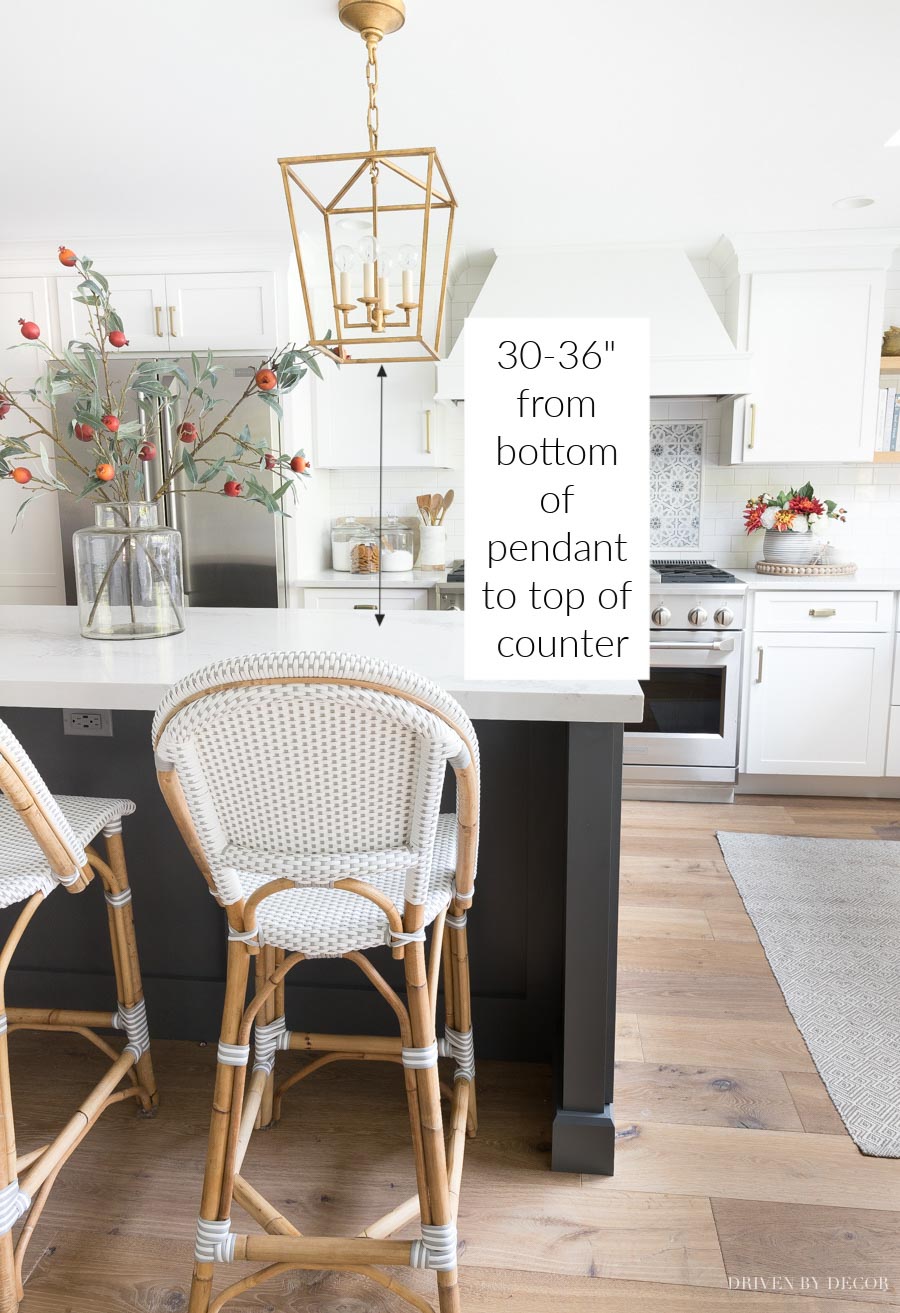
Image Source: www.drivenbydecor.com
Why Light Height Matters
Getting the light height right above your kitchen island is very important. It is not just about looks. It is also about how well the lights work. When lights hang too low, they can get in your way. They might block your view. They can also create bad shadows. This makes it hard to work. If lights hang too high, they might not light up your island enough. They could make the room feel dim. They might also look out of place.
Proper placement helps your kitchen feel cozy and bright. It makes your island a true center point. This is where you cook, eat, and spend time. Getting the height right is key for good lighting. It also makes your kitchen island lighting rules easy to follow.
Key Factors for Ideal Light Placement
Many things influence the best spot for your kitchen island lights. Think about these points before you hang any lights.
Ceiling Height Kitchen Island Lighting Needs
Your room’s ceiling height is a big deal. It changes where your lights should hang.
- Standard Ceilings (8-9 feet or 2.4-2.7 meters): With a normal ceiling, the 30 to 36 inches rule works well. This distance keeps lights from hitting your head. It also gives good light.
- High Ceilings (10 feet or 3 meters or more): If you have tall ceilings, you might hang your lights a bit higher. This helps them look right in the large space. You might go up to 40 inches (102 cm) or even more. The goal is to fill the tall space without losing light on the island.
- Low Ceilings (Under 8 feet): For lower ceilings, be very careful. You may need to use flush-mount or semi-flush-mount lights. These lights sit closer to the ceiling. If you use pendants, make sure they are small. Keep them as high as possible. You want to avoid blocking views or hitting heads. Kitchen island light clearance is extra important here.
Island Size and Shape
The size and shape of your island also affect light placement.
- Long Islands: For long islands, you will likely need more than one light. Two or three pendant lights often look best. Make sure they are spread out evenly. This helps light the whole surface.
- Square or Small Islands: A single, larger light can work well on a square or small island. A single pendant or a small chandelier can be a good choice.
- Narrow Islands: For very narrow islands, choose slim lights. You want lights that do not take up too much space. This keeps the area feeling open.
- Spacing: When using multiple lights, space them out. Aim for about 24 to 30 inches (61 to 76 cm) between each light’s center. This gives even light. It also looks balanced.
Light Fixture Type
The kind of light you choose matters. Different lights hang at different heights.
- Pendant Lights: These are common for islands. Pendant light height over island is often 30-36 inches. This is measured from the bottom of the light to the counter. For task lighting, this height works well.
- Chandeliers: A chandelier placement above kitchen island can add style. Chandeliers are usually larger. They need more space. For a chandelier, the bottom should be about 30 to 36 inches above the island. If it is very wide, you might hang it a bit higher. This keeps it from feeling too big.
- Linear Lights: These are long, single lights. They often hang over the center of the island. Their height should also be in the 30-36 inch range. This ensures the whole island gets light.
- Recessed Lights: These lights go into the ceiling. They do not hang down. They offer general light. They can be used with pendants for extra light. They do not have a hanging height.
- Track Lighting: This lets you move lights along a track. You can point them where you need light. Their height is mostly set by the track on the ceiling.
Your Height and View
Think about the people who will use the island.
- Tall People: If tall people live in your home, hang lights a bit higher. This stops them from bumping their heads. It also keeps their view clear.
- Line of Sight: The bottom of the light should not block your view. You want to see people across the island. You also want to see into other parts of the kitchen. Test this by standing at the island. Make sure the light is out of your main sight line. Optimal height for island pendants keeps views open.
Purpose of the Lighting
Why do you need light on your island?
- Task Lighting: If you cook or prepare food on the island, you need bright light. Lights should be close enough to cast good light. The 30-36 inch rule is often best for this. This helps you see clearly.
- Ambient Lighting: If the island is for general light or a cozy feel, lights can be a bit higher. This spreads light more widely.
- Decorative Lighting: If the light is mainly for looks, you have more freedom. Still, keep function in mind. Do not let it get in the way. Hanging lights over kitchen bar areas often have a decorative feel.
Standard Pendant Height Above Island
The standard pendant height above island is a good starting point. This is usually 30 to 36 inches (76 to 91 cm) from the bottom of the light to the island surface. This range works for many kitchens. It lets light spread well. It also keeps the lights out of the way.
Table 1: General Height Guide for Kitchen Island Lights
| Ceiling Height (Feet/Meters) | Ideal Light Height from Island (Inches/CM) | Notes |
|---|---|---|
| 8 feet (2.4 m) | 28-32 inches (71-81 cm) | Keep it a bit higher to ensure clearance. |
| 9 feet (2.7 m) | 30-36 inches (76-91 cm) | Standard and most common range. |
| 10 feet (3 m) | 34-40 inches (86-102 cm) | Can hang slightly higher to fill space. |
| 11+ feet (3.3+ m) | 38-44+ inches (97-112+ cm) | Adjust based on fixture size and room scale. |
This table shows a good starting point. Remember, these are guides. You may need to change them based on your specific needs.
Chandelier Placement Above Kitchen Island
A chandelier can make a grand statement above an island. Its placement needs careful thought.
Chandelier placement above kitchen island is similar to pendants. The bottom of the chandelier should be 30 to 36 inches (76 to 91 cm) above the island.
- Size Matters: A chandelier is usually bigger than a pendant. Make sure it does not overpower the island.
- Width: The chandelier should be narrower than the island. It should be at least 6-12 inches (15-30 cm) smaller on each side. This means if your island is 3 feet (91 cm) wide, your chandelier should be no more than 2 feet (61 cm) wide.
- Visual Weight: A heavy-looking chandelier might need to hang a bit higher. This keeps it from feeling too low.
- Clearance: Always ensure enough space to walk around. Also make sure you can work on the island easily.
Hanging Lights Over Kitchen Bar Areas
Kitchen bar areas are often like smaller islands. The same rules apply for hanging lights over kitchen bar.
The ideal height is still around 30 to 36 inches (76 to 91 cm) from the bar top. If it’s a breakfast bar where people sit, ensure the light does not block faces. It should not shine directly into eyes.
Steps for Finding the Right Height
It is a good idea to test the height before you put up the lights for good. Here is how:
- Measure Your Island: Write down the length and width of your island.
- Check Ceiling Height: Measure from your floor to the ceiling.
- Hold it Up: Have someone hold the light fixture. Or use a pole or string to fake it. Hold it at different heights above the island.
- Stand Back: Step back and look at the light from different spots in the kitchen.
- Sit Down: If you have stools, sit on them. See if the light blocks your view. Make sure it does not shine in your eyes.
- Walk Around: Walk around the island. Make sure you do not hit your head. Check kitchen island light clearance.
- Mark the Spot: Once you find the perfect height, mark it on the ceiling.
This testing helps you avoid mistakes. It makes sure the lights work well and look good.
Measuring Distance from Counter to Light Fixture
To get the distance from counter to light fixture right, use a tape measure.
Hold the end of the tape on the island surface. Measure up to where the bottom of the light will sit. This is the main measurement you need.
For multiple pendants, measure from the center of the island. Then space them out. Divide the island length by the number of lights plus one. This gives you spacing points. For example, a 6-foot island with 3 lights: 6 feet / (3+1) = 1.5 feet. So lights would be at 1.5 feet, 3 feet, and 4.5 feet from one end.
Important Considerations and Safety Tips
When hanging lights, safety comes first.
- Professional Help: If you are not good with electrical work, get a pro. An electrician can hang your lights safely. They make sure everything is wired right.
- Weight of Fixture: Make sure the ceiling box can hold the light’s weight. Heavy lights need special support.
- Bulb Type: Think about the bulbs. LED bulbs are energy-saving. They last a long time. Make sure the light fixture can use the bulbs you want.
- Dimmers: Adding a dimmer switch is a great idea. It lets you change the light level. Bright for cooking, dim for dining.
- Code Compliance: Check local building codes. Some areas have rules for how high things must hang. This is part of kitchen island lighting rules.
Common Mistakes to Avoid
Even small errors can make a big difference. Try to avoid these common mistakes:
- Hanging Too Low: The biggest mistake. Lights that are too low block views. They can get in the way. They can make the island feel cramped. They might even cause head bumps.
- Hanging Too High: If lights are too high, they do not give enough light. They can make the room look dim. They might also look lost in the space. They will not light your work area well.
- Wrong Number of Lights: Too few lights will not light the whole island. Too many can make it look crowded. They can also create too much light.
- Poor Spacing: Lights that are too close or too far apart look bad. They also cause uneven light.
- Ignoring Room Scale: Do not choose lights that are too big or too small for your kitchen. A tiny light in a huge kitchen looks silly. A huge light in a small kitchen can feel overwhelming.
- Forgetting Cleaning: Some lights are hard to clean. Think about how you will reach and clean them before you buy.
- Overlooking Your Needs: Your kitchen is for you. Think about how you use the island. Do you cook a lot? Do kids do homework there? This helps decide the best height and light type. This is part of how high to hang kitchen island lights.
Mastering the Look: Style and Visual Flow
The right light height helps your kitchen look good. It creates a smooth flow.
- Balance and Scale: The lights should look balanced with your island. They should also look balanced with the rest of your kitchen. The size of the light should match the size of the island.
- Visual Weight: A light with a lot of detail or a dark color has more “visual weight.” It can seem bigger. A lighter, simpler light has less visual weight. This can affect how high it feels.
- Repetition: If using multiple pendants, make sure they are the same type. This creates a pleasing look. The standard pendant height above island helps this look.
- Room Flow: Look at your kitchen from different angles. Do the lights fit into the overall design? Do they lead your eye through the room?
Ceiling Height Kitchen Island Lighting: Deeper Dive
Your ceiling height impacts almost everything about your lighting plan.
- Low Ceilings (8 feet or less):
- Goal: Maximize open space. Avoid blocking views.
- Light Choices: Recessed lights, semi-flush mounts. If pendants, choose small, simple ones. Keep them very high.
- Height Rule: Aim for the top end of the 30-36 inch range. Or even higher if needed to clear head space. Some might go 40 inches (102 cm) above the island if the light is small.
- Visual Trick: Use clear or glass pendants. They take up less visual space.
- Average Ceilings (9-10 feet):
- Goal: Good balance of light and open space.
- Light Choices: Most pendant types, small to medium chandeliers.
- Height Rule: The 30-36 inch (76-91 cm) range is perfect here.
- Options: You have lots of choices for style and size.
- High Ceilings (10+ feet):
- Goal: Fill vertical space. Provide enough light from a distance.
- Light Choices: Larger pendants, multi-tier chandeliers, linear lights.
- Height Rule: You can hang lights higher. Up to 40 inches (102 cm) or more above the island. This keeps the light in scale with the tall room.
- Impact: Taller ceilings can make a light look smaller. Choose lights that are big enough to make an impact.
How High to Hang Kitchen Island Lights: A Practical Guide
When you are ready to hang your lights, follow these steps for the best results.
- Turn Off Power: Always turn off the power at your main breaker box first. This is for your safety.
- Assemble Lights: Put together your lights according to the maker’s instructions.
- Determine Hanging Length: This is where your chosen height comes in. Most pendant lights have an adjustable cord or rod. You need to figure out how much cord to leave.
- Calculation: Measure the total height from ceiling to island. Subtract your desired light height (e.g., 36 inches). The number you get is roughly how long the light and its hanging rod/chain should be.
- Example: Ceiling is 9 feet (108 inches) high. You want the light 36 inches above the island.
- 108 inches (ceiling) – 36 inches (height above island) = 72 inches (total hanging length needed from ceiling).
- Then, subtract the light fixture’s own height from this 72 inches. This gives you the length of the chain/cord.
- Install Mounting Bracket: Attach the light’s mounting bracket to the ceiling electrical box.
- Wire the Light: Connect the wires. Match black to black, white to white, and ground to ground.
- Attach Fixture: Carefully attach the light fixture to the mounting bracket.
- Test: Turn the power back on. Test the lights.
- Fine-Tune: If your light allows, you can make small height changes later.
Remember, the goal is good light for tasks. It also needs to look good. This is the art of kitchen island lighting rules.
Reviewing Light Output and Bulb Type
The type of bulb and its brightness matter. They can influence how high a light feels.
- Brightness (Lumens): Lumens tell you how bright a bulb is. For task lighting over an island, aim for 700-1000 lumens per pendant.
- Color Temperature (Kelvin): This is how warm or cool the light looks.
- 2700K-3000K: Warm white, cozy feel.
- 3500K-4000K: Neutral white, good for tasks.
- 5000K+: Cool white, like daylight.
- Most kitchens do well with 3500K-4000K for task lighting.
- Beam Spread: Some bulbs have a narrow beam. Others spread light wide. For task lighting, a wider spread is often better. This covers more of the island.
- Dimmers: Again, dimmers are great. They let you adjust the mood. You can have bright light for chopping veggies. Then dim it for a relaxed dinner.
The right light output ensures that your optimal height for island pendants actually lights the area well.
Frequently Asked Questions (FAQ)
Q: Can I mix different types of pendant lights over my island?
A: Yes, you can mix them. But it is best to stick to a consistent style or color. Keep their hanging height the same or very similar. This makes the look cohesive.
Q: What if my island is really long? How many lights do I need?
A: A good rule is one pendant for every 2-3 feet (61-91 cm) of island length. So, a 9-foot (2.7 m) island might need three or four lights. Make sure they are evenly spaced.
Q: My lights seem too dim. Is it the height or the bulb?
A: It could be both. First, check your bulbs. Are they bright enough (enough lumens)? Is their wattage too low? If the bulbs are bright, the lights might be too high. When lights are too high, the light spreads out too much. It does not focus on the island. Lowering the light or adding brighter bulbs can help.
Q: Do I need a professional to hang my kitchen island lights?
A: If you are not comfortable with electrical work, yes. It is always safest to hire a licensed electrician. They ensure the wiring is correct. They also make sure it meets safety codes. This gives you peace of mind.
Q: How close can pendant lights be to the edge of the island?
A: Keep lights at least 6 inches (15 cm) in from the edge of the island. This prevents head bumps. It also makes the light look centered over the usable space. It ensures good kitchen island light clearance.
Q: How high should a rectangular linear fixture hang over an island?
A: A rectangular or linear fixture should follow the same rules. Hang it 30 to 36 inches (76 to 91 cm) above the island surface. This gives good task lighting across the whole fixture.
Q: What is the best way to clean my kitchen island lights?
A: Always turn off the power first. Use a soft, dry cloth for dust. For smudges, use a damp cloth with mild soap. Dry them right away. Avoid harsh chemicals. For glass shades, a glass cleaner can work.
Conclusion
Getting the height right for your kitchen island lights is important. It affects how your kitchen looks and how well you can work there. The general rule is 30 to 36 inches (76 to 91 cm) above the island. But remember to think about your ceiling height, island size, and your own height. Use the tips and tables in this guide. Test the height before you install. By following these kitchen island lighting rules, you can create a kitchen that is both beautiful and functional. Your kitchen island will shine bright.