
Image Source: cdn.kitchencabinetkings.com
How Wide Are Kitchen Counters: Your Guide to Perfect Fit
How wide are kitchen counters? Kitchen counters are usually 25 inches deep from the wall to the front edge. This common size gives you good workspace. It also includes a small edge that hangs over the front of your cabinets. This standard kitchen counter depth is set to fit most base cabinets. It also leaves room for common appliances like dishwashers. But, kitchen islands and peninsulas can be much wider. Custom projects might also have different sizes.
The Common Kitchen Counter Width
Most kitchen counters have a depth of about 25 inches. This is a very common size across many homes. It makes sure your kitchen works well. It also helps with how your kitchen looks. This specific standard countertop dimensions measurement is not by chance. It comes from how kitchen cabinets are made and how people use their kitchens every day.
Why 25 Inches is the Norm
The 25-inch depth is standard for good reasons. It gives you enough space for most kitchen tasks. You can chop food, prepare meals, and use small appliances easily. Think about your toaster, coffee maker, or blender. They fit well on this depth. This size also helps with installing things like sinks and faucets. Most sinks are made to fit into a counter this deep.
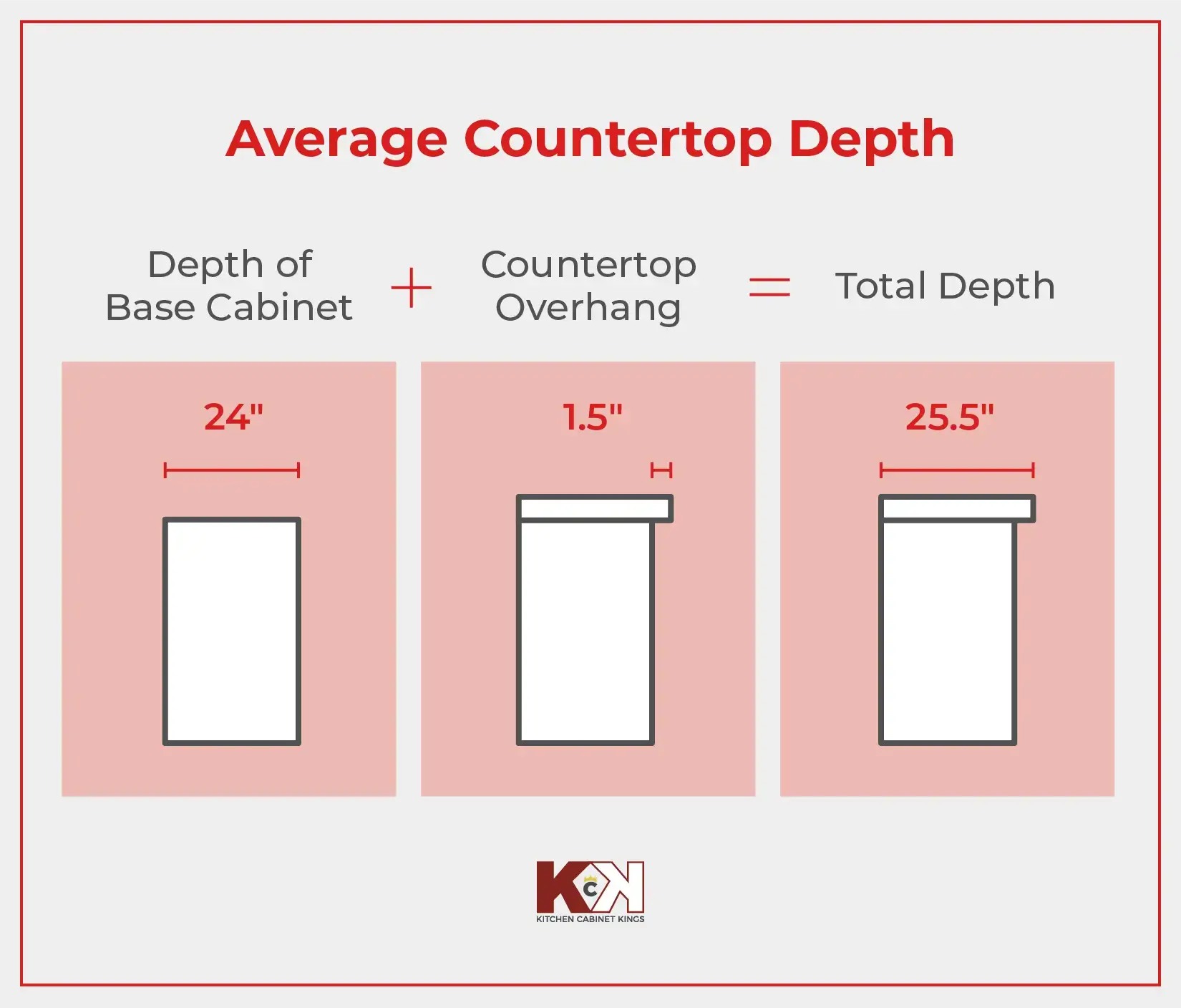
The 25-inch depth works with base cabinet depth. Most base cabinets are 24 inches deep. This 24-inch depth is the main part of your counter space. It gives you storage below. The extra inch of counter width comes from an overhang. This overhang protects your cabinets. It also helps you open cabinet doors and drawers more easily.
The goal is to make kitchens easy to use. This standard depth helps designers and builders. They know most items will fit. This saves time and money. It also makes sure your kitchen works right.
Here is a table showing standard counter dimensions:
| Counter Part | Typical Depth | What it does |
|---|---|---|
| Base Cabinet Depth | 24 inches | Main part of cabinet below counter |
| Countertop Overhang | 1 inch | Front edge that sticks out past the cabinet |
| Total Counter Depth | 25 inches | Overall depth from wall to front of counter |
Grasping the Parts of Counter Width
To truly know how wide your counters are, you need to look at their parts. A kitchen counter is more than just a flat slab. It sits on cabinets. It has an edge that hangs out. Both of these parts are important for the total width.
The Role of Base Cabinets
Base cabinet depth is the main support for your counter. These cabinets sit on the floor. They form the base of your kitchen. Most standard base cabinets are 24 inches deep. This means they stick out 24 inches from the wall. This depth is set by how appliances are made. It also matches the size of common kitchen items.
These cabinets are the backbone of your kitchen layout. They hold your sink, dishwasher, and other items. The counter rests right on top of these cabinets. So, the depth of your base cabinets directly affects how deep your standard kitchen counter depth will be. If your cabinets are shallow, your counter will be shallow. If your cabinets are deep, your counter will be deep.
The Importance of Countertop Overhang
The countertop overhang depth is the part of the counter that sticks out past the front of the base cabinets. This small overhang is very important. For most standard counters, this overhang is about 1 inch.
Here is why this small overhang matters:
* Protection: It protects your cabinet fronts. When you spill something, the liquid drips onto the floor, not down the cabinet doors. This helps keep your cabinets looking good for longer. It also stops water from damaging the wood.
* Ease of Use: The overhang gives you a little extra room. You can open cabinet doors and drawers without your knuckles hitting the counter edge. This makes using your kitchen much easier. It also lets you lean against the counter without bumping your knees.
* Looks: The overhang gives a finished look to your kitchen. It creates a clean line. It makes the counter look like it is floating just a bit. This adds to the overall design of your kitchen.
While 1 inch is common, some counters may have a slightly smaller or larger overhang. This depends on the style you like. It also depends on what your kitchen needs. For example, a thicker counter material might have a different overhang.
When Counters Are Not Standard
Not all kitchen counters are 25 inches deep. Sometimes, you need a different size. This could be because your kitchen is small. Or maybe you need extra space. These special sizes are often called custom countertop dimensions. They can be either more shallow or more deep than the usual.
Shallow Depth Kitchen Counters
Shallow depth kitchen counters are narrower than the standard 25 inches. They might be 18 to 22 inches deep. Why would you want a shallow counter?
* Small Kitchens: In very small kitchens, every inch counts. A shallow counter can free up space. This makes it easier to move around. It can make a tight kitchen feel bigger.
* Hallways or Walkways: If a counter is next to a hallway, a shallow depth helps keep the path clear. This stops people from bumping into the counter.
* Specific Needs: Maybe you only need a small counter for a coffee station. Or you want a narrow desk area in the kitchen. A shallow counter fits these special uses.
* Old Homes: Some older homes have very narrow kitchen spaces. Standard counters might not fit. Shallow counters can be the only option.
But, shallow depth kitchen counters have limits. A standard kitchen sink needs a certain depth to fit. Many dishwashers also need a full 24-inch cabinet depth. So, if you go shallow, you might need to choose smaller sinks or other appliances. You also have less workspace. This means less room for cooking or preparing food.
Deep Kitchen Countertops
On the other hand, some kitchens use deep kitchen countertops. These counters are wider than 25 inches. They might be 30 inches, 36 inches, or even more. Why choose deep counters?
* More Workspace: A deep counter gives you a lot more room to spread out. You can have items near the wall. You still have plenty of space in front for chopping or mixing.
* Large Appliances: Some large professional-grade appliances need more depth. A deep counter can fit these bigger items better.
* Hidden Outlets: You can place outlets far back on a deep counter. This keeps them out of sight. It makes the front of your counter look cleaner.
* Storage at the Back: You can use the back of a deep counter for storage. Put jars, containers, or small appliances there. They are out of the way but still easy to reach.
* Special Designs: Some kitchen designs look great with deeper counters. They can give a luxurious feel.
If you choose deep kitchen countertops, you will need deeper base cabinet depth. This means you cannot use standard 24-inch cabinets. You will need custom cabinets. Or, you might build out the wall behind the cabinets. This adds to the cost. But, it gives you a very functional and open workspace.
Special Counter Areas and Their Widths
Kitchens often have more than just straight counters along a wall. Many homes have islands or peninsulas. These special areas have their own depth needs. Their kitchen counter measurements can be very different from wall counters.
Kitchen Island Dimensions
A kitchen island is a freestanding counter in the middle of your kitchen. It is not against a wall. This means it can be very wide. There are no walls to limit its depth. Kitchen island dimensions vary greatly. They depend on how you will use the island.
Many islands are designed for more than just prep work. They often have seating. If you add seating, the island needs more countertop overhang depth. This overhang gives space for knees. For comfortable seating, you need about 12 to 15 inches of overhang.
Typical island depths often range from 36 inches to 48 inches or more. This depth includes:
* Standard 24-inch deep cabinets on one side.
* A space for plumbing or electrical if needed.
* An overhang for seating on the other side.
For example, a common island might have:
* 24 inches of base cabinet depth for storage.
* A 1-inch countertop overhang depth on the working side.
* A 12 to 15-inch countertop overhang depth on the seating side.
* This makes the total island depth around 37 to 40 inches.
Islands must also have enough walk-around space. You need at least 36 to 42 inches of clear space around all sides of the island. This allows people to move freely. It also lets appliances open without hitting the island. Make sure to plan your kitchen island dimensions carefully.
Here is a table for common island seating overhangs:
| Seating Type | Recommended Overhang Depth |
|---|---|
| Bar Stool | 12 inches |
| Counter Stool | 15 inches |
| Table Height | 18 inches |
Kitchen Peninsula Width
A kitchen peninsula is like an island. But, it connects to a wall on one side. It extends into the room. It has three open sides. Kitchen peninsula width is often similar to island widths. They can also offer seating or extra workspace.
Like islands, peninsulas often have base cabinet depth of 24 inches on one side. They also commonly include an overhang for seating. A common depth for a kitchen peninsula is 36 to 42 inches.
Think about these points for a peninsula:
* Walkway: Make sure there is enough space around the open end. Just like an island, you need room to walk.
* Seating: If you want bar stools, plan for enough overhang (12-15 inches).
* Traffic Flow: Peninsulas can guide traffic in a kitchen. Make sure it does not block main pathways.
* Appliance Placement: Think about where appliances will go. A stove or sink in a peninsula needs careful planning for space and plumbing.
Peninsulas are a great way to add counter space. They also offer informal dining. They work well in L-shaped or U-shaped kitchens. They can define the kitchen space without fully closing it off.
Getting Custom Countertop Dimensions
Sometimes, a standard counter just will not work. Or, you have a very specific vision for your kitchen. This is when custom countertop dimensions become important. Custom counters are made to fit your exact space and needs.
Why Choose Custom?
There are many reasons to choose custom counter sizes:
* Unique Kitchen Shape: Your kitchen might have odd angles or curves. Standard counters might leave gaps. Custom counters fit perfectly into these unique spots.
* Old Homes: Older homes often have walls that are not straight or square. Standard pre-cut counters will not align well. Custom counters can be made to follow the exact lines of your old walls.
* Special Appliances: You might have a very large stove or an extra-deep refrigerator. These may need deeper counters. Or, you might want a very shallow counter for a specific coffee bar area.
* Personal Design: You might want a counter that is unusually long or has a special shape. Maybe you want a very long island or a counter that curves around a pillar. Custom work makes this possible.
* Special Materials: Some materials are only available for custom cuts. These might be unique stone slabs.
Choosing custom countertop dimensions means you get exactly what you want. You are not limited by common sizes. This gives you more design freedom. It also ensures every inch of your counter space is used wisely.
Working with Pros
When you go custom, working with skilled professionals is key. Countertop fabricators and installers are experts. They use special tools and methods.
* Templating: The first step is often “templating.” This means they come to your home. They make an exact pattern of your cabinets and walls. They use this pattern to cut your counter material. This ensures a perfect fit. It accounts for any wall bumps or uneven spots.
* Material Choice: They can guide you on materials. They know what works best for different depths and uses.
* Installation: Custom counters can be heavy and tricky to install. Pros have the right equipment and experience. They install the counter safely and correctly. This makes sure it is level and secure.
While custom countertop dimensions cost more, they offer unmatched precision. They ensure your counters fit your home perfectly. They also match your lifestyle. This leads to a kitchen that looks great and works wonderfully.
Measuring Your Kitchen Counters Accurately
Getting the right kitchen counter measurements is very important. Whether you are buying standard counters or custom ones, good measurements stop problems later. Wrong numbers mean counters that do not fit. This can cost you time and money.
Key Steps for Kitchen Counter Measurements
- Measure Base Cabinet Depth: Start by measuring your base cabinets. Measure from the wall to the front edge of the cabinet box. Most will be 24 inches. Write this down.
- Add Desired Overhang: Remember the
countertop overhang depth. If you want a standard 1-inch overhang, add 1 inch to your cabinet depth. So, 24 inches (cabinet) + 1 inch (overhang) equals 25 inches total depth. - Check for Uneven Walls: Walls are not always perfectly straight. Measure the depth at a few spots along the wall. Measure the front of the cabinets too. Take the largest measurement. This ensures your counter will not be too shallow.
- Account for Appliances: If you have special appliances like a deep refrigerator or a professional range, measure them. Make sure your counter depth will work with them. Sometimes, you need to adjust cabinet depth to match.
- Measure Lengths: Also measure the length of each counter section. Measure from wall to wall. Or measure from the wall to the edge of an appliance opening. Always measure twice. It is a good rule to measure in three spots: front, middle, and back. Use the longest measurement.
- Sketch it Out: Draw a simple sketch of your kitchen. Label all measurements clearly. This helps you keep track. It also helps explain things to your counter supplier.
- Consider Special Areas: For islands or peninsulas, measure their full depth. Include any seating overhangs. Make sure you have enough walk-around space around them.
Tools You Will Need
- Tape Measure: A good, long metal tape measure is a must. It should be at least 25 feet long.
- Pencil and Paper: For writing down all your numbers.
- Level: To check if your cabinets are level. This helps ensure your counter will also be level.
- Helper: An extra set of hands can make measuring much easier. Especially for long runs.
Taking accurate kitchen counter measurements helps you get the right materials. It makes sure your new counters fit well. This avoids headaches and extra costs.
The Impact of Counter Width on Kitchen Design
The depth of your kitchen counters plays a big role in your kitchen’s overall design. It affects how the kitchen looks. It also changes how well it works. The standard kitchen counter depth of 25 inches is a safe bet for most homes. It offers a good balance.
In a small kitchen, a standard or even shallow depth kitchen counters can make a big difference. They help the room feel more open. They keep pathways clear. In a large kitchen, deep kitchen countertops can create a grand feel. They offer vast work surfaces. They can also handle large appliances.
Kitchen island dimensions and kitchen peninsula width are also key. A large island can be the center of your kitchen. It can be a place for cooking, eating, and gathering. A peninsula can define space in an open-concept home.
The right counter depth ensures good “flow.” This means you can move easily from one task to another. It means your kitchen feels comfortable. It also affects the look. Deep counters can make a kitchen look more luxurious. Shallow counters can make a space feel modern and minimal. Your chosen counter width should always match your kitchen’s size and your cooking style.
Frequently Asked Questions (FAQ)
Q: Can I put a shallow counter in a standard kitchen?
A: Yes, you can use shallow depth kitchen counters in a standard kitchen. But, you must check that your sink and appliances will still fit. You will also have less workspace.
Q: How much overhang do I need for bar stools?
A: For comfortable seating at a counter, you should aim for about 12 to 15 inches of countertop overhang depth. This gives enough room for knees and legs.
Q: Do all appliances fit standard counter depths?
A: Most common kitchen appliances, like dishwashers and standard ranges, are made to fit with a standard kitchen counter depth of 25 inches (which sits on 24-inch base cabinet depth). However, some professional or larger appliances might need deeper counters. Always check appliance specs.
Q: What if my walls are not straight when measuring?
A: If your walls are not straight, take your kitchen counter measurements at several points. Use the largest measurement. This ensures your custom or standard counter will fit without gaps at its deepest points. Professional templating is best for uneven walls.