
How big are kitchen trash bags? Kitchen trash bags come in many sizes. Their size is usually measured by gallon capacity. The most common size for kitchen use is 13 gallons. But bags also vary in width and length. These trash bag dimensions help them fit different cans. Choosing the right size stops bags from slipping or overflowing. This guide will help you pick the perfect bag for your kitchen.
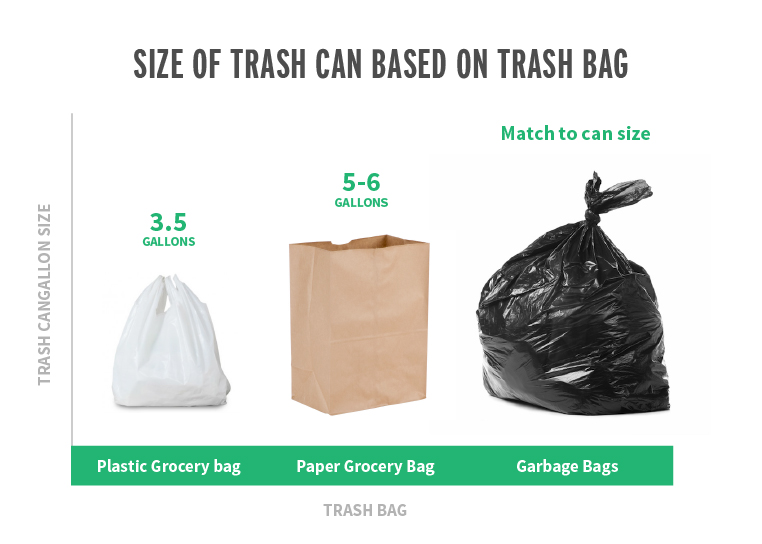
Image Source: trashcansunlimited.com
The Core of Trash Bag Size: Gallons
When you buy trash bags, the first thing you see is the gallon number. This number tells you how much space is inside the bag. It shows the garbage bag volume.
What Gallon Capacity Means
Gallon capacity is a way to measure liquid. For trash bags, it means how much trash the bag can hold. Think of it like a bucket. A 13-gallon bag can hold 13 gallons of water. It also holds 13 gallons of trash. This is the main way we talk about bag size.
- Small bags: These are often 4 to 8 gallons. They fit small bathroom bins or office bins.
- Medium bags: These can be 10 to 13 gallons. The 13-gallon bag is very popular for kitchens. It’s often called a tall kitchen bag.
- Large bags: These go from 20 gallons up to 55 gallons or more. You use these for big cleanups. They are good for yard waste or large household trash bins.
Why Gallons Matter
Knowing the gallon size is key. It helps you match the bag to your trash can. If your can is 13 gallons, you need a 13-gallon bag. A bag that is too small will not fit. It will rip or fall into the can. A bag that is too big will waste material. It will also look messy. The right gallon size makes things easy. It helps keep your kitchen clean.
Beyond Gallons: Grasping Trash Bag Dimensions
Gallons tell you the volume. But trash bags also have shape. This shape is shown by their width and length. These trash bag dimensions are very important. They tell you if the bag will fit around your can. They also tell you if it will reach the bottom.
Width and Length Explained
- Width: This is the measurement across the bag. It’s how wide the opening is. Or, it’s how wide the bag lays flat. You need enough width for the bag to wrap around your can’s rim.
- Length: This is the measurement from the opening to the bottom of the bag. You need enough length for the bag to reach the bottom of your can. You also need a little extra to fold over the rim.
These two numbers tell you more than just gallons. Two bags can both be 13 gallons. But one might be wider and shorter. The other might be narrower and taller. This is why checking dimensions is good.
Flat vs. Gusseted vs. Star-Bottom Bags
Not all bags are shaped the same at the bottom. This affects how they hold trash. It also changes their usable space.
- Flat Bags: These bags are like a simple pillowcase. They have a flat bottom. Their width measurement is usually a single number. For example, 24 inches wide. When you fill them, the corners stay empty. They don’t stretch well into round cans.
- Gusseted Bags: These bags have extra folds on the sides. Think of them like a paper grocery bag. The sides are tucked in. When you open the bag, these folds expand. This gives the bag more room. It helps them fit square or rectangle cans better. A gusseted bag might list two widths. For example, 15 inches + 7 inches gusset. This means it is 15 inches wide flat. The 7-inch gusset adds extra space.
- Star-Bottom Bags: These bags have a special seal at the bottom. It looks like a star. This design lets the bag stretch and shape to fit the can. It uses all the space in the bag. Star-bottom bags are very common for kitchen trash cans. They fit both round and square cans well. Most tall kitchen bag gallons are star-bottom.
How to Measure Your Can for the Right Bag Fit
To find the best kitchen trash can liner sizes, you need to measure your can. Do not just guess. It is easy to do.
-
Measure the Can’s Height:
- Use a tape measure.
- Measure from the bottom of your can to its top rim.
- Add 4 to 6 inches to this number. This extra length lets the bag fold over the rim. It also keeps the bag from falling in.
-
Measure the Can’s Circumference (Distance Around):
- If your can is round:
- Measure the distance across the top opening. This is the diameter.
- Multiply the diameter by 3.14 (pi). This gives you the circumference.
- If your can is square or rectangle:
- Measure all four sides of the top opening.
- Add these four measurements together. This gives you the circumference.
- If your can is round:
-
Find the Bag’s Flat Width:
- Take the circumference number you just found.
- Divide it by 2. This is the flat width you need for your bag.
- For example, if your can’s circumference is 48 inches, you need a bag that is at least 24 inches wide when laid flat.
Example Measurement:
Let’s say your kitchen can is:
* Height: 20 inches
* Diameter (round can): 12 inches
- Needed Bag Length: 20 inches (can height) + 6 inches (overlap) = 26 inches.
- Can Circumference: 12 inches (diameter) * 3.14 = 37.68 inches.
- Needed Bag Flat Width: 37.68 inches / 2 = 18.84 inches.
So, you would look for a bag that is about 19 inches wide and 26 inches long. The gallon size usually matches these numbers.
Standard Kitchen Bag Sizes: A Quick Guide
Most people use a few key sizes for their kitchen trash. These are the standard kitchen bag sizes.
The Popular 13-Gallon Bag (Tall Kitchen Bag Gallons)
The 13-gallon size is the king of kitchen trash bags. It is designed to fit most standard kitchen trash cans. These cans are usually about 25-28 inches tall.
- Typical Dimensions: A 13-gallon bag often measures about 24 inches wide by 27-29 inches long. These bags usually have a star-bottom seal. This helps them fit neatly.
- Why it’s popular: It holds a good amount of trash for a family. It fits inside common kitchen cabinets. Many kitchen trash cans are made to fit this size. It is sometimes called a tall kitchen bag gallons size.
Other Common Sizes
While 13 gallons is king, other sizes are used in kitchens too.
- Small Kitchen Trash Bags (4-8 Gallons):
- These bags are for smaller cans.
- You might use them for a compost bin on the counter. Or for a small waste bin under the sink.
- They are good for single people or small apartments.
- Typical dimensions for an 8-gallon bag: about 17-18 inches wide by 20-22 inches long.
- Large Kitchen Trash Bags (20-30 Gallons):
- Some homes have very large kitchen cans. These might be 20 gallons or 30 gallons.
- This is common for big families. Or for people who produce a lot of trash.
- A 30-gallon bag might be around 30 inches wide by 37 inches long.
- These bags are thicker too. They need to hold more weight.
- Sometimes these are called contractor bags or heavy-duty bags. But they can also be used for large kitchen trash cans.
Here is a table of common kitchen trash bag sizes:
| Gallon Capacity | Typical Dimensions (Width x Length) | Common Use |
|---|---|---|
| 4 Gallon | 17 in x 18 in | Small bathroom, office, countertop bins |
| 8 Gallon | 17.5 in x 20 in | Small kitchen, compost, medium bathroom bins |
| 10 Gallon | 22 in x 24 in | Medium kitchen, smaller pantry bins |
| 13 Gallon | 24 in x 27 in to 29 in | Standard kitchen trash cans (most popular) |
| 20 Gallon | 28 in x 30 in | Large kitchen, outdoor/garage, large office |
| 30 Gallon | 30 in x 37 in | Extra large kitchen, outdoor, heavy duty |
Note: Dimensions can vary slightly by brand and bag type (flat, gusseted, star-bottom).
Matching Bags to Cans: Kitchen Trash Can Liner Sizes
Finding the right kitchen trash can liner sizes is important. A good fit means less mess. It also means less frustration.
Finding the Perfect Fit
You want a bag that fits snugly. It should not be too tight. It should not be too loose.
- Not too tight: A bag that is too tight will be hard to put on. It might rip when you try to fill it. It might also pull down into the can.
- Not too loose: A bag that is too loose will fall into the can. Your trash will get stuck between the bag and the can. This is messy.
Use the measuring guide from earlier. Measure your can. Then, look at the bag’s measurements. Do not just look at the gallon size. Check the width and length too. This is especially true for cans that are not a standard shape. For example, very tall and narrow cans. Or very wide and short cans.
Tips for a Snug Fit
- Look for bags with ties: Drawstring bags are great. The drawstring cinches the bag tight around the rim. This stops it from falling in.
- Choose the right bottom: Star-bottom bags are best for most kitchen cans. They mold to the can’s shape.
- Consider the can’s shape: If you have a round can, a star-bottom bag is ideal. If you have a square can, a gusseted bag might also work well.
- Don’t overfill: Even with the right bag, overfilling can cause problems. It can make the bag rip or fall into the can.
Waste Bin Bag Measurements: A Deep Dive
Different rooms have different bins. This means they need different waste bin bag measurements.
Small Bins
Small bins are often in bathrooms, bedrooms, or offices. They hold light trash.
- Sizes: 4-gallon and 8-gallon bags are common. Some bins might use even smaller, 2-gallon bags.
- Use: Tissues, paper, small wrappers.
- Dimensions: These bags are usually 15-20 inches wide and 18-24 inches long.
- Material: They are often thinner. They do not need to be super strong.
Medium Bins
These are bigger than bathroom bins but smaller than kitchen ones. They might be in a laundry room or a child’s bedroom.
- Sizes: 8-gallon to 10-gallon bags.
- Use: Everyday waste, small items of clothing, paper.
- Dimensions: Roughly 20-22 inches wide by 22-24 inches long.
- Material: A bit stronger than small bags.
Large Bins
These include the main kitchen trash can. They also include garage bins or large outdoor bins.
- Sizes: 13-gallon (kitchen), 20-gallon, 30-gallon, 33-gallon, and up to 55-gallon.
- Use: Food waste, general household trash, heavy items, yard waste.
- Dimensions: These vary greatly. For example, a 55-gallon bag might be 38 inches wide by 58 inches long.
- Material: Often thick and strong. This helps them hold heavy or sharp items.
Specialty Bins
Some bins have special shapes or uses.
- Tall & Slim Cans: These cans are narrow but very tall. You will need a bag that is long enough. The width might be smaller than a typical 13-gallon bag. Check dimensions carefully.
- Recycling Bins: These can be many sizes. Some are small, some are large. They might hold bottles or cans. The bag needs to be strong enough for the weight.
- Compost Bins: These are usually small. They hold food scraps. They need special compostable bags. These bags break down over time. Their sizes range from 2-gallon to 8-gallon.
Deciphering Garbage Bag Volume
When we talk about garbage bag volume, we mostly talk about gallons. But there is more to it. The material of the bag also plays a big part.
How Volume Relates to Gallons
As stated, gallons give a direct measure of volume. A 13-gallon bag holds the same volume as 13 gallons of water. This is a simple way to think about it. It makes comparing bags easy. You can quickly see which bag holds more.
Considering Bag Strength and Thickness (Mil)
Volume is about how much space. Strength is about how much weight or stress a bag can handle. This is measured in “mil.”
- What is “Mil”? Mil is a unit of thickness. One mil is one-thousandth of an inch (0.001 inch). The higher the mil number, the thicker the bag. Thicker bags are stronger.
- Thin Bags (0.5 – 0.9 Mil): These are light-duty bags. They are good for light trash. Think paper, dry waste, or bathroom trash. They are often cheaper.
- Medium Bags (0.9 – 1.2 Mil): These are standard kitchen bags. Most 13-gallon bags fall into this range. They handle general kitchen waste well. They resist small tears.
- Heavy-Duty Bags (1.2 – 3.0 Mil and higher): These are for heavy or sharp trash. You might use them for moving. Or for yard waste, construction debris, or very large kitchen bins. They are much harder to puncture or rip.
Why Mil Matters:
Imagine putting wet coffee grounds in a thin bag. It might tear. Now put them in a medium-duty bag. It will hold. If you are cleaning out a garage, you need a heavy-duty bag. It will hold sharp wood pieces or broken glass. Always think about what you throw away. Then pick the right mil thickness.
Liter Trash Bags: The Metric System Explained
While gallons are common in the US, many other countries use liters. So you might see liter trash bags.
Converting Liters to Gallons
It is easy to switch between liters and gallons.
- 1 US liquid gallon is about 3.785 liters.
- 1 liter is about 0.264 US liquid gallons.
So, a 50-liter trash bag is a bit larger than a 13-gallon bag.
* 50 liters / 3.785 liters per gallon = about 13.2 gallons.
And a common 13-gallon bag is about 49.2 liters.
* 13 gallons * 3.785 liters per gallon = 49.205 liters.
Where Liter Bags are Common
You will find liter-sized bags in:
* Europe
* Canada
* Australia
* Most countries outside the US
If you buy a trash can from one of these regions, it might list its size in liters. Then you would look for liter trash bags to match. It is good to know the conversion. It helps you pick the right bag anywhere.
Choosing the Right Bag: A Step-by-Step Approach
Picking the right trash bag does not have to be hard. Follow these steps.
Assess Your Trash Can Size
This is the most important step.
1. Measure your can’s height and circumference. Write these numbers down.
2. Use the measurements to find the needed bag width and length.
3. Find the gallon capacity of your can. Most cans have this printed on the bottom. Or on a sticker.
Think About Your Trash Type
What kind of trash do you throw away most?
* Light, dry trash: Paper, empty food boxes, plastic containers (rinsed). A thinner bag (0.6-0.9 mil) is fine.
* Wet, heavy, or smelly trash: Food scraps, dirty diapers. You need a stronger bag (1.0-1.2 mil). Look for bags with odor control.
* Sharp objects: Broken dishes, glass. You need a very thick bag (1.2 mil or more).
* Recyclables: Often, clear bags are used for recycling. They let collectors see the contents.
Consider Bag Features
Beyond size and strength, bags have other features.
* Drawstrings: These make closing the bag easy. They also help the bag stay on the can.
* Flaps: Some bags have flaps you tie. They are less common now.
* Odor Control: Bags with baking soda or other chemicals help reduce smells.
* Compostable: For food waste bins. These bags break down naturally.
* Recycled Content: Bags made from recycled plastic are better for the planet.
Common Mistakes to Avoid
- Guessing the size: Always measure your can. Do not just assume.
- Buying only by gallon size: Remember, width and length matter. A 13-gallon bag from one brand might fit differently than another.
- Using bags that are too thin: This leads to rips and messes. It costs more in the long run from wasted bags.
- Forgetting about the rim overlap: Always add extra inches for the bag to fold over the can’s rim.
- Not checking reviews: Other buyers often share helpful info about bag fit.
Tips for a Better Bag Experience
- Buy in bulk: If you know your size, buying large packs saves money.
- Keep a small trash can near your cooking area: This makes throwing away food scraps easy. It can also help reduce the smell in your main can if you empty it often.
- Squeeze out air: Before tying off a full bag, press out extra air. This makes it easier to lift. It also saves space in your outside bin.
- Double bag for very wet or sharp trash: If you have something very risky, use two bags. It is better to be safe.
- Consider a trash compactor: If you have too much trash, a compactor can reduce its volume. Then you would use special compactor bags.
Frequently Asked Questions (FAQ)
Q1: What are the most common kitchen trash bag sizes?
A1: The most common size for kitchen trash bags is 13 gallons. This is often called a “tall kitchen bag.” You might also find 8-gallon for smaller kitchen bins or 20-30 gallon bags for larger homes.
Q2: How do I measure my kitchen trash can for the right bag size?
A2: First, measure the height of your can. Add 4-6 inches for overlap. Then, measure the distance around the top of your can (circumference). Divide this number by two. This gives you the needed flat width of the bag.
Q3: What does “mil” mean when talking about trash bags?
A3: “Mil” measures the thickness of the trash bag material. One mil is 0.001 inch. A higher mil number means a thicker, stronger bag. Thicker bags are better for heavy or sharp trash.
Q4: Can I use a regular 13-gallon trash bag for a compacting trash can?
A4: No, compacting trash cans need special compactor bags. These bags are much thicker and stronger than regular bags. They are made to withstand the pressure of compaction. Regular bags will rip.
Q5: What’s the difference between a flat bag, gusseted bag, and star-bottom bag?
A5:
* Flat bag: A simple bag with a flat seal at the bottom, like a pillowcase. It does not stretch much.
* Gusseted bag: Has folds on the sides that expand. It fits square or rectangle cans well.
* Star-bottom bag: Has a special seal that lets the bag stretch and shape to the can. It uses all the bag’s space. This is common for kitchen trash bags.
Q6: What is the equivalent of a 13-gallon trash bag in liters?
A6: A 13-gallon trash bag is about 49.2 liters. So, a 50-liter trash bag is very close in size.
Conclusion
Choosing the right kitchen trash bag is simpler than it seems. Start with your trash can’s size. Measure its height and distance around. Then, think about the kind of trash you throw away. Do you need a strong bag? Or a bag that fights odors? Keep these simple ideas in mind. You will find the perfect bag for your home. This will make your kitchen cleaner and your life easier.