
A dripping Delta kitchen faucet can be an annoyance, wasting water and potentially increasing your utility bills. Can you fix a leaky Delta kitchen faucet yourself? Yes, you absolutely can! With a few basic tools and this guide, you can tackle most common Delta faucet repairs and get your kitchen back to being a peaceful, drip-free zone.
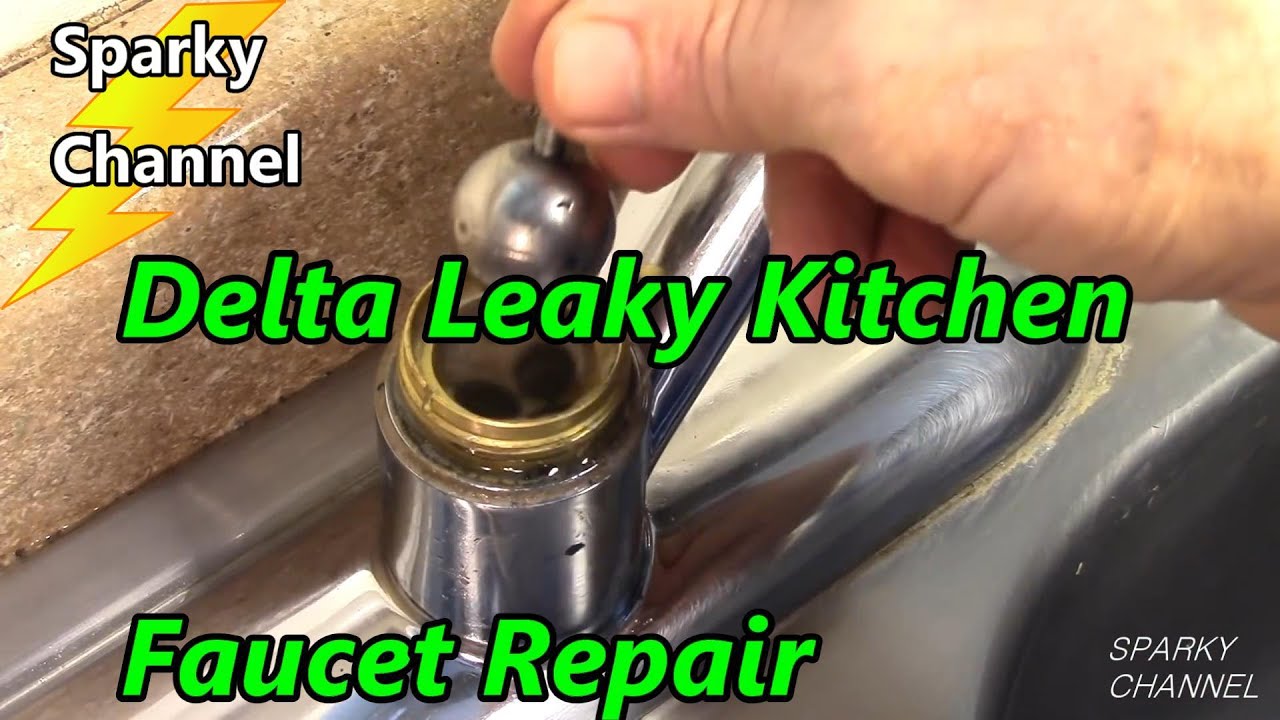
Image Source: i.ytimg.com
Why is My Delta Faucet Dripping?
A kitchen faucet leak typically stems from worn-out internal components. Over time, rubber seals, O-rings, or cartridges can degrade due to mineral buildup, constant use, or simply age. These small parts are the usual culprits behind that persistent silent drip or an outright stream of water. Addressing these issues promptly is a crucial part of effective plumbing maintenance.
Diagnosing the Leak: Where is the Water Coming From?
Before you grab your tools, take a moment to pinpoint the source of the leak. This will help you determine the right Delta faucet repair approach.
Common Leak Locations:
- Spout Drip: This is the most common complaint. Water drips directly from the end of the spout.
- Handle Leak: Water seeps out from around the faucet handle when the water is turned on or off.
- Base Leak: Water appears around the base of the faucet where it meets the sink.
- Under-Sink Leak: While not a direct faucet leak, a leak under the sink could be related to supply line connections.
Tools and Supplies You’ll Need for Delta Faucet Repair
Having the right equipment on hand makes any Delta faucet repair much smoother. Here’s a list of common items you’ll likely need:
- Adjustable wrench
- Phillips head screwdriver
- Flathead screwdriver
- Pliers (slip-joint or channel-lock)
- Penetrating oil (like WD-40)
- Rag or old towel
- Bucket
- Replacement Delta faucet parts (cartridge, O-rings, seals, etc. – identified after diagnosis)
- Plumber’s grease or silicone lubricant
- Safety glasses
You might also consider purchasing a leaky faucet repair kit specific to your Delta faucet model. These kits often contain the most commonly needed replacement parts.
Step-by-Step Guide to Fixing a Dripping Delta Faucet
The most frequent cause of a dripping Delta faucet is a faulty cartridge. A cartridge is a valve that controls the flow and temperature of water.
Step 1: Shut Off the Water Supply
This is the most important first step!
- Look under your sink for two shut-off valves, one for hot water and one for cold.
- Turn both valves clockwise until they are tight.
- Turn on the faucet to drain any remaining water in the pipes.
- Place a rag or towel in the sink basin to catch any small parts that might fall.
Step 2: Disassemble the Faucet Handle
How you remove the handle depends on your specific Delta faucet model. Many have a decorative cap or plug that hides a screw.
-
For Single-Handle Faucets:
- Look for a small decorative cap (often red and blue for hot/cold indicators) on the front or side of the handle.
- Gently pry this cap off with a flathead screwdriver or a utility knife.
- You’ll find a screw underneath. Use the appropriate screwdriver to remove it.
- Once the screw is out, the handle should lift straight up and off. If it’s stuck, try wiggling it gently. A little penetrating oil might help if it’s very stubborn.
-
For Two-Handle Faucets:
- There might be a decorative cap on top of the handle. Pry this off.
- You may find a screw on top or a hex screw on the side. Remove it.
- The handle should then pull off.
Step 3: Access and Remove the Cartridge
Once the handle is off, you’ll see the internal workings.
- Remove the Escutcheon/Bonnet Nut: This is a decorative cover or a large nut that holds the cartridge in place. It might unscrew by hand, or you may need an adjustable wrench. Turn it counter-clockwise.
- Identify the Cartridge: The cartridge is usually a cylindrical piece made of brass or plastic.
- Remove the Cartridge Retaining Clip (if applicable): Some Delta faucets have a small metal clip that secures the cartridge. Look for a U-shaped clip at the base of the cartridge. Use needle-nose pliers to pull it straight out.
- Pull Out the Cartridge: Grasp the cartridge stem with pliers and pull it straight up and out. It might require some force if it’s been in place for a long time. You may need to wiggle it. If it’s very difficult, some cartridges have a specific tool for removal, or you might need to gently tap it from the top.
Step 4: Inspect and Replace Worn Parts
This is where you’ll fix the actual leak.
- Cartridge: The most common cause of a dripping Delta faucet is a worn-out cartridge. If yours looks damaged, cracked, or has worn seals, it needs replacement. Bring the old cartridge to a hardware store to ensure you get an exact match for your Delta faucet parts.
- O-Rings and Seals: Look for any worn, cracked, or flattened O-rings or rubber seals. These are small but crucial for preventing leaks. There are often O-rings around the base of the spout (if it swivels) and within the cartridge assembly. If you see any damaged ones, replace them. It’s a good idea to replace all O-rings when you have the faucet disassembled.
- Valve Seat: In some older faucet models, there’s a metal or plastic valve seat that the cartridge seals against. If this is corroded or damaged, it can cause leaks. You might need a special tool to remove and replace the valve seat.
Step 5: Install New Parts
- Lubricate: Apply a small amount of plumber’s grease or silicone lubricant to the new cartridge and any new O-rings. This helps them slide into place easily and creates a better seal.
- Install the New Cartridge: Align the new cartridge correctly (there are often notches or tabs to guide its placement) and push it firmly into the faucet body.
- Replace the Retaining Clip (if removed): Slide the clip back into its slot to secure the cartridge.
- Screw Back the Bonnet Nut: Tighten the bonnet nut securely, but don’t overtighten, as this can damage the new cartridge.
Step 6: Reassemble the Faucet Handle
- Place the handle back onto the cartridge stem, ensuring it’s in the correct position.
- Insert and tighten the handle screw.
- Snap the decorative cap back into place.
Step 7: Turn Water Supply Back On and Test
- Slowly turn the hot and cold water shut-off valves back on (counter-clockwise).
- Turn on the faucet and check for leaks. Operate the handle through its full range of motion to ensure smooth operation and that the drip has stopped.
- Check under the sink for any signs of leaks at the supply line connections.
Fixing Leaks Around the Handle
If water is leaking from around the faucet handle, the issue is often with the O-rings or seals within the handle assembly, or the cartridge itself might be loose.
Steps to Fix Handle Leaks:
- Shut off the water supply.
- Remove the handle as described in Step 2.
- Inspect O-rings: Look for O-rings around the stem of the handle or beneath it. If they appear worn or flattened, replace them. It’s often best to replace all O-rings found during disassembly.
- Check the Cartridge: Ensure the cartridge is seated properly and the bonnet nut is snug. A loose bonnet nut can allow water to escape around the cartridge and up into the handle area.
- Lubricate and Reassemble: Apply plumber’s grease to any new O-rings or the cartridge before reassembling the handle.
Fixing Leaks at the Base of the Faucet
A leak at the base of the faucet usually indicates a problem with the O-rings that seal the spout to the faucet body or a loose mounting bracket.
Steps to Fix Base Leaks:
- Shut off the water supply.
- Remove the Spout (if it swivels):
- On many Delta faucets, the spout has a decorative collar at its base. You may need to unscrew this collar.
- Once the collar is off, you might find a retaining clip holding the spout in place. Remove it.
- Pull the spout straight up and off.
- Inspect and Replace Spout O-rings: At the base of the spout where it meets the faucet body, you’ll find one or more O-rings. Carefully remove these old O-rings and replace them with new ones. Lubricate the new O-rings before installing the spout.
- Tighten Mounting Hardware: If the leak is due to the faucet base being loose, you may need to tighten the mounting nuts or brackets underneath the sink. This often requires access to the underside of the sink.
- Reassemble: Reinstall the spout, collar, and any retaining clips.
When to Replace the Entire Faucet
While most Delta faucet repair jobs can be handled with part replacements, there are times when a full faucet replacement is the better option.
Signs It’s Time for a New Faucet:
- Extensive Corrosion: If the faucet body itself is heavily corroded or pitted, it may not be safe or practical to repair.
- Multiple Leaks: If you’ve fixed one leak only to discover another, or if the faucet has multiple simultaneous leaks from different points, it might be a sign of widespread internal wear.
- Difficulty Finding Parts: For very old or discontinued Delta faucet models, finding specific replacement parts can be challenging.
- Frequent Repairs: If you find yourself constantly needing to perform Delta faucet repair, the cost and time involved might outweigh the investment in a new, reliable faucet.
- Outdated or Inefficient Design: Newer faucets often incorporate water saving faucet features and more user-friendly designs.
Frequently Asked Questions About Delta Faucet Leaks
Q1: How do I know which Delta faucet cartridge to buy?
A: The best way is to identify your faucet model number, which is often found on the back of the faucet body or on the original packaging/documentation. Once you have the model number, you can usually find a parts diagram online or at a hardware store to identify the correct cartridge. Alternatively, you can take the old cartridge to a plumbing supply store or hardware store for a match.
Q2: Can I use a generic cartridge instead of Delta-specific parts?
A: While some generic cartridges might fit, it’s highly recommended to use genuine Delta faucet parts for the best performance and longevity. Using a generic part may not seal properly, leading to continued leaks or premature failure.
Q3: My faucet still drips after replacing the cartridge. What else could be wrong?
A: If you’ve replaced the cartridge and the faucet still drips, the issue might be with the valve seats. Some Delta faucets have separate valve seats that the cartridge seals against. These can become corroded or damaged. You might need a valve seat wrench to remove and replace them. Also, double-check that the new cartridge was installed correctly and that all other seals and O-rings are in good condition.
Q4: How can I prevent future leaks and perform regular plumbing maintenance?
A:
* Regular Cleaning: Clean your faucet regularly with mild soap and water to prevent mineral buildup. Avoid abrasive cleaners that can damage finishes.
* Address Small Leaks Promptly: Don’t let minor drips go unaddressed. They can worsen over time and lead to more significant problems.
* Check for Leaks Under the Sink: Periodically inspect supply line connections and the faucet mounting hardware underneath the sink for any signs of moisture.
* Soften Water: If you have hard water, consider a water softener. Hard water can accelerate wear and tear on faucet components.
* Consider a Water Saving Faucet: When it’s time to replace your faucet, look for models with the WaterSense label, which indicates they are designed for water efficiency.
Q5: What if I can’t get the faucet handle off?
A: Faucet handles can become very stubborn due to mineral buildup or corrosion. Try spraying a penetrating oil (like WD-40) around the base of the handle and let it sit for 15-30 minutes. Gently wiggling the handle while trying to lift it can also help. If it’s still stuck, some faucet repair kits come with a handle puller tool, or you may need to gently tap the handle upwards with a rubber mallet or a block of wood. Be careful not to force it too much, as you could damage the faucet body.
Q6: My faucet is making a lot of noise. Is this related to a leak?
A: Sputtering, hammering, or whistling noises from a faucet can sometimes be related to worn-out parts like the cartridge or O-rings, or it could be due to water pressure issues or debris in the water lines. If the noise started around the same time you noticed a leak, it’s likely connected. Replacing the cartridge often resolves these noises as well.
By following these steps, you can effectively perform Delta faucet repair and eliminate that irritating kitchen faucet leak. Remember to work carefully, be patient, and gather all the necessary Delta faucet parts before you begin. A little DIY effort can save you money and keep your kitchen running smoothly, all while contributing to responsible plumbing maintenance and even water saving faucet goals.