
Making a kitchen kosher means making it fit for Jewish dietary laws. This process is called Kashering a kitchen. It involves deep cleaning and special ways to prepare kitchen items. You must remove all non-kosher traces. This guide will show you how to do this in clear steps. We will cover kosher kitchen rules and how to change a Treif to kosher space.
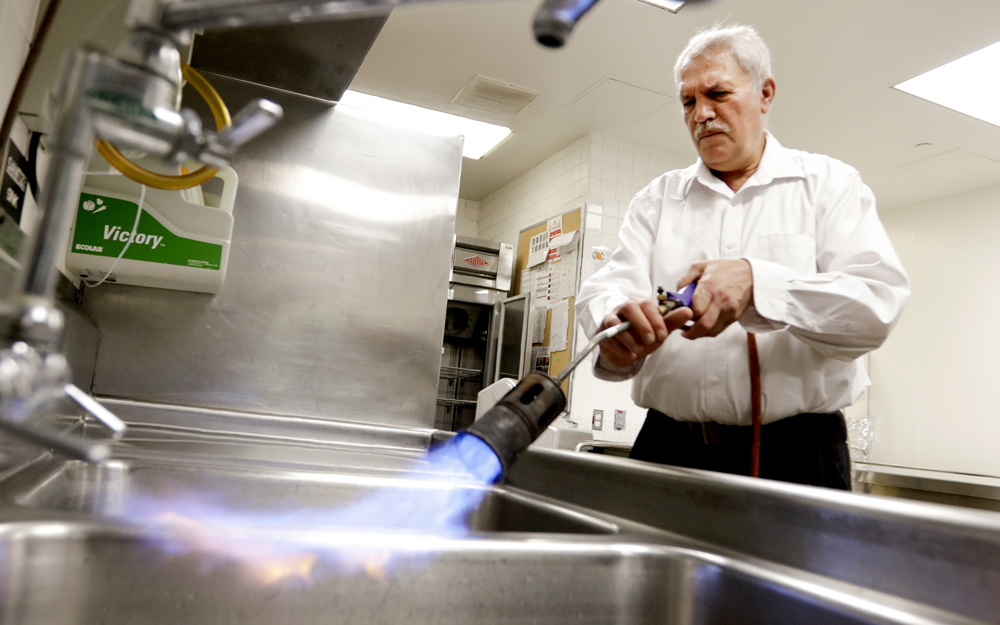
Image Source: www.cedars-sinai.org
Grasping Kosher Basics
Kosher means “fit” or “proper” in Hebrew. It refers to food that meets the standards of Jewish dietary laws, called Kashrut. These laws come from the Torah. They tell us what foods we can eat and how to prepare them.
Key Kosher Rules:
- Allowed Animals: Only certain animals are kosher. For example, cows, sheep, and chickens are allowed. They must be killed in a special way (shechita).
- No Pork or Shellfish: Pigs, rabbits, camels, and all shellfish (like shrimp, crab, lobster) are not kosher.
- Meat and Dairy Separation: You cannot eat meat and dairy together. You also cannot cook or serve them together.
- Pareve Foods: These foods are neither meat nor dairy. They include fruits, vegetables, grains, eggs, and fish (with scales and fins). Pareve foods can be eaten with either meat or dairy.
- Kosher Supervision: Many foods need a rabbi’s or supervising agency’s approval to be kosher. This is shown by a kosher symbol on the package.
When a kitchen is not kosher, it means it has been used for non-kosher foods. Or, it has mixed meat and dairy items. To make it kosher, you must clean it thoroughly. You must also remove any non-kosher residue. This is the goal of the koshering process.
The Need for Kashering a Kitchen
Why would someone need to Kasher a kitchen? There are a few main reasons.
- Moving into a New Home: If the previous owners did not keep a kosher home, you need to make it kosher.
- Rented Spaces: If you rent a kitchen for a short time, you might need to kosher it. This is often true for vacation rentals.
- Returning to Observance: Some people decide to start keeping kosher. They will need to change their kitchen.
- After Non-Kosher Use: If a kosher kitchen was accidentally used for non-kosher food, it might need to be re-koshered.
- Passover Preparation: Before Passover, a special and strict koshering is needed. This is because leavened products (chametz) are forbidden. This is known as Passover kitchen preparation.
The goal is to remove all traces of non-kosher food. This includes taste, smell, and actual particles. Halacha kitchen guidelines provide exact methods for this.
Getting Ready for the Koshering Process
Before you begin the actual koshering process, you must clean everything. This step is very important. No amount of koshering works if the items are dirty.
Emptying and Decluttering
First, clear out everything.
- Remove Non-Kosher Food: Take out all non-kosher food items. Give them away or throw them out.
- Clear Out Unusable Items: Get rid of old or broken kitchen items.
- Separate Kitchenware: Decide which kitchenware you will keep. Any items that cannot be koshered must be put away or discarded. This includes items you bought as non-kosher.
Deep Cleaning Every Surface
Every part of the kitchen must be spotlessly clean. No food residue can remain.
- Counters and Tabletops: Wash with hot soapy water. Scrub well.
- Sinks: Clean sinks with strong cleanser. Remove all grime.
- Oven and Stovetop: Clean thoroughly. Remove burnt-on food. Use oven cleaner if needed.
- Refrigerator and Freezer: Empty and wipe down all shelves and drawers.
- Dishwasher: Clean the inside filter and spray arms. Run an empty hot cycle with cleaner.
- Cabinets and Drawers: Wipe them all down inside and out. Remove crumbs.
- Walls and Floors: Clean walls near cooking areas. Mop floors.
This cleaning step is vital. It prepares the kitchen for the next step. It makes sure no non-kosher food is physically present.
Setting Up Separate Areas and Kitchenware
A kosher kitchen keeps meat and dairy separate. This is a core kosher kitchen rule. You need dedicated items for each.
- Two Sets of Dishes: You will need one complete set of dishes, pots, pans, and utensils for meat. You will need another complete set for dairy.
- Distinct Markings: Mark your meat and dairy items clearly. Some people use different colors. Red for meat, blue for dairy is common.
- Separate Storage: Store meat dishes in one cabinet. Store dairy dishes in another.
- Pareve Items: You can have a third set for pareve foods. Or, you can use either meat or dairy dishes for pareve. If you use meat dishes for pareve, those pareve foods can then be eaten with meat. If you use dairy dishes, they can be eaten with dairy.
- Separate Washing: Ideally, you should have two sinks or basins for washing dishes. If you have only one sink, you need a method to keep meat and dairy separate during washing. This could mean using separate dish racks or washing at different times.
This preparation ensures that once your kitchen is kosher, it stays kosher easily.
The Detailed Koshering Process
The actual koshering process depends on the item’s material and how it was used. The main methods are boiling (Hag’alah) and intense heat (Libun).
General Koshering Process Rules
- Cleanliness First: As said, everything must be completely clean before koshering. No food bits, grease, or dirt.
- 24-Hour Rule: Items must not have been used for non-kosher food for 24 hours before koshering. This ensures no non-kosher taste remains strong.
- Intent: You must intend for the item to become kosher.
- Rabbinic Guidance: For complex cases, always ask a rabbi.
Koshering Utensils
Different materials need different methods.
Metal Utensils (Pots, Pans, Flatware, etc.)
Most metal items are koshered by Hag’alah (boiling).
- Hag’alah (Boiling):
- Clean: Make sure the item is perfectly clean.
- Wait: Do not use the item for 24 hours.
- Boil Water: Fill a large pot with water. Bring it to a rolling boil. The pot itself must be kosher. If it’s new, it can be koshered first. If it’s an existing non-kosher pot, it must be koshered before using it to kosher other things.
- Immerse: Dip the metal item completely into the boiling water. If the item is too big, dip it in parts. Make sure the entire surface touches the boiling water.
- Rinse: Immediately after removing from the boiling water, rinse the item with cold water. This cools it down and sets the kosher status.
- Repeat (if needed): Some traditions say to do this three times. Most often, once is enough.
- Libun Gamur (Intense Heat/Burning): This method is for items that have directly touched fire or very hot non-kosher food without liquid. Examples include grill grates, broiler pans, or items used in an oven without liquid.
- Heat Until Glowing: Heat the metal item until it glows red hot. This burns off any non-kosher residue. This is a strong method and can damage items.
- Self-Cleaning Oven: A self-cleaning oven’s cycle often achieves Libun Gamur for the oven racks and inner surfaces.
Glass, Porcelain, Ceramic, Stone, and Plastic Items
- Glass: Many opinions exist. Some say glass does not absorb non-kosher taste and only needs thorough cleaning. Others say it needs Hag’alah. Before Passover, glass often needs Hag’alah.
- Porcelain, Ceramic, Earthenware, China: These materials are generally not kosherable if they have been used for non-kosher food. They are porous and absorb taste too deeply. They must be replaced.
- Plastic: Like glass, there are different views. Many allow Hag’alah for plastic items. Check with your rabbi.
- Wood, Rubber, Silicone: These are often koshered by Hag’alah if they are solid and non-porous.
Table: Koshering Methods by Material
| Material Type | Common Koshering Method (General Use) | Notes |
|---|---|---|
| Stainless Steel | Hag’alah (Boiling) | Must be perfectly clean. Immediate cold rinse after boil. |
| Iron, Cast Iron | Hag’alah or Libun Gamur | Hag’alah if used with liquid; Libun Gamur if used dry with high heat (e.g., grill grates). Can rust. |
| Aluminum | Hag’alah (Boiling) | Less common for cookware due to softness, but possible. |
| Glassware | Hag’alah or thorough cleaning | Depends on tradition. Hag’alah common for Passover. |
| Glazed China/Ceramic | Not Kosherable (generally) | Porous nature makes absorption too deep. Must be replaced. |
| Unglazed Earthenware | Not Kosherable | Highly porous. Must be replaced. |
| Plastic | Hag’alah or thorough cleaning | Opinions vary; often permitted with Hag’alah. Check with rabbi. |
| Wood (solid) | Hag’alah (Boiling) | If solid and smooth (e.g., cutting boards). Replace if porous or cracked. |
| Rubber/Silicone | Hag’alah (Boiling) | Common for spatulas, baking mats. |
Koshering Appliances
Appliances need special attention for the koshering process.
Oven
- Self-Cleaning Oven: This is the easiest method. Clean the oven first. Remove all food residue. Then run a full self-cleaning cycle. The high heat of the cycle (Libun Gamur) makes the oven kosher. The racks are koshered along with the oven.
- Non-Self-Cleaning Oven (Broiler Method):
- Clean: Scrape and clean all surfaces well.
- Wait: Do not use the oven for 24 hours.
- Heat: Turn the oven to its highest setting. Turn on the broiler if it has one. Let it run for at least an hour.
- Racks: The racks can be koshered at the same time if they are in the oven. For Libun Gamur on racks, they must glow red.
Note: Some authorities say this method only works for the top surfaces directly under the broiler. For full koshering, self-cleaning is preferred.
Stovetop/Burners
- Electric Coils/Gas Grates:
- Clean: Remove all food bits.
- Heat: Turn on the burners to their highest setting. Let them burn for 10-15 minutes. The grates should get very hot (Libun Kal – light heat).
- Metal Protectors: If you have metal burner covers, they can be koshered this way too.
- Glass Stovetops (Ceramic Cooktops):
- Clean: Clean the surface completely.
- Heat: Turn on all burners to high heat until the surface glows or gets very hot.
- Wait: Do not use for 24 hours before koshering.
Microwave
- Clean: Thoroughly clean the inside of the microwave. Remove the glass plate.
- Wait: Do not use for 24 hours.
- Boil Water: Place a bowl of water in the microwave. It should contain a small amount of soap.
- Run Microwave: Turn it on until the water boils and steam fills the entire inside. Continue for a few more minutes. The steam must reach all internal surfaces.
- Clean Plate: The glass plate should be cleaned well. Some say to boil it (Hag’alah) if possible. Otherwise, replace it or dedicate it to kosher use.
Dishwasher
- Clean: Clean the dishwasher filters, spray arms, and interior. Remove any food particles.
- Wait: Do not use for 24 hours.
- Empty Cycles: Run two or three empty hot cycles with detergent. Use the highest temperature setting.
Refrigerator and Freezer
- Clean: These do not absorb non-kosher tastes like heated items. Simply clean them very well.
- Remove Liners: Remove and clean all shelves, drawers, and liners separately. Wash them with soap and water.
- Wipe Down: Wipe down the inside walls and door seals.
- Cover if Needed: Some people cover the shelves after cleaning to be extra careful.
Sinks and Countertops
Sinks and countertops also absorb non-kosher taste through hot food or liquids.
- Sinks (Stainless Steel, Porcelain):
- Clean: Clean the sink completely.
- Wait: Do not use for 24 hours.
- Pour Boiling Water: Pour boiling water from a kosher kettle or pot over every surface of the sink. Make sure the water touches all parts, including the drain and faucet handles if they get splashed.
- Hot Stone/Metal: Some traditions use a hot stone or metal item passed over the sink’s surface while pouring boiling water.
- Drain Cover: The drain stopper should be replaced or koshered.
- Countertops (Granite, Quartz, Laminate):
- Clean: Clean the counters very well.
- Wait: Do not use for 24 hours.
- Pour Boiling Water: Pour boiling water over the entire surface.
- Covering (Alternative/Addition): After cleaning, many people cover countertops with thick contact paper, foil, or special kosher counter covers. This is a common practice, especially for Passover kitchen preparation, to avoid direct contact with previously used surfaces.
Special Considerations: Passover Kitchen Preparation
Passover kitchen preparation is stricter than general kashering a kitchen. During Passover, not only is non-kosher food forbidden, but also chametz (leavened grains like wheat, barley, rye, oats, spelt) and its derivatives are forbidden.
Key Differences for Passover:
- Chametz Zero Tolerance: Any utensil or surface that has touched chametz, especially when hot, needs special koshering or replacement.
- More Stringent Methods: Boiling and burning methods are preferred for Passover. Cleaning alone is never enough for chametz.
- Dedicated Items: Many families have a complete separate set of kitchenware used only for Passover. This avoids the need for extensive koshering each year.
- Selling Chametz: Any remaining chametz food in the house is usually “sold” to a non-Jew for the holiday.
Passover Kitchen Preparation Steps:
- Deep Clean: Clean the entire kitchen even more thoroughly than for regular koshering. Remove every crumb of chametz.
- Sell Chametz: Gather all chametz food and put it away or sell it.
- Kosher Ovens and Stovetops: Use the self-clean cycle for ovens. For stovetops, use Libun Gamur (burning off) or cover completely.
- Kosher Sinks: Pour boiling water. Many use a dedicated sink insert or liner for Passover.
- Cover Counters: Counters are typically covered with foil, plastic, or special liners.
- Switch Utensils: Bring out the special Passover dishes, pots, and silverware. Pack away all regular kitchenware.
- Fridge/Freezer: Clean well. No chametz inside.
Maintaining a Kosher Kitchen
Once your kitchen is kosher, keeping it that way is key. This involves following kosher kitchen rules daily.
Daily Practices
- Separate Washing: Always wash meat and dairy dishes separately. If you only have one sink, wash one type, clean the sink, then wash the other. Or use a wash basin.
- Separate Sponges/Brushes: Use different sponges or brushes for meat and dairy dishes. Label them clearly.
- Dedicated Dish Racks: Use separate dish racks for meat and dairy.
- Storage: Always return meat and dairy items to their designated storage areas.
- Cutting Boards: Have separate cutting boards for meat, dairy, and pareve. Wood boards are often hard to fully clean if used for both. Many prefer plastic or glass.
- Utensil Use: Be mindful of which spoon, spatula, or knife you use. Do not mix them.
- Cleaning Products: Use kosher cleaning products. They do not need to be kosher certified, but should not contain animal-derived ingredients if you are very strict.
Food Storage
- Clear Labeling: Label all food items clearly, especially those in the refrigerator or pantry. This helps avoid mixing meat and dairy ingredients.
- Separate Shelves: Designate separate shelves or areas in the refrigerator and pantry for meat, dairy, and pareve. This helps keep things organized.
- Covering Foods: Cover open food items to prevent cross-contamination.
Vigilance and Awareness
- Read Labels: Always check food labels for kosher certification. Look for symbols like OU, OK, Kof-K, Star-K.
- Ask Questions: If you are unsure about a food item or a kitchen practice, ask a knowledgeable person or a rabbi.
- Teach Others: If others use your kitchen, teach them the kosher kitchen rules. This is important for guests or family members.
Interpreting Complex Situations: From Treif to Kosher
Sometimes, things go wrong. A non-kosher item might accidentally touch a kosher one. Or a non-kosher food is used in a kosher pot. This is where the concept of Treif to kosher becomes relevant. “Treif” means not kosher.
Accidental Mixing
- Cold Contact: If a cold non-kosher item touches a cold kosher item, often the kosher item can be washed and remain kosher. The non-kosher item may need washing or discarding.
- Hot Contact: If a hot non-kosher item touches a hot kosher item, or if non-kosher food is cooked in a kosher pot, the rules are stricter.
- Less than 24 Hours: If the kosher pot or utensil was used for kosher food less than 24 hours ago, it might become non-kosher. It would then need to be re-koshered through Hag’alah or Libun.
- More than 24 Hours (Ein K’bol’o Kach Polto): If the kosher item has not been used for 24 hours, its absorbed kosher taste has weakened. If a non-kosher food (e.g., milk) is cooked in a meat pot that hasn’t been used for 24 hours, it’s possible the pot can be re-koshered. This is complex and needs rabbinic guidance. The rule “Ein K’bol’o Kach Polto” means “as it absorbed, so it will give off.” The method of koshering must match the method of absorption. If absorbed by boiling, it is koshered by boiling. If by direct fire, by direct fire.
When to Consult a Rabbi
- Complex Situations: If you are unsure about koshering specific items or if an accidental mix-up occurs, ask a rabbi. They are experts in Halacha kitchen guidelines.
- New Appliances: When getting a new, complex appliance, a rabbi can give specific advice on koshering it.
- Buying Items: For large purchases, like a new set of dishes, a rabbi can confirm what can be used and what needs koshering.
Frequently Asked Questions (FAQ)
Q1: Can I reuse items I koshered for Passover for regular kosher use?
A1: Yes. Items koshered for Passover are fit for all kosher use. Just make sure to clean them after Passover before storing them. Many families still keep separate Passover and year-round items.
Q2: Do I need special cleaners to kosher my kitchen?
A2: No. Regular household cleaners are fine. The cleaning is to remove physical dirt and food bits. The koshering process itself (boiling, burning) makes the item kosher.
Q3: Can I kosher a microwave oven?
A3: Yes, often you can. You must clean it thoroughly. Then, place a bowl of water inside and boil it until the microwave is filled with steam. This usually works for a microwave. The glass tray may need boiling too.
Q4: What if I accidentally use a dairy spoon with meat?
A4: If the spoon was cold and the food was cold, you can just wash the spoon well. If either the spoon or food was hot, the spoon may need to be re-koshered by boiling (Hag’alah). If the food was also hot, the food itself might become non-kosher. This needs rabbinic guidance.
Q5: Is a new appliance already kosher?
A5: New appliances like ovens and stovetops are not automatically kosher. They might have been tested with non-kosher oils or residues at the factory. They need to be koshered before first use. This means running a self-clean cycle or intense heat.
Q6: What about cutting boards? Can they be koshered?
A6: Wooden or plastic cutting boards can often be koshered if they are solid and uncracked. This is usually done by pouring boiling water over them. However, many people prefer to have separate cutting boards for meat, dairy, and pareve to avoid any doubt and for easier maintenance. If a board is very porous or has deep cuts, it is usually not kosherable.
Making a kitchen kosher is a big job. It needs care and attention to detail. But by following these steps, you can create a kitchen that perfectly fits Jewish dietary laws. This lets you enjoy meals in a way that aligns with your beliefs. Remember, for any doubt, ask a rabbi for advice.