
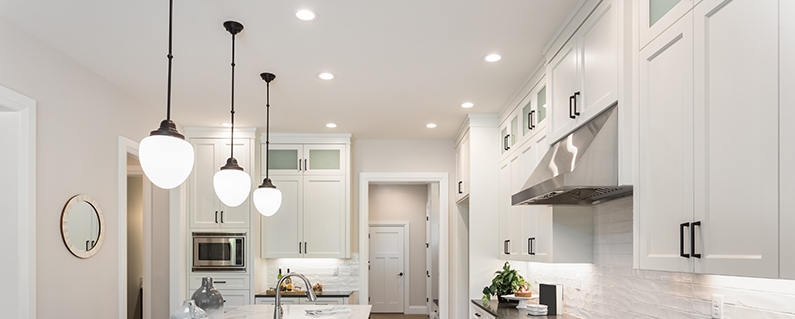
Image Source: cdn-ikpfnll.nitrocdn.com
Getting the Right Light for Your Kitchen
When you choose lights for your kitchen, lumens are key. Kitchen lighting lumen recommendations often suggest 30 to 40 lumens per square foot for general lighting. This amount helps create enough light for cooking and other common kitchen tasks. So, if you are asking how many lumens per square foot kitchen needs, start with this simple range. Getting the right light means your kitchen will be bright, safe, and pleasant. It is not just about turning on a light. It is about making your space work well for you.
What Lumens Mean for Your Kitchen
To pick the best lights, you first need to know what lumens are. It is simpler than it sounds.
Deciphering Lumens and Brightness
Lumens tell you how much total visible light a light bulb or fixture gives off. Think of it as the brightness of the light. More lumens mean a brighter light. Fewer lumens mean a softer, dimmer light. When we talk about ideal kitchen ceiling light brightness, we are really talking about the right number of lumens. High lumens are good for places where you need to see clearly, like over your kitchen counter. Low lumens are good for creating a calm mood.
Older light bulbs were sold by watts. Watts tell you how much energy a bulb uses, not how bright it is. Lumens tell you the actual brightness. So, always look for the lumen number when buying new lights.
Foot-Candles: Another Way to Measure Light
While lumens tell you the total light from a bulb, foot-candles tell you how much light hits a surface. One foot-candle is equal to one lumen per square foot. This helps us talk about foot candles kitchen lighting standards. For example, a bright kitchen counter might need more foot-candles than a casual dining area in the kitchen.
Here are some common foot-candle standards for kitchens:
| Kitchen Area | Recommended Foot-Candles | Lumens Per Square Foot (Approx.) |
|---|---|---|
| General Kitchen Area | 20-50 fc | 20-50 lm/sq ft |
| Task Areas (Counters) | 50-100 fc | 50-100 lm/sq ft |
| Dining Nook | 30-40 fc | 30-40 lm/sq ft |
| Pantry | 30-50 fc | 30-50 lm/sq ft |
Knowing foot-candles helps you get the right brightness exactly where you need it. It guides you to choose lights that are not too dim or too bright for different spots.
Finding Your Kitchen’s Lighting Needs
Every kitchen is different. A small kitchen needs less light than a large one. Also, different parts of the kitchen need different levels of light.
Kitchen Size and Light Output
A good way to start is by looking at your kitchen’s size. The bigger your kitchen, the more lumens you will need. This is part of a kitchen size light output guide.
To figure out your kitchen’s area, multiply its length by its width. For example, a kitchen that is 10 feet long and 10 feet wide is 100 square feet.
Once you have the square footage, you can use the lumen per square foot rule. As mentioned, for general kitchen lighting, aim for 30 to 40 lumens per square foot.
So, for a 100-square-foot kitchen:
* Minimum lumens: 100 sq ft * 30 lm/sq ft = 3000 lumens
* Maximum lumens: 100 sq ft * 40 lm/sq ft = 4000 lumens
This gives you a good starting point for the total lumens needed from all your general lights.
Here is a general guide for total lumens based on kitchen size:
| Kitchen Size (Square Feet) | Recommended Total Lumens (General Lighting) |
|---|---|
| Small (75 sq ft or less) | 2250 – 3000 lumens |
| Medium (75 – 150 sq ft) | 2250 – 6000 lumens |
| Large (150 – 250 sq ft) | 4500 – 10000 lumens |
| Very Large (250+ sq ft) | 7500 – 10000+ lumens |
Remember, these numbers are for general lighting. You will add more light for task areas.
Zones for Better Lighting
A smart kitchen has different types of light for different areas. This is called layering light. There are three main types:
-
General (Ambient) Lighting: This is the main light that brightens the whole room. It helps you move around safely. For general lighting, use the lumens per square foot kitchen guideline (30-40 lm/sq ft). Ceiling lights like flush mounts or recessed lights provide this.
-
Task Lighting: This light focuses on specific work areas. Think about your counters, sink, or stove. These spots need brighter, more direct light. This is where kitchen task lighting lumens come in. You might need 50 to 100 lumens per square foot in these areas. Under-cabinet lights or pendant lights over an island are good examples.
-
Accent Lighting: This light highlights features. It can be for beauty, like lighting a display cabinet. It uses less light and creates mood. You do not need many lumens for accent lighting.
Here is a table showing lumen needs for different kitchen zones:
| Kitchen Zone | Type of Lighting | Recommended Lumens (per fixture/area) |
|---|---|---|
| Overall Room | General | Varies by total square footage |
| Countertops / Work Areas | Task | 300-700 lumens per linear foot |
| Kitchen Island / Peninsula | Task/General | 500-1000 lumens per pendant/fixture |
| Sink Area | Task | 500-1000 lumens |
| Dining Area (in kitchen) | General/Accent | 1500-4000 lumens (dimmable preferred) |
| Pantry / Storage | General | 500-1000 lumens |
By planning these zones, you make sure every part of your kitchen is lit just right.
Calculating Lumens for Your Space
Now that you know what lumens are and how they relate to your kitchen size and zones, let’s talk about how to calculate exactly what you need.
A Simple Lumen Calculation Method
This simple method helps you choose the right amount of light for your kitchen. This is like a basic kitchen lighting design lumen calculator.
Step 1: Measure Your Kitchen.
* Measure the length and width of your kitchen in feet.
* Multiply length by width to get the total square footage.
* Example: 12 feet long * 10 feet wide = 120 square feet.
Step 2: Choose Your Lumen Target.
* For general lighting, aim for 30 to 40 lumens per square foot. Let us pick 35 lumens per square foot for our example.
Step 3: Calculate Total General Lumens.
* Multiply your square footage by your target lumen number.
* Example: 120 sq ft * 35 lm/sq ft = 4200 total general lumens.
Step 4: Plan for Task Lighting.
* Identify all task areas: counters, sink, stove, island.
* For these areas, add extra lumens. You will need brighter light here.
* A general rule is to add 500-1000 lumens for each major task area.
* Example: If you have 10 feet of counter space, you might need 300-700 lumens per foot. So, 10 feet * 500 lm/ft = 5000 lumens for counters.
* Or, if you have two task areas (sink and main counter), you might add two lights, each 800 lumens. That is 1600 extra lumens.
Step 5: Add up all lumens.
* Total needed = General Lumens + Task Lumens + Accent Lumens (if any).
* Example: 4200 (general) + 1600 (task) = 5800 total lumens needed.
This total lumen number is what all your kitchen lights should add up to. You do not need one giant light. You can use many smaller lights.
Considering Different Fixtures
Different types of lights offer different average lumens for kitchen fixtures.
- Recessed Lighting: These lights are hidden in the ceiling. They give a clean look. They are great for general lighting and task lighting.
- Recessed lighting lumens kitchen: Each recessed light often gives 600-900 lumens. You would space them evenly to cover the room.
- Pendant Lights: These hang down from the ceiling. They are good for task lighting over an island or sink. They also add style.
- Each pendant might give 400-800 lumens, depending on its size and bulb.
- Under-Cabinet Lights: These are perfect for task lighting on counters. They light up your workspace without shadows.
- These can be strips or small puck lights. They often give 200-500 lumens per foot or fixture.
- Flush Mount or Semi-Flush Mount Lights: These are main ceiling lights. They work well for general lighting in smaller kitchens or as a central light.
- They can provide 1000-3000 lumens or more, depending on size.
When you buy a fixture, check the lumen output listed on the box. Add up the lumens from all your chosen fixtures to make sure you meet your kitchen’s needs.
More Than Just Brightness: Color Temperature (CCT)
Lumens tell you how bright a light is. But light also has a color. This is called Color Correlated Temperature (CCT). It is measured in Kelvin (K).
CCT for Kitchen Ceiling Lights: What It Is
CCT describes if a light appears warm (yellowish) or cool (bluish-white).
- Warm White (2700K – 3000K): This light is soft and cozy, like old incandescent bulbs. It is good for creating a relaxing mood. It may not be ideal for task lighting where you need to see true colors.
- Cool White / Bright White (3500K – 4000K): This light is more neutral. It is good for everyday tasks and makes colors look natural. It is often a good choice for kitchens.
- Daylight (5000K – 6500K): This light is very bright and has a bluish tint, like natural sunlight. It is good for very detailed work but can feel harsh in a home setting if not used carefully.
Choosing the Right CCT for Your Kitchen
For most kitchens, CCT for kitchen ceiling lights often falls in the 3500K to 4000K range. This provides good visibility without being too harsh or too warm.
- For a warm, inviting kitchen: Choose 3000K. This works well with traditional or farmhouse styles.
- For a modern, clean kitchen: Choose 3500K or 4000K. This light helps keep colors true and makes the space feel bright and crisp.
- For task lighting: 4000K is often best. It helps you see clearly for cutting food or reading recipes. You want to see the true color of your food.
It is a good idea to keep the CCT consistent across all lights in your kitchen. Mixing very warm and very cool lights can make the room look uneven.
Common Kitchen Lighting Styles and Lumens
Different lighting styles serve different purposes and offer varied lumen outputs.
Recessed Lights in the Kitchen
Recessed lights are popular for their sleek look. They blend into the ceiling.
- How many recessed lighting lumens kitchen needs from each light?
- For general lighting, each recessed light usually provides 600-900 lumens.
- For task lighting over a counter, you might use fixtures with 750-1000 lumens.
- Spacing: Space them evenly, often 3-5 feet apart, to avoid dark spots. The aim is to get good overall brightness. Use narrower beam angles for task areas and wider angles for general lighting.
Pendants and Chandeliers
Pendant lights hang down. They are great for task lighting over islands, peninsulas, or sinks. Chandeliers provide general lighting and can be a focal point.
- Pendant Lumens: A single pendant over a sink might need 500-800 lumens. Over an island, you might use two or three pendants, each giving 400-700 lumens. Their main role is often task lighting.
- Chandelier Lumens: A chandelier in a kitchen dining area might need 2000-4000 lumens. It depends on the size of the area and if it is the main light source. Dimmers are very helpful for chandeliers to adjust the mood.
Under-Cabinet and Strip Lighting
These lights are crucial for kitchen task lighting lumens. They sit under your upper cabinets and shine directly onto your countertops.
- Lumen Output: Under-cabinet lights should be bright enough to remove shadows from your work surface. Look for options that provide 200-500 lumens per linear foot. This range ensures you have plenty of light for chopping, mixing, and preparing food safely.
- Placement: Place them towards the front of the cabinet. This helps light up the whole counter, not just the back wall.
Putting It All Together: A Design Guide
A well-lit kitchen is a mix of different types of lights. It is not just about one bright bulb.
Layering Your Light
This means using general, task, and accent lighting together.
- Start with General Lighting: Use recessed lights, flush mounts, or track lights to give overall brightness. This covers your average lumens for kitchen fixtures for the whole room.
- Add Task Lighting: Place focused lights where you work: under cabinets, over the sink, or above an island. This ensures enough kitchen task lighting lumens.
- Think About Accent Lighting (Optional): Add strip lights inside glass cabinets or puck lights over shelves. This adds style and mood.
- Consider Natural Light: Think about windows and natural light. You might need less electric light during the day if you have large windows.
By layering, you create a kitchen that is both functional and inviting. You can adjust the light for different times of day or different activities.
Dimmer Switches: A Smart Choice
Dimmers are key for a flexible kitchen. They let you change the brightness of your lights.
- Why use dimmers?
- You can make task lights brighter for cooking.
- You can dim general lights for a relaxed dinner party.
- They save energy when lights are dimmed.
- They extend the life of your light bulbs.
Install dimmers on your general and task lights. This gives you full control over your kitchen’s mood and function.
Tips for Smart Kitchen Lighting
- Do not guess your lumens. Use the calculations based on square footage and task areas.
- Look for lumens, not watts. Lumens are the true measure of brightness.
- Choose the right CCT. For most kitchens, 3500K to 4000K is a good balance.
- Layer your lights. Use general, task, and accent lighting for best results.
- Use dimmers. They give you control over brightness and mood.
- Consider LED lights. They use less energy and last longer. They come in many lumen and CCT options.
- Think about light direction. Task lights should point directly at your work surface.
- Avoid shadows. Use multiple light sources to reduce shadows, especially on counters.
- Test light samples. If possible, try a bulb with the suggested CCT and lumen range before buying many.
Frequently Asked Questions (FAQ)
How many lumens do I need for a small kitchen?
For a small kitchen (75 sq ft or less), you will likely need a total of 2250 to 3000 lumens for general lighting. Remember to add more lumens for specific task areas like counters or the sink.
Can too many lumens be bad?
Yes, too many lumens can make a kitchen feel harsh and uncomfortable. It can cause glare and eye strain. It is better to have enough light, with dimmers, than too much light. A very bright kitchen can feel like an office or a hospital, not a cozy home.
What is the best light color for a kitchen?
The best light color for a kitchen is usually a cool white or bright white, around 3500K to 4000K. This CCT makes colors look natural and provides good visibility for cooking tasks. Warmer lights (2700K-3000K) are good for ambiance but might not be best for tasks. Colder lights (5000K+) can feel too harsh.
Do all lights have the same lumens?
No, lights come with a wide range of lumen outputs. A small night light might have 10 lumens, while a large floodlight could have thousands. Even within the same type of bulb (like an LED bulb), lumens can vary widely. Always check the lumen number on the packaging.
How do I know the lumens of my current lights?
For newer LED bulbs, the lumen output is almost always printed on the bulb itself or on its packaging. For older incandescent or fluorescent bulbs, you might need to look up the bulb type online. Many lighting websites also have charts that convert old wattage to modern lumen values.
Getting the right amount of light in your kitchen makes a big difference. By paying attention to lumens, CCT, and light layering, you can create a kitchen that is both useful and beautiful.