
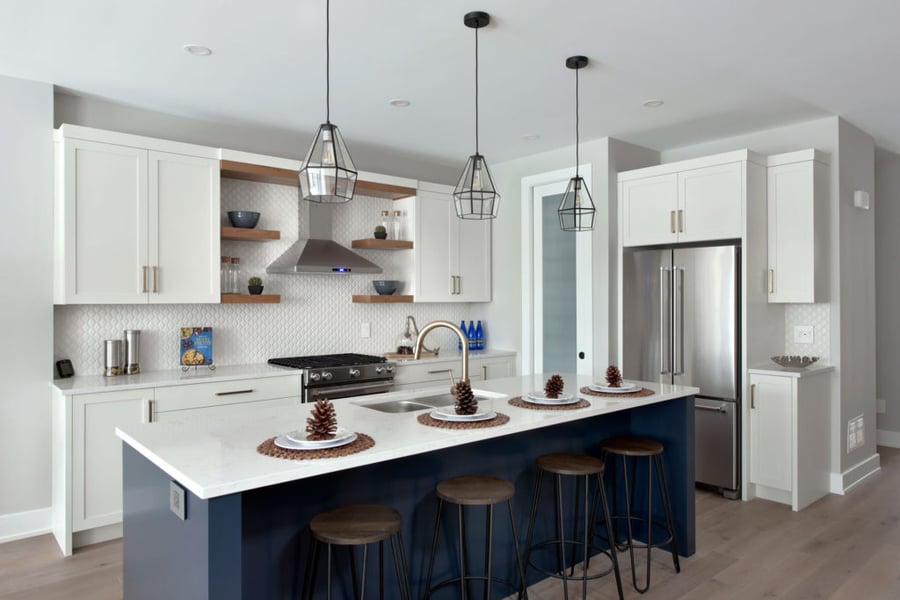
Image Source: www.deslaurier.com
Mastering How Much Of An Overhang For Kitchen Island
Kitchen islands are great for cooking, eating, and gathering. A key part of their design is the countertop overhang. This is how far the counter sticks out past the base. Many people ask, “What is the standard kitchen island overhang?” For comfortable seating, it is usually 12 inches. “What is the minimum island seating overhang?” You need at least 9 inches for people to sit without feeling too cramped. “Can I have a large unsupported overhang?” Generally, you can have up to 12 inches of unsupported overhang for stone counters like granite or quartz, but it depends on the thickness and type of stone. Always check with your stone provider. “How much legroom is needed for an island?” This relates directly to the overhang; 12 inches of depth for legroom is ideal. “What are bar stool overhang requirements?” They are the same as general seating: aim for 9 to 12 inches of overhang for comfort.
This guide will walk you through everything about island overhangs. We will cover standard sizes, how much space you need for sitting, how to support the counter, and how to fit it all into your kitchen. Getting the overhang right makes your island useful, comfy, and safe.
Grasping the Island Overhang Basics
An island overhang is simply the part of your countertop that extends past the cabinet or base below it. Think of it as a small ledge. This ledge is more important than you might think. It makes your island look good. It also gives you space to sit or work.
Why Overhangs Matter:
- Comfort: The right overhang gives you room for your legs and knees. This is super important when you sit at the island. Without enough space, sitting there feels awkward and tight.
- Looks: Overhangs help the island fit into your kitchen design. They can make the island look light or heavy. They can match other counters or stand out.
- Usefulness: An overhang turns a plain counter into a dining spot. It creates a space for kids to do homework. It can be an extra prep area or a place for guests to gather.
- Protection: It stops spills from dripping onto your cabinet fronts. This helps keep your cabinets clean and safe from water damage.
- Safety: A properly supported overhang is strong and safe. If an overhang is too long without support, it can break or sag. This is a big safety risk.
There are different types of overhangs. Some are just for looks, maybe an inch or two. Others are deep, meant for chairs and people. Most people focus on the overhang needed for seating. This is where legroom becomes key.
Standard Overhangs: What Works Best?
When planning an island, most people want to know the standard kitchen island overhang. For an island where people will sit, the most common and comfortable overhang is 12 inches. This measurement gives enough space for most adults to sit without their knees hitting the island base.
Why 12 Inches is Common:
- Legroom: It gives good space for knees and thighs. You can sit closer to the counter without hunching over.
- Chair Placement: Chairs can tuck in nicely under the counter. This keeps your kitchen clear when the chairs are not in use.
- Balance: It offers a good balance between comfort and the need for support. A 12-inch overhang often does not need a lot of extra support, depending on the material.
However, not all islands need a 12-inch overhang. It depends on how you use the island.
- No Seating: If your island is just for prep or storage, a small overhang of 1 to 1.5 inches is fine. This just protects the cabinets below. It is often the same overhang as your regular kitchen counters.
- Light Seating: For quick meals or kids, you might get away with less. But it won’t be as comfortable for long periods.
- Bar-Height Seating: If your island has a raised bar section, the overhang for that section can be smaller, sometimes 9 to 10 inches. This is because bar stools often sit taller, changing leg angles.
Here is a quick look at common overhang measurements:
| Island Use Case | Recommended Overhang (Inches) | Notes |
|---|---|---|
| No Seating / Decorative | 1 to 1.5 | Protects cabinets, common for prep-only islands. |
| Minimum Seating (tight) | 9 | Works for small spaces, but less comfortable for long periods. |
| Standard Comfortable Seating | 12 | Ideal for most adults, good legroom. |
| Extra Comfortable / Tall Users | 15 | Offers more room, often needs extra support. |
| Bar-Height Seating | 9 to 10 | For raised bar areas, bar stools often require less depth. |
Remember, these are guidelines. Your specific needs and kitchen layout will help you decide.
Seating Comfort: The Overhang’s Role
The comfort of your island seating depends a lot on the overhang. This is where minimum island seating overhang and kitchen island legroom dimensions come into play.
Minimum Overhang for Sitting:
The absolute minimum overhang for comfortable seating is 9 inches. Why 9 inches? This allows for some knee room for most people. However, it’s a tight squeeze. If someone has long legs, they might feel cramped. They might have to sit sideways or angle their legs. For quick snacks or kids, 9 inches can work. But for daily meals or long talks, it’s not ideal.
Why 12 Inches is Better for Sitting:
A 12-inch overhang is widely considered the best for comfortable kitchen island seating. This extra 3 inches makes a big difference.
- More Legroom: It allows adults to sit more naturally. Their knees and upper legs fit easily under the counter.
- Easier Movement: People can pull their chairs in and out without bumping their legs.
- Better Posture: Good legroom helps people sit up straight. This is better for your back.
Legroom Dimensions:
Kitchen island legroom dimensions refer to the clear space under the overhang. This space needs to be deep enough for knees and thighs.
- Depth: For counter-height seating, aiming for a minimum of 12 inches of clear depth from the edge of the counter to the island base is important. This matches the 12-inch overhang.
- Height: Standard counter height is about 36 inches from the floor. This height, combined with a 12-inch overhang, works well with standard counter-height stools. Bar-height counters are taller, about 42 inches. They also need 9 to 10 inches of overhang, as bar stools are taller and change the leg angle.
Considering Bar Stool Overhangs:
Bar stool overhang requirements are very similar to regular counter-height seating. If you have a raised bar area on your island, the counter is usually 42 inches high. For this height, 9 to 10 inches of overhang is often enough. Bar stools are taller, so the sitter’s knees are at a different angle. This means they need a bit less horizontal space. However, if you have the room, giving more overhang (12 inches) is never a bad idea. It just adds to comfort.
Tips for Comfortable Seating:
- Test It: Before you build, try sitting at a counter with similar overhangs. Use different chairs or stools. See how it feels.
- Consider Users: If tall people will use the island often, consider an overhang of 15 inches. This gives extra room.
- Chair Size: Think about the chairs you will use. Big chairs need more space. Make sure they can tuck under the overhang. This helps with clearance needed for island chairs.
Overall, prioritizing comfort in your island design means giving enough overhang for people to sit without feeling squeezed.
Support Systems: Keeping It Safe and Strong
A beautiful countertop is no good if it sags or breaks. That’s why island countertop support guidelines are so important. The longer your overhang, the more critical proper support becomes.
Maximum Unsupported Overhang:
You might wonder, “What is the maximum unsupported island overhang?” This depends a lot on the material and its thickness.
- Granite and Quartz (3 cm thick): For these popular stone materials, if they are 3 centimeters thick (about 1.25 inches), you can often go up to 10-12 inches of unsupported overhang. Some stone experts say 10 inches is safer without special checks.
- Granite and Quartz (2 cm thick): If the stone is thinner, like 2 centimeters (about 0.75 inches), the unsupported overhang should be much less, usually only about 6 inches. Thinner stone needs more help to stay strong.
- Laminate: Laminate countertops are lighter. They can often extend 12-15 inches unsupported if the base material is strong. But they can still sag over time.
- Solid Wood: Solid wood countertops are often thicker and can span longer distances without support. But they can warp or crack if not properly sealed and cared for. They also need sturdy support for any significant overhang.
Important Rule: No more than one-third of the countertop’s total width should be unsupported. For example, if your counter is 36 inches deep, the overhang should not be more than 12 inches. If your counter is 24 inches deep, the overhang should not be more than 8 inches. This rule helps keep the counter balanced and strong.
When Do You Need Extra Support?
You need extra support when:
- Your overhang is longer than the “maximum unsupported” limit for your material.
- Your countertop material is thinner (e.g., 2 cm stone).
- Your countertop will have a lot of weight on it (e.g., heavy appliances, people leaning on it).
- You want peace of mind and extra safety.
Types of Overhang Supports:
There are many ways to support a kitchen island overhang. The best choice depends on your budget, style, and the size of your overhang.
- Corbels: These are decorative brackets that attach to the island’s base. They stick out under the overhang to hold it up.
- Pros: Can add a lot of style, visible support.
- Cons: Can get in the way of legs if placed poorly, can look bulky.
- Readability: Make sure corbels don’t hit your knees.
- Steel Plates or Brackets (Hidden Supports): These are flat steel bars or L-shaped brackets. They attach to the island framing and extend under the counter. They are usually hidden from view.
- Pros: Invisible support, clean look, very strong.
- Cons: Need proper installation into the island frame, more complex to put in.
- Readability: Metal supports can make your counter very strong without being seen.
- Cantilevered Steel Rods/Tubes: Long steel rods or tubes are set into the island frame before the counter goes on. They stick out and hold the counter.
- Pros: Extremely strong, completely hidden, allows maximum legroom.
- Cons: Must be planned and installed during island construction, harder to add later.
- Readability: These hidden steel rods are super strong and give you lots of knee space.
- Legs or Posts: Adding decorative legs or posts at the end of the overhang. These run from the floor to the counter.
- Pros: Very stable, can be decorative, good for very long overhangs.
- Cons: Take up floor space, can block seating access, change the island’s look.
- Readability: Legs or posts add strong support, but they also take up floor space.
- Pony Wall or Extended Cabinet: Sometimes, the island base is extended. This creates a solid wall or extra cabinet space under the overhang.
- Pros: Provides full support, offers more storage if cabinets are used.
- Cons: Reduces legroom, changes the island’s function from open seating to more enclosed.
- Readability: You can build a small wall or extra cabinets under the counter for support.
Always work with your countertop installer or a builder to figure out the best support for your island. They can advise you on the right choice for your material and design. Over-supporting is always better than under-supporting.
Designing with Cabinets: Overhang Considerations
Most kitchen islands are built on top of cabinets. This affects the overhang. You need to think about how the overhang for island with cabinets works.
Standard Cabinet Depth:
Kitchen base cabinets are usually 24 inches deep. When you add a countertop, it usually extends about 1 to 1.5 inches past the cabinet fronts. This is called the “standard counter overhang.” So, a counter on a 24-inch deep cabinet is usually around 25.5 to 26 inches deep in total.
Adding Seating Overhang:
If you want seating, you add the seating overhang to this base.
- Example:
- Standard cabinet depth: 24 inches
- Standard counter overhang at front: 1.5 inches (over cabinet doors)
- Seating overhang at back: 12 inches
- Total Counter Depth: 24 inches (cabinet) + 1.5 inches (front overhang) + 12 inches (back overhang) = 37.5 inches deep.
This means your island countertop will be quite deep. Make sure you have enough space in your kitchen for an island this wide.
Overhang and Cabinet Access:
Think about how the overhang affects opening cabinet doors and drawers.
- Overhang in front: The small 1 to 1.5-inch overhang at the front of the cabinets is normal. It allows doors and drawers to open easily. It also stops spills from going down the cabinet fronts.
- Overhang at the back (seating side): This is usually fine. But if you have cabinets or shelves on the seating side of the island, make sure the overhang doesn’t block them. Some people put shallow cabinets (e.g., 12 or 15 inches deep) on the seating side. Then they add the overhang. This helps give more storage while still having space to sit.
- Example with shallow cabinets:
- Shallow cabinet depth: 15 inches
- Overhang: 12 inches
- Total counter depth for seating area: 27 inches (15 + 12).
- This is still a good counter depth but means the island itself is not as wide overall.
- Example with shallow cabinets:
Designing the Cabinet Layout:
- Single-sided seating: Most common. All cabinets face one way, and the overhang is on the opposite side.
- Two-sided seating: Some large islands allow seating on two sides. This usually means the island is much wider. You might have cabinets in the middle or back-to-back cabinets. The overhangs on both sides need to be measured carefully.
- End-of-island seating: If people sit at the short end of the island, that end also needs an overhang. This is often the same 12 inches as the long side.
When planning your island, draw out your cabinet layout first. Then, add the counter depth and overhangs. This helps you see how much space the island will take up. It also helps you decide if your overhang will work with your cabinets.
Clearance and Flow: Space Around Your Island
An island doesn’t stand alone. It sits in your kitchen. The clearance needed for island chairs and general movement around the island is just as important as the overhang itself. Good clearance makes your kitchen easy to use.
Minimum Walkway Space:
You need enough room to walk around the island.
- Minimum Path: At least 36 inches (3 feet) of clear space is needed between the island and other counters or walls. This is for a single person to walk past.
- High-Traffic Path: In busy areas, or where two people might pass, aim for 42 inches (3.5 feet) of clear space.
- Main Work Aisle: Between the island and your main cooking areas (stove, sink), 42 inches is a good minimum. If two cooks are often in the kitchen, aim for 48 inches.
Clearance for Seating:
This is where the overhang, chair size, and walkway space all meet.
- Chairs Tucked In: When chairs are pushed under the overhang, they should not stick out into your walkway too much. A 12-inch overhang helps chairs tuck in well.
- Chairs Pulled Out: People pull chairs out to sit down. This takes up more space.
- If you have seating on one side, and a wall or counter on the other: Allow at least 42 to 48 inches from the edge of the island counter (where the chair sits) to the nearest obstruction. This lets someone sit comfortably and still allows some movement behind them.
- If you have seating on two sides, back-to-back: You need a lot of space in the middle. Aim for at least 60 inches (5 feet) from the edge of one counter to the edge of the other counter. This allows chairs to be pulled out on both sides without bumping.
Chair Dimensions:
Think about the actual chairs or stools you will use.
- Chair Width: Stools are usually 16-18 inches wide. Give each seated person about 24-30 inches of counter width. So, for three stools, your seating area needs to be 72-90 inches long.
- Chair Depth: When pulled out, chairs can take up 18-24 inches of floor space. Make sure this depth, plus your walkway, fits.
Flow of the Kitchen:
- Work Triangle: Make sure the island does not block the path between your sink, stove, and refrigerator. This “work triangle” should be easy to move around.
- Doorways and Appliances: Ensure the island’s size and placement (and chair clearance) do not block doorways or the opening of appliance doors (fridge, oven, dishwasher).
Planning your island’s size, overhang, and surrounding clearance together is key. A well-planned island makes your kitchen work smoothly and feel open, even with seating.
Special Overhang Situations
Not every island is the same. Some designs have unique needs for their overhangs.
Breakfast Bar vs. Counter Height:
- Counter Height: This is the most common. The island counter is 36 inches high, like your main kitchen counters. The standard 12-inch overhang works best here.
- Breakfast Bar (Bar Height): Some islands have a raised section, usually 42 inches high. This creates a separate eating area. Because bar stools are taller, the leg angle is different. This raised part often needs a slightly smaller overhang, around 9 to 10 inches. It still gives enough room for knees for bar-height stools.
Multi-Level Islands:
These islands have different counter heights for different uses. For example, a lower section for prep and a higher section for a bar.
- Each level needs its own overhang consideration. The lower prep area might only need 1.5 inches. The higher bar area would need its 9-10 inches for seating.
- The transition between levels must be smooth and well-supported.
Overhangs for Workstations (No Seating):
If your island is purely for food prep, cooking, or a workstation, you don’t need a deep seating overhang.
- A standard 1 to 1.5-inch overhang is fine. This protects the cabinets below and gives a finished look.
- Sometimes, an island might have no overhang on one side if it’s pushed against a wall or another fixed structure.
Decorative Overhangs:
Some overhangs are not for sitting. They are just for looks or to add a small shelf.
- These are usually very shallow, perhaps 2 to 6 inches.
- They don’t need much support, but proper attachment is still important.
- They can be used for displaying items or as a small ledge.
When designing your island, think about how you will use each part. This will guide your overhang choices for different sections of the island.
Choosing Your Ideal Overhang: A Summary
Deciding on the perfect overhang for your kitchen island involves weighing several factors. There’s no one-size-fits-all answer, but following these steps will help you choose wisely.
Key Things to Think About:
- How You Use the Island:
- Seating: If people will sit there often, prioritize comfort. Aim for 12 inches, or even 15 inches if space allows and you have tall users.
- Prep/Cooking: If it’s mainly a workspace, a small overhang (1-1.5 inches) is fine.
- Storage: If the island is mostly cabinets, ensure the overhang doesn’t block access.
- Available Kitchen Space:
- Measure your kitchen carefully. Make sure the island’s total depth (cabinet + overhangs) allows for enough walkways and chair clearance around it.
- A deep island with a generous overhang can make a small kitchen feel cramped.
- Countertop Material and Thickness:
- Stone (granite, quartz) needs specific support for longer overhangs. Thicker stone (3 cm) can go further unsupported than thinner stone (2 cm).
- Laminate or wood might have different support needs.
- Budget:
- Longer overhangs or special support systems (like hidden steel plates) can add to the cost of your island.
- Personal Comfort:
- What feels right to you and your family? If possible, test out different overhang depths in a showroom or a friend’s kitchen.
Bringing It All Together:
- Start with Function: Decide if your island is for seating, storage, prep, or a mix.
- Measure Your Space: See how much room you truly have for the island itself and the surrounding walkways.
- Pick Your Material: This helps determine how much overhang needs support.
- Choose Your Overhang Depth:
- For comfortable seating, aim for 12 inches.
- For minimum seating, 9 inches.
- For non-seating areas, 1-1.5 inches.
- Plan for Support: If your chosen overhang is too long for your material to be unsupported, add corbels, steel brackets, or other supports.
- Consider the Chairs: Make sure the chairs you want fit under the overhang and don’t block pathways.
Building a kitchen island is a big project. Getting the overhang right is a small detail that makes a huge difference in how much you enjoy your kitchen. Don’t rush this part of the plan. Work with a trusted kitchen designer or contractor. They can help you make the best choices for your home. Their expertise ensures your island is beautiful, safe, and perfectly suited to your needs.
Frequently Asked Questions (FAQ)
What is the recommended island countertop depth in total?
The recommended island countertop depth depends on whether you have seating and what type of cabinets you use. If you use standard 24-inch deep base cabinets and add a 12-inch overhang for seating, the total counter depth will be around 37.5 inches (1.5 inches front overhang + 24 inches cabinet + 12 inches seating overhang). If your island is just for prep and has no seating, it might be around 25.5 to 26 inches deep (1.5 inches front overhang + 24 inches cabinet).
Can an island overhang be too big?
Yes, an island overhang can be too big. If it’s too deep without proper support, it can sag, crack, or break, which is a safety hazard. Also, a very large overhang can make your kitchen feel cramped, blocking walkways or making it hard to open appliance doors. Always balance comfort with safety and kitchen flow.
What is the difference between counter height and bar height seating overhangs?
* Counter Height: The countertop is typically 36 inches from the floor, matching your main kitchen counters. For comfortable seating here, a 12-inch overhang is best.
* Bar Height: This is a raised section, usually 42 inches from the floor. Bar stools are taller. Because of the different leg angle, a 9 to 10-inch overhang is often enough for comfortable seating at bar height.
Do I need a contractor to add an overhang?
For small, standard overhangs (1-1.5 inches) on existing cabinets, a DIY approach might be possible. However, for any significant seating overhang (9 inches or more), especially with stone materials, it’s highly recommended to use a professional countertop installer or contractor. They know about proper support, weight limits, and safe installation methods. They can ensure your overhang is strong, safe, and looks good.
How do I measure for an overhang?
First, measure the depth of your island’s base cabinets or frame. Then, decide how much overhang you want past that base. For example, if your cabinets are 24 inches deep and you want a 12-inch seating overhang, your total countertop depth will be 24 inches (cabinet) + 1.5 inches (front overhang) + 12 inches (back overhang) = 37.5 inches. The overhang itself is simply the amount the counter extends past the edge of the base structure.