
How much overhang for a kitchen island is best? A standard kitchen island overhang for comfortable seating is usually 12 to 15 inches for counter-height stools. This provides enough knee space for island seating. You need at least 9 inches for a minimum island overhang for stools, but more is always better for comfort. A larger overhang often means more comfortable island seating depth. The best overhang lets people sit without feeling cramped, making your island a true gathering spot.
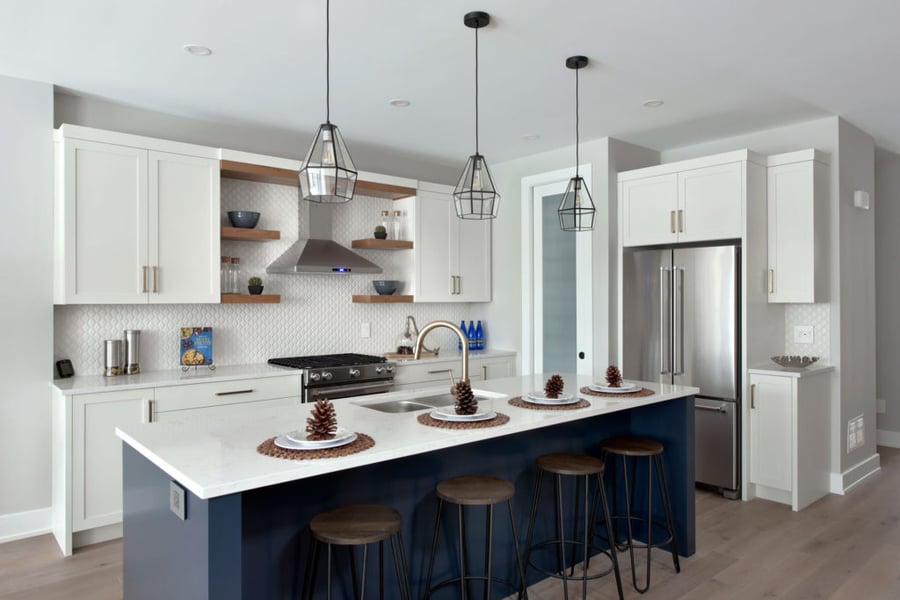
Image Source: www.deslaurier.com
Why Overhang Matters for Your Island
The overhang on your kitchen island is more than just a design choice. It plays a big part in how you use your island every day. It affects comfort, how well the space works, and even how your kitchen looks.
Comfort is Key
Think about sitting at your island. If there isn’t enough space under the counter, your knees might hit the cabinets. This makes sitting very uncomfortable. A good overhang gives you enough room to pull your stool in close. It lets you sit back and relax. This knee space for island seating is vital for happy users. It makes sure people can eat, work, or chat comfortably for a long time.
Function and Flow
The right overhang also helps your kitchen flow well. If the overhang is too small, people might sit too far out. This can block pathways. It can make your kitchen feel crowded. On the other hand, a good overhang allows people to tuck their stools in nicely. This keeps walking paths clear. It makes moving around the kitchen easy. It also makes sure your kitchen island seating clearance is good for traffic.
Visual Appeal
An island overhang also affects how your kitchen looks. A well-proportioned overhang makes the island look balanced. It can add to the style of your kitchen. Too little overhang might make the island look small or out of place. Too much without proper support can look heavy or even unsafe. The right overhang adds a finishing touch. It makes your island look inviting and complete.
Grasping Standard Overhang Guidelines
When planning your kitchen island, it helps to know the common rules for overhang. These rules are like helpful hints. They make sure your island is both good-looking and useful. Different stool heights need different overhangs.
The Basics of Overhang
Overhang means how much the countertop sticks out past the base cabinets. This extra space is where people sit. It’s where you get knee room. The right amount depends on the height of your island. It also depends on the type of seating you plan to use. More overhang usually means more comfort. But it also means you might need extra support.
NKBA Recommendations
The National Kitchen and Bath Association (NKBA) offers clear guidelines. These guidelines help designers and homeowners. They aim for the best use and comfort in kitchen spaces. For kitchen island seating, the NKBA island overhang guidelines are very important. They tell us the minimum space needed for people to sit comfortably.
Counter-Height Seating (36 inches high)
Many kitchen islands are counter-height, which is about 36 inches from the floor. This is the same height as your kitchen counters. It’s a popular choice because it feels like a natural part of the kitchen.
For counter-height seating, the NKBA suggests a minimum of 15 inches of clear knee space. This means your standard kitchen island overhang should be at least 15 inches. This allows most adults to sit comfortably. They can pull their knees under the counter without bumping. If you have less than 15 inches, people might sit too far away. Or their knees might hit the cabinets. This impacts the comfortable island seating depth.
Bar-Height Seating (42 inches high)
Some islands have a raised bar section. This part is usually about 42 inches high. This height works well for bar stools. It creates a separate eating area. It can also hide kitchen mess from view.
For bar-height seating, the NKBA recommends a minimum of 12 inches of clear knee space. So, for bar stool overhang requirements, aim for at least 12 inches. Because bar stools are taller, your legs are often straighter. This means you need a little less depth for your knees. Still, 12 inches gives enough room for most people to sit without feeling squeezed.
Table-Height Seating (30 inches high)
Less common for islands, but sometimes used, is table-height seating. This is about 30 inches high. It’s like a dining table.
For table-height seating, the NKBA suggests a minimum of 18 inches of clear knee space. This is more than counter or bar height. Why? Because at a lower table, you lean forward more. Your legs stick out further under the table. So, a larger overhang is needed for comfort. If your island has a section at this height, make sure it has enough depth.
Here is a simple table to sum up the NKBA overhang guidelines:
| Seating Height | Counter Height (36 inches) | Bar Height (42 inches) | Table Height (30 inches) |
|---|---|---|---|
| Minimum Overhang | 15 inches | 12 inches | 18 inches |
| Comfort Level | Good | Good | Best |
| Stool Type | Counter Stool | Bar Stool | Dining Chair |
Deeper Dive into Knee Space and Comfort
The idea of knee space is central to a usable kitchen island. It’s all about making your island a place where people want to gather.
What is Knee Space?
Knee space is the open area directly under the counter where your legs and knees go when you sit down. It’s the depth of the overhang. If this space is too shallow, your legs will have to sit at an awkward angle. Or you’ll have to sit further away from the counter. This makes eating or working hard. The goal is to let you sit with your thighs mostly under the counter. This way, you can reach your plate or keyboard easily. A good knee space for island seating makes a big difference.
The Importance of Comfortable Island Seating Depth
Comfortable island seating depth goes beyond just avoiding knee bumps. It’s about how much room you have to move. It’s about feeling relaxed. If the overhang is too short (say, 6 inches), you can barely get your knees under. You’ll lean forward awkwardly. If it’s 9 inches, it’s better, but still tight for most adults. A depth of 12 inches is often seen as the minimum island overhang for stools that allows some comfort. But 15 inches is truly ideal for counter-height seating. This extra few inches allow you to pull your stool in fully. It lets you rest your arms on the counter. It makes the island feel like a true dining space.
Think about it like this: if you’re trying to write or eat, you want to be close to the surface. A good depth means you don’t have to stretch. It means your elbows can rest naturally. This makes the island a truly usable space, not just a place to perch.
Minimum Requirements for Stools
While 15 inches is the NKBA ideal for counter height, some situations might not allow it. What is the absolute minimum island overhang for stools? For a counter-height island, you can get by with 9 to 10 inches of overhang. This is often seen as the absolute bare minimum. It offers very little knee room. It’s okay for short uses, like a quick snack. But it’s not comfortable for longer periods. If you have to choose between no seating and 9 inches, 9 inches is better. But always aim for more if you can. For bar-height, 9 inches is also a tight minimum. Remember, these are minimums, not ideals for comfort.
Different Stool Types and Their Overhang Needs
The type of stool you pick works hand-in-hand with your island’s overhang. Each stool height has its own needs to make sure sitting is pleasant.
Bar Stool Overhang Requirements
Bar stools are tall. They are made for counters around 40-42 inches high. Because they are tall, your legs hang down more straight. This means you might not need as much depth under the counter as with a lower stool. As noted, 12 inches is the standard for bar stool overhang requirements. This gives enough space for most people’s knees. If you have a busy space, sometimes 10 inches can work. But, again, 12 inches is better for true comfort. It allows a bit more wiggle room. It makes getting in and out of the stool easier.
Counter Stool Considerations
Counter stools are the most common type. They fit a standard 36-inch counter. This is the same height as your kitchen counters. For these stools, 15 inches of overhang is the gold standard. This allows plenty of knee space. It lets you sit back comfortably. It also means you can easily get your whole leg under the counter. If you have active kids, this extra space is great. It gives them room to move without hitting the island. For an average adult, 15 inches is the comfortable island seating depth. It allows for a relaxed posture. It supports good arm placement for eating or working.
Table Stool Dynamics
Table-height stools or chairs are for a 30-inch high counter. This height needs the most overhang. This is because at a lower table, your legs naturally extend further forward. They also bend at a sharper angle. For this reason, a minimum of 18 inches of overhang is needed for table-height seating. This generous space ensures that your legs have plenty of room. It makes sure you can push your chair fully under the counter. This keeps your pathway clear. It also helps with the overall kitchen island seating clearance. If you plan to use your island as a main dining spot, this height and overhang are very important. They provide the most traditional dining feel.
Beyond Overhang: Island Dimensions for Seating
While overhang is key for comfort, it’s just one piece of the puzzle. The overall size and layout of your island also play a huge role in how well it seats people.
Ideal Kitchen Island Dimensions for Seating
To truly seat people well, an island needs to be wide enough and deep enough. The length depends on how many people you want to seat. For each person, you need about 24 inches of width. So, for two people, your island needs to be at least 48 inches wide. For three people, it needs to be 72 inches wide.
The kitchen island countertop depth is also important. This is the total depth from the back of the island to the edge of the overhang.
* If your island has cabinets on one side and seating on the other, the countertop needs to be deep enough for both. Standard base cabinets are about 24 inches deep. Add your desired overhang (e.g., 15 inches). So, a typical island with seating on one side might need a total depth of 24 inches (cabinets) + 15 inches (overhang) = 39 inches total depth.
* If you have cabinets on both sides, and seating in between, the depth will be much greater. For example, 24 inches (cabinets) + 24 inches (cabinets) + 15 inches (overhang) might be too much. For islands with seating between two sets of cabinets, the seating area might be a void. Or you might have shallower cabinets. The goal is to make sure the overall kitchen island countertop depth works for its purpose.
Thinking about the ideal kitchen island dimensions for seating means looking at the total size. It’s not just the overhang but the length and overall depth too. Make sure there’s enough space for people to sit side-by-side without bumping elbows.
Kitchen Island Seating Clearance Around the Island
It’s not just about space at the island, but around it. You need enough room behind the seated people for others to walk by. The NKBA recommends a minimum of 36 inches of clear walkway space behind any seating area. This means from the edge of the island counter (or the furthest point of a pulled-out stool) to the next obstacle (like a wall or another cabinet).
For a more comfortable walkway, especially in high-traffic areas, aim for 42-48 inches of clearance. If you have two rows of seating facing each other, you’ll need even more space in between. At least 60 inches is often needed for two people to sit back-to-back and still have room for someone to pass. Good kitchen island seating clearance is vital for a functional kitchen. It prevents bottlenecks and makes your kitchen easy to use.
The Role of Kitchen Island Countertop Depth
The total depth of your island’s countertop affects many things. It includes the depth of your cabinets and the overhang.
* Cabinet Depth: Most kitchen base cabinets are 24 inches deep. This is the standard.
* Overhang: This is the part that extends beyond the cabinets, providing knee room.
* Total Depth: Cabinet depth + overhang depth = total kitchen island countertop depth.
For example, if you have 24-inch deep cabinets and a 15-inch overhang, your total island depth will be 39 inches. This is a common and comfortable depth for an island with seating on one side. If your island is a single slab and meant for seating on both sides, it needs to be very deep. You would need 15 inches for seating on one side, plus 15 inches for seating on the other side, plus some middle space. This would make it at least 30 inches deep, maybe 36 inches or more. This depth must also fit your kitchen space.
Ensuring Stability: Kitchen Island Overhang Support
As your island overhang gets larger, it needs more support. Stone countertops, like granite or quartz, are very heavy. Without proper support, a large overhang can crack, sag, or even break off. This is a safety issue. It’s also a costly repair.
When is Support Needed?
For most stone countertops, an overhang of more than 10-12 inches usually needs extra support. Some stone suppliers might say 6 inches is the limit without support. Always check with your countertop fabricator. They will know the strength of the specific material you choose. If you plan for a long or deep overhang, planning for support from the start is smart. Kitchen island overhang support is critical for durability and safety.
Types of Support
There are several ways to support an island overhang. Each has its pros and cons.
Corbel Supports
Corbels are decorative brackets. They attach to the underside of the island. They stick out to hold the countertop.
* Pros: They can be very decorative. They come in many styles (wood, metal, stone). They are visible and add to the kitchen’s look.
* Cons: They take up knee space. They can be bumped by knees or stools. They might not fit all modern design styles.
Steel Brackets
Steel brackets are strong and often sleek. They are typically flat pieces of steel. They are attached to the island structure.
* Pros: Very strong and durable. Can be made to be less visible than corbels. Some can be truly hidden. They offer excellent kitchen island overhang support.
* Cons: Less decorative. Some types can still be seen or felt under the counter.
Hidden Supports
Hidden supports are designed to be completely out of sight. They are usually flat steel plates or rods. They are built into the cabinet structure or embedded into the countertop.
* Pros: Offer a clean, floating look for your island. They maximize knee space. They are very modern and popular.
* Cons: Can be more complex to install. Often require planning during the cabinet construction phase. May be more expensive. Examples include steel rods inserted into the stone, or flat steel plates hidden just below the surface.
Installation Tips for Support
- Plan Early: Decide on your overhang and support needs early in the design process. Tell your cabinet maker and countertop fabricator.
- Professional Help: Always have professionals install supports and countertops. This ensures safety and proper function.
- Match Material: Choose support materials that work with your countertop. For example, some hidden supports need specific stone thicknesses.
- Check Local Codes: Some areas have building codes for countertop overhangs and support.
Factors Shaping Your Overhang Choice
Choosing the best overhang is not just about rules. It’s about your kitchen, your family, and how you live. Several things will help you decide the best fit.
Kitchen Size and Layout
The overall size of your kitchen matters.
* Small Kitchens: In a small kitchen, a large overhang might eat up too much precious walkway space. It could make the kitchen feel cramped. You might have to choose a minimum island overhang for stools (like 9-12 inches) to keep paths clear.
* Large Kitchens: A large kitchen can handle a more generous overhang. You can have 15 inches or more for extra comfort. You can also afford a wider island with a greater kitchen island countertop depth. This allows for more seating and multi-functionality.
Consider where the island is. Is it a main thoroughfare? If so, prioritize good kitchen island seating clearance.
User Needs (Kids, Adults, Mobility)
Who will use the island most often?
* Adults: Most adults are comfortable with 12-15 inches of overhang for counter-height.
* Children: Kids might prefer less overhang. They sometimes like to sit closer to the edge. But they still need enough room for their knees. The comfort for them is also tied to the right stool height.
* Elderly or People with Mobility Needs: These users might need more generous knee space. A deeper overhang (15 inches+) allows more room to shift. It makes it easier to get in and out of stools. They might also prefer a table-height island for easier access.
Island Function (Dining, Prep, Both)
How will you use your island most?
* Main Dining Area: If your island is your primary dining spot, aim for maximum comfort. This means a generous overhang (15-18 inches) and enough width per person (24-30 inches). A deeper comfortable island seating depth is key here.
* Quick Meals/Homework: For short uses, a minimum island overhang for stools (9-12 inches) might be fine.
* Food Prep: If the island is mostly for preparing food, you might have less seating. Or you might have no seating. The focus would be on counter space and work zones. However, if you want people to sit and chat while you cook, a good overhang is still useful.
Material Choices
The material of your countertop affects how much overhang you can have unsupported.
* Stone (Granite, Quartz, Marble): These are heavy and can crack. They often need support for overhangs over 10-12 inches.
* Solid Surface (Corian): These are lighter and more flexible. They can sometimes handle slightly larger overhangs without visible support. Always check the manufacturer’s guidelines.
* Wood/Butcher Block: Wood is also relatively lighter. It’s more forgiving than stone. But very long overhangs still need support to prevent warping or sagging.
* Laminate: Lighter still. But too much overhang can make it feel flimsy without support.
Always check with your countertop supplier about their specific recommendations for kitchen island overhang support based on the material you choose.
Tips for Designing the Perfect Island Overhang
Making the right choice for your island’s overhang involves careful thought. Here are some practical tips to help you get it right.
Plan with Measurements
Do not guess. Measure your space carefully.
* Measure your kitchen: Know its total size. Mark out walkways.
* Use tape on the floor: Use painter’s tape to outline your proposed island size. Draw out the overhang. Place chairs or stools around it. See how much space is left.
* Consider your stools: Measure the depth of your chosen stools. How much space do they take up when pulled out? How much when pushed in? This helps you gauge your kitchen island seating clearance.
* Mock it up: If possible, use cardboard boxes or a temporary setup to mimic the island’s height and overhang. Sit at it. See how it feels. This is the best way to determine comfortable island seating depth for your family.
Test Your Seating
Before you finalize your design, try out stools.
* Visit showrooms: Sit at different islands in kitchen showrooms. Pay attention to the overhang. Do you feel cramped? Is there plenty of knee space for island seating?
* Borrow or buy a sample stool: If you’re serious about a certain stool, see if you can take one home. Place it with your mock-up. See how it fits and feels. This helps confirm your bar stool overhang requirements or counter stool needs.
Consider Future Needs
Think about how your family might change.
* Growing children: Will young children grow into tall teenagers? A generous overhang will be comfortable for them as they get bigger.
* Aging in place: If you plan to stay in your home long-term, think about mobility. More space under the counter can be very helpful for people using wheelchairs or walkers.
* Resale value: A well-designed, comfortable island is a big plus for potential buyers. Stick to standard kitchen island overhang guidelines for broad appeal.
Work with a Pro
A kitchen designer or an architect can be a great help.
* Expert advice: They know the NKBA island overhang guidelines. They understand space planning. They can suggest the best kitchen island countertop depth.
* Problem-solving: They can help solve tricky layout issues. They can make sure your island fits your kitchen and your needs perfectly.
* Structural details: They can advise on kitchen island overhang support. They will ensure your island is safe and strong. They can help you integrate ideal kitchen island dimensions for seating into your overall kitchen design.
Final Thoughts on Your Island Overhang
The overhang for your kitchen island is a critical detail. It affects how you use your kitchen every day. It impacts comfort, how easy it is to move around, and even the look of your space. By paying attention to standard guidelines, knee space, and support, you can create an island that’s not just beautiful but also perfectly functional. A well-planned overhang turns your kitchen island into the heart of your home. It makes it a place where family and friends can gather, eat, and make memories in comfort.
Frequently Asked Questions (FAQ)
Can an island overhang be too big?
Yes, an island overhang can be too big. If it’s too deep, it can take up too much walkway space in your kitchen. This can make the kitchen feel crowded. It can also block access to appliances or cabinets. Also, very large overhangs need strong kitchen island overhang support. Without it, the countertop can sag or break, which is dangerous. There is a sweet spot between too small for comfort and too large for the room.
How wide should an island be for seating on one side?
For comfortable seating on one side, your island should be at least 24 inches wide per person. So, for two people, an island needs to be 48 inches wide. For three people, it needs to be 72 inches wide. This allows each person enough elbow room. It makes sure people can sit side-by-side without feeling cramped.
How much space do you need behind island seating?
You need enough room for people to sit and for others to walk behind them. The NKBA recommends a minimum of 36 inches of clear walkway space behind island seating. For a more comfortable path, especially in busy kitchens, aim for 42 to 48 inches. This provides good kitchen island seating clearance.
Is 9 inches enough overhang for an island?
9 inches is generally considered the absolute minimum island overhang for stools, especially for counter-height seating (36 inches high). It offers very limited knee space. It might be okay for a quick snack or for children. But it is not comfortable for adults over longer periods. For true comfort and good knee space for island seating, aim for 12 to 15 inches for counter height.
What is the average kitchen island depth?
The average kitchen island depth varies based on its design.
* For an island with standard 24-inch deep cabinets and a comfortable 15-inch overhang, the total kitchen island countertop depth would be about 39 inches.
* If the island has shallow cabinets (e.g., 12 inches deep) and a 15-inch overhang, it would be 27 inches deep.
* If the island has cabinets on both sides and seating in the middle, the depth would be much greater. It could be 48 inches or more. This is because it includes two sets of cabinet depths plus the seating space.