
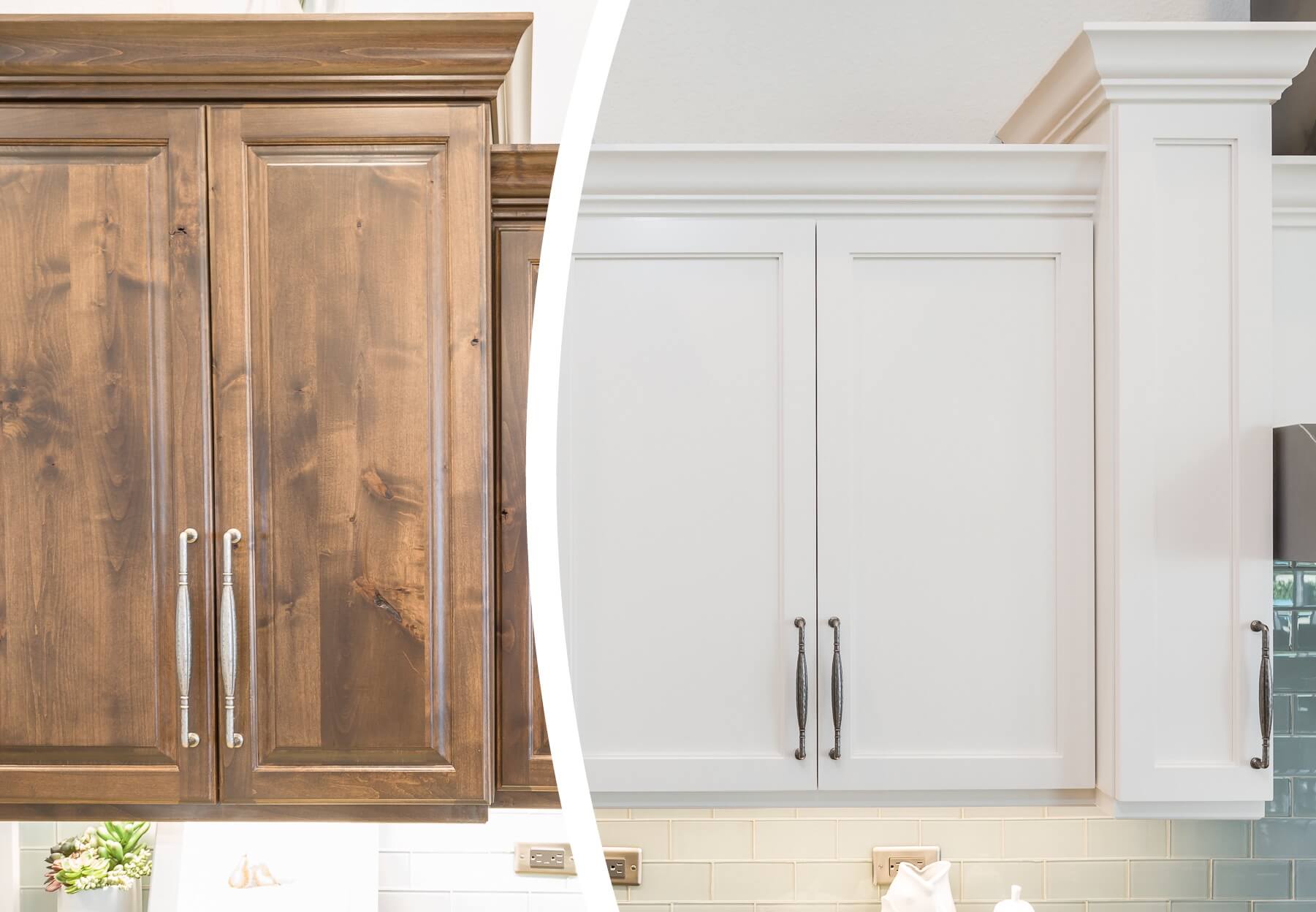
Image Source: www.nhance.com
How Much To Replace Kitchen Cabinet Doors?
The cost to replace kitchen cabinet doors typically ranges from $100 to $400 per door, but can go higher depending on material, style, and customization. This price usually covers the door itself and basic hardware, though installation costs are often separate. If you’re looking to refresh your kitchen’s look without a full renovation, replacing cabinet doors is a fantastic option. It’s a way to dramatically change your kitchen’s appearance for a fraction of the cost of new cabinets. This guide will delve into the various factors influencing kitchen cabinet door replacement cost and provide a clear picture of what to expect.
Deciphering the Cost of New Cabinet Doors
The cost of new cabinet doors is influenced by a multitude of factors, making it crucial to break down each element. Think of it like buying a car; the base model is one price, but adding features and choosing premium materials can significantly increase the final cost.
Material Matters: A Look at Common Door Materials
The material you choose for your new cabinet doors is perhaps the biggest driver of price. Each material offers a different look, feel, durability, and price point.
- MDF (Medium-Density Fiberboard): This is often the most budget-friendly option. MDF is made from wood fibers, sawdust, and resin, compressed into panels.
- Pros: Smooth surface ideal for painting, consistent quality, relatively inexpensive.
- Cons: Not as moisture-resistant as solid wood, can swell if exposed to water, can be heavy.
- Typical Cost: $50 – $150 per door.
- Particleboard: Similar to MDF but often made with larger wood chips and a different binder. It’s generally less durable than MDF.
- Pros: Very inexpensive.
- Cons: Least durable, prone to damage from moisture, can sag over time.
- Typical Cost: $40 – $100 per door.
- Plywood: A strong and stable option, plywood is made by gluing thin layers of wood veneer together.
- Pros: Durable, good moisture resistance, less prone to warping than solid wood.
- Cons: Can be more expensive than MDF, the layered edge might need finishing if visible.
- Typical Cost: $70 – $200 per door.
- Solid Wood: This is the premium choice, offering natural beauty, durability, and a wide range of wood species.
- Maple: A popular choice for its hardness, smooth grain, and ability to take stain well. It’s mid-range in solid wood pricing.
- Pros: Durable, attractive grain, paints and stains well.
- Cons: Can be more expensive than MDF or plywood.
- Typical Cost: $100 – $300 per door.
- Oak: Known for its distinctive grain patterns and durability. It’s also a mid-range solid wood option.
- Pros: Strong, classic look, good for traditional styles.
- Cons: Grain can be prominent, might not suit modern aesthetics.
- Typical Cost: $90 – $280 per door.
- Cherry: Offers a rich, warm color that deepens with age. It’s a more premium wood.
- Pros: Beautiful color, smooth finish, ages gracefully.
- Cons: Can be more expensive, softer than maple.
- Typical Cost: $120 – $350 per door.
- Hickory: One of the hardest domestic woods, offering excellent durability and unique color variations.
- Pros: Extremely durable, distinctive character.
- Cons: Can be harder to work with, more expensive.
- Typical Cost: $130 – $400+ per door.
- Walnut: A dark, luxurious wood that’s very desirable for high-end kitchens. It’s on the higher end of the price spectrum.
- Pros: Rich color, elegant appearance, durable.
- Cons: Most expensive of common solid woods, can be prone to scratching due to its softness compared to maple.
- Typical Cost: $150 – $450+ per door.
- Maple: A popular choice for its hardness, smooth grain, and ability to take stain well. It’s mid-range in solid wood pricing.
Styles and Designs: More Than Just a Flat Panel
The style of your cabinet doors significantly impacts their cost. Simple Shaker-style doors are generally less expensive than intricate raised-panel or custom-designed doors.
- Flat-Panel (Slab) Doors: These are the simplest and most cost-effective. They are essentially flat pieces of material.
- Pros: Modern look, easy to clean, cheapest option.
- Cons: Can appear basic if not paired with striking hardware.
- Typical Cost: Adds 0-10% to the base material cost.
- Shaker Doors: Characterized by a recessed center panel and a simple frame, Shaker doors are a timeless classic.
- Pros: Versatile, fits many kitchen styles, moderately priced.
- Cons: Slightly more complex construction than slab doors.
- Typical Cost: Adds 10-20% to the base material cost.
- Raised-Panel Doors: These doors have a center panel that is raised, adding depth and dimension.
- Pros: Adds a traditional and sophisticated look.
- Cons: More complex to manufacture, thus more expensive.
- Typical Cost: Adds 20-30% to the base material cost.
- Recessed-Panel Doors: Similar to Shaker but with a more pronounced bevel or profile.
- Pros: Offers a refined look.
- Cons: More intricate detailing means higher cost.
- Typical Cost: Adds 15-25% to the base material cost.
- Beadboard Doors: Feature vertical grooves resembling beadboard paneling.
- Pros: Offers a cottage or farmhouse charm.
- Cons: The grooves can be harder to clean.
- Typical Cost: Adds 10-20% to the base material cost.
- Glass-Insert Doors: Doors with glass panels, often used for display cabinets.
- Pros: Creates visual interest, can make a small kitchen feel larger.
- Cons: Requires the contents to be tidy, glass can break.
- Typical Cost: Adds $50 – $200+ per door for the glass and specialized frame.
Finishes: From Paint to Stain
The finish applied to your cabinet doors also plays a role in the overall cost.
- Unfinished: Buying doors unfinished is the cheapest option, but it means you’ll have to do the finishing yourself.
- Cost: Saves $10-$50 per door compared to finished.
- Painted: Painting offers a clean, modern look. Custom colors or specialized finishes (like matte or high-gloss) can add to the cost.
- Typical Cost: $20 – $80 per door, depending on complexity and brand.
- Stained: Staining highlights the natural beauty of wood grains. Different stain colors and finishes can vary in price.
- Typical Cost: $20 – $70 per door.
- Veneered: A thin layer of wood veneer applied over a core material like MDF or particleboard.
- Pros: Can mimic the look of solid wood at a lower cost.
- Cons: Can be less durable than solid wood, edges might show the core material.
- Typical Cost: Adds $15 – $40 per door to the base material cost.
Cabinet Door Refacing Cost vs. Replacement
When considering updating your kitchen cabinets, cabinet door refacing cost is often compared to a full replacement. Refacing involves keeping your existing cabinet boxes but replacing the doors and drawer fronts, and often applying a new veneer or laminate to the visible parts of the boxes.
Refacing: A Mid-Range Solution
- What it involves: New doors and drawer fronts, veneering or laminating the cabinet frames, and new hardware.
- Pros: Less disruptive than a full remodel, generally less expensive than a full cabinet replacement, can update the look significantly.
- Cons: You’re still working with the old cabinet boxes, which may have internal wear and tear. The quality of the refacing job is critical.
- Typical Cost: $4,000 – $10,000 for an average-sized kitchen. This breaks down to roughly $150 – $400 per door, similar to buying new doors alone but with the added cost of refacing the boxes.
Full Replacement: The High-End Option
- What it involves: Completely removing old cabinets and installing new ones.
- Pros: Allows for complete customization of layout, style, and materials; offers the highest quality and longevity.
- Cons: Most expensive and time-consuming option, most disruptive to your kitchen.
- Typical Cost: $10,000 – $30,000+ for an average-sized kitchen, depending heavily on materials and brand.
Key Difference: If your existing cabinet boxes are in good condition, replacing kitchen cabinet fronts can offer a significant visual upgrade at a more manageable cost than a full gut renovation. The cabinet door refacing cost can be a good middle ground.
Replacing Kitchen Cabinet Fronts: The Process and What to Expect
The process of replacing kitchen cabinet fronts is relatively straightforward, but accuracy is key.
Measuring for Success
- Measure Each Door: Carefully measure the height and width of each existing door. Measure from edge to edge.
- Consider Overlay:
- Full Overlay: Doors and drawer fronts cover most of the cabinet frame, leaving minimal gaps.
- Partial Overlay: Doors and drawer fronts cover a portion of the cabinet frame, leaving larger gaps between them.
- Inset: Doors and drawer fronts are set into the cabinet frame, creating a flush surface. This requires precise fitting and is generally more expensive.
- Measure for Drawer Fronts: Measure the width and height of the drawer box opening, and then add the desired overlay to determine the size of the drawer front.
- Hinge Boring: Most cabinet door manufacturers can bore holes for hinges based on your existing cabinet box configuration (e.g., overlay type, hinge placement). This is a crucial step for easy installation.
Hardware Considerations
Don’t forget to factor in the cost of new hardware. Knobs and pulls can significantly impact the overall look and feel of your new doors.
- Knobs: Typically cost $2 – $20 each.
- Pulls: Typically cost $3 – $30 each.
- Hinges: If your new doors require different hinge types or your old ones are worn, budget $5 – $20 per hinge.
Cabinet Door Swap Prices: DIY vs. Professional Installation
The cabinet door swap prices will vary significantly depending on whether you opt for a DIY approach or hire professionals.
DIY Installation: Saving Money, Gaining Experience
- Tools Needed: Measuring tape, drill/driver, screwdriver bits, level, possibly a router for hinge mortising if not pre-bored.
- Process:
- Remove old doors and drawer fronts.
- Carefully unpack and inspect new doors and drawer fronts.
- Attach hinges to the new doors.
- Mount the new doors onto the cabinet boxes, adjusting for a perfect fit.
- Attach new drawer fronts to drawer boxes.
- Install new knobs or pulls.
- Cost Savings: You save on labor costs, which can be substantial.
- Time Commitment: This can take a weekend or more, depending on the size of your kitchen and your DIY skill level.
- Potential Pitfalls: Incorrect measurements can lead to doors that don’t fit, and improper hinge installation can cause doors to hang unevenly.
Professional Installation: Expertise and Efficiency
- What they do: Professionals will measure, order the correct doors, pre-bore if necessary, and install everything perfectly. They have the right tools and experience to ensure a seamless finish.
- Benefits: Saves you time and the potential headache of mistakes. Ensures a professional, factory-like finish.
- Cost: Professional installation can add $50 – $150 per door to the total cost. For a kitchen with 20 doors, this could be an additional $1,000 – $3,000.
Cost to Replace Kitchen Cupboard Doors: A Comprehensive Breakdown
Let’s break down the potential cost to replace kitchen cupboard doors for an average-sized kitchen (roughly 15-20 doors and drawer fronts).
| Item | Estimated Cost Per Door/Drawer Front | Estimated Total (15 Doors) | Estimated Total (20 Doors) |
|---|---|---|---|
| Material | |||
| MDF (Painted) | $75 | $1,125 | $1,500 |
| Plywood (Stained) | $130 | $1,950 | $2,600 |
| Solid Maple (Shaker) | $180 | $2,700 | $3,600 |
| Solid Cherry (Raised) | $250 | $3,750 | $5,000 |
| Hardware (Knobs/Pulls) | $5 – $20 each | $75 – $300 | $100 – $400 |
| Installation (DIY) | $0 (labor) | $0 | $0 |
| Installation (Pro) | $75 – $150 | $1,125 – $2,250 | $1,500 – $3,000 |
| Total (DIY, Maple) | $3,775 – $3,900 | $5,100 – $5,500 | |
| Total (Pro, Maple) | $4,900 – $6,150 | $6,600 – $8,500 |
Note: These are estimates. Actual prices will vary based on specific suppliers, locations, and current market conditions.
New Kitchen Cabinet Door Prices: Factors Affecting the Bill
When looking at new kitchen cabinet door prices, consider these additional factors that can influence your budget:
- Customization: Any deviation from standard sizes or styles will increase the price. This includes custom stain matching, decorative milling, or unique shapes.
- Hardware Inclusion: Some suppliers might include basic hinges or knobs, while others will price them separately. Always clarify what’s included.
- Delivery Fees: If you’re ordering online or from a distant supplier, delivery costs can add up, especially for large orders.
- Lead Time: Custom orders take time. Factor this into your project timeline. Shorter lead times might come at a premium.
Kitchen Cabinet Door Refurbishment Cost: Breathing New Life
Kitchen cabinet door refurbishment cost is an alternative to replacement, focusing on restoring your existing doors. This can be a great option if your doors are structurally sound but simply worn or outdated.
What Refurbishment Entails:
- Sanding: Removing old paint, stain, and imperfections.
- Repair: Fixing minor dents, scratches, or veneer damage.
- Priming: Applying a primer for a smooth, even finish.
- Painting or Staining: Applying a new coat of paint or stain.
- New Hardware: Replacing knobs and pulls.
Refurbishment vs. Replacement Costs:
- DIY Refurbishment: If you’re willing to put in the labor, you can sand, prime, and paint your existing doors for the cost of materials (sandpaper, primer, paint, brushes, rollers, hardware). This could be as low as $100 – $300 for an entire kitchen.
- Professional Refurbishment: Hiring a painter or cabinet specialist to refurbish your doors will cost more. Expect to pay $40 – $100 per door, plus the cost of materials and hardware. For 15 doors, this might range from $600 to $1,500 plus materials.
When to Refurbish:
- Your current doors are in good structural condition.
- You like the existing style of your doors.
- You’re on a tight budget and have time for DIY.
When to Replace:
- Doors are warped, cracked, or heavily damaged.
- You want a completely new style or material.
- The cost of refurbishment is approaching the cost of new, basic doors.
Custom Kitchen Cabinet Door Cost: The Ultimate Personalization
If you have a specific vision for your kitchen or unique cabinet sizes, you’ll be looking at custom kitchen cabinet door cost. This offers the most flexibility but also comes with the highest price tag.
What Makes Doors Custom?
- Unique Dimensions: Doors made to exact, non-standard sizes.
- Exotic Wood Species: Using woods not typically found in stock options.
- Intricate Designs: Hand-carved details, unique panel profiles, or specialized joinery.
- Specialty Finishes: Custom color matching, distressed finishes, or unique gloss levels.
- Inset Doors: Requiring very precise manufacturing for a flush fit.
Pricing Custom Doors:
The custom kitchen cabinet door cost can be significantly higher than off-the-shelf options.
- Material: Premium hardwoods and exotic woods can cost 50-100% more than common woods.
- Labor: The skilled labor required for custom milling, joinery, and finishing adds substantially to the price.
- Design Fees: In some cases, a designer might be involved, adding to the overall cost.
For custom doors, expect to pay anywhere from $200 to $600+ per door, depending on the complexity of the design and the materials used.
Cabinet Door Replacement Estimates: What to Ask For
When seeking cabinet door replacement estimates, be prepared to provide detailed information to ensure accurate quotes.
Key Information to Provide:
- Number of Doors and Drawer Fronts: A clear inventory of what needs replacing.
- Dimensions: Provide exact measurements for each door and drawer front.
- Material Preference: Specify if you want MDF, plywood, or a particular type of solid wood.
- Style Preference: Indicate your desired door style (Shaker, slab, raised panel, etc.).
- Finish Preference: Whether you want them painted, stained, or unfinished.
- Hinge Boring Requirements: Specify if you need hinge holes pre-drilled and any details about your existing hinge setup (e.g., European-style concealed hinges).
- Hardware: State whether you will be providing your own hardware or if you need it included in the estimate.
- Desired Timeline: When do you need the doors?
- Delivery Location: Where should the doors be delivered?
Questions to Ask the Supplier/Installer:
- What is the exact material composition of the doors?
- Are the doors pre-drilled for hinges? If so, can you confirm the boring pattern?
- What is the warranty on the doors?
- What is your return policy for doors that don’t fit or are defective?
- What is the estimated lead time from order to delivery?
- Are there any additional fees for customization or special finishes?
- If I’m getting installation, what does that include?
Frequently Asked Questions (FAQ)
Q1: Can I reuse my existing hinges when replacing cabinet doors?
A1: Often, yes, if the new doors have the same hinge boring pattern as your old doors. However, if you’re changing the door style (e.g., from inset to overlay) or if your old hinges are worn out, you may need new ones. It’s best to check the compatibility and condition of your current hinges.
Q2: How long does it take to replace kitchen cabinet doors?
A2: If you’re doing it yourself, it can take anywhere from a weekend to a few days, depending on the size of your kitchen and your skill level. Professional installation usually takes 1-3 days.
Q3: What is the cheapest way to update my kitchen cabinet doors?
A3: The cheapest ways are to either paint your existing doors (DIY) or purchase new doors made from MDF or particleboard in a simple slab style. Refurbishing your current doors is also a cost-effective option if they are in good condition.
Q4: Do I need to replace my drawer fronts too?
A4: It’s highly recommended to replace drawer fronts at the same time you replace cabinet doors for a cohesive look. The cost is often similar to doors, and it ensures a consistent aesthetic throughout your kitchen.
Q5: Where can I buy replacement kitchen cabinet doors?
A5: You can buy them from big box home improvement stores (like Home Depot or Lowe’s), specialized online cabinet door retailers, local cabinet shops, and lumber yards. Online retailers often offer a wider selection and competitive pricing.
Replacing your kitchen cabinet doors is a smart and impactful way to transform your kitchen without the expense and disruption of a full renovation. By carefully considering materials, styles, finishes, and whether you’ll DIY or hire a professional, you can achieve a beautiful, updated kitchen that fits your budget and your vision.