
Most kitchen countertops are 36 inches tall. This includes the countertop itself. This height is common in many homes. It helps people work in the kitchen easily. Many kitchen cabinets are made for this height. You can choose different heights too. Some people like shorter or taller counters. This guide will tell you all about kitchen counter heights. It covers standard sizes. It also talks about special needs and custom options.
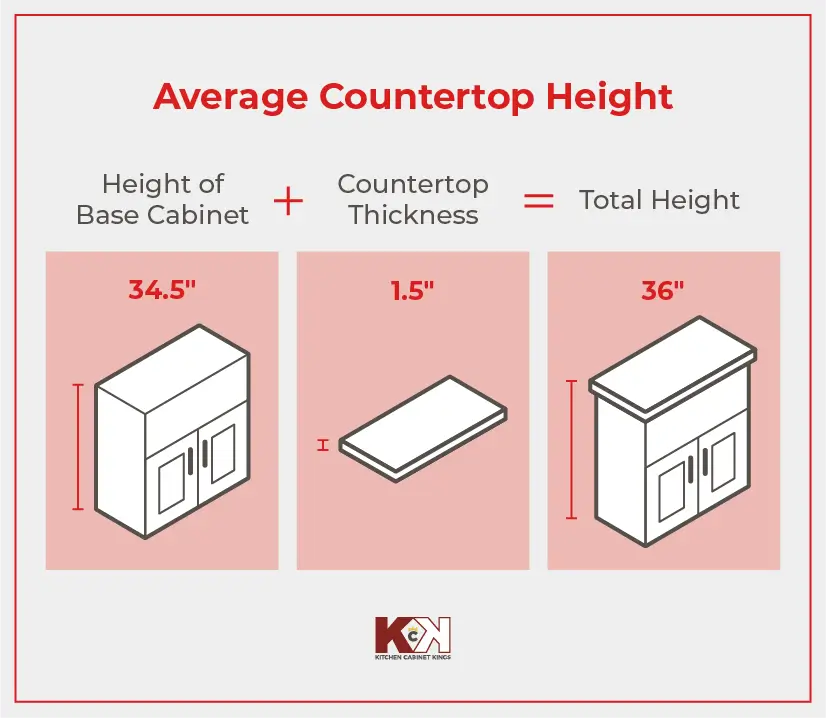
Image Source: cdn.kitchencabinetkings.com
Grasping the Standard Kitchen Counter Height
The standard kitchen counter height is 36 inches. This measurement goes from the floor to the top of the counter. It includes the counter’s thickness. This height did not just appear by chance. It came from many years of design. It also considers how people use kitchens.
This height works for most adults. It lets them chop food. They can mix things. They can wash dishes. All this can be done without bending too much. It also helps avoid reaching too high. It aims for a comfortable working spot.
The 36-inch height is very common. Most kitchen cabinets are built to meet this height. This makes planning a kitchen easier. It also makes buying parts simple. You can find ready-made cabinets. You can find ready-made countertops. They all fit together well at this height.
It is important to know this standard. It helps you design your kitchen. It guides your choices for new counters. It also helps you see if a kitchen fits you.
The Origin of 36 Inches
Why 36 inches? This height became standard a long time ago. It came about when kitchens became more modern. Before, kitchen work areas were not very high. People used tables. They used blocks. These were not always comfortable.
Over time, designers looked at how people stood. They watched how people worked. They found that 36 inches was a good height. It suits most people. It stops back strain. It makes kitchen tasks easier. This height became widely used. Now, it is the main height for counters.
Kitchen Base Cabinet Height and Countertops
The kitchen base cabinet height is key here. Base cabinets sit on the floor. They form the structure for your countertop. Most base cabinets are 34.5 inches tall. This is their height without the countertop.
Then, you add the countertop. Countertops are usually 1.5 inches thick. So, 34.5 inches (cabinet) + 1.5 inches (counter) equals 36 inches. This is how the standard 36-inch height is met.
Most cabinet makers build to these sizes. This makes it easy to choose cabinets. You can then add your chosen counter. They will fit perfectly. This creates a smooth and steady work surface.
Beyond the Standard: Average Kitchen Counter Height and Variations
While 36 inches is the standard, some kitchens might differ. The average kitchen counter height often lines up with this standard. But sometimes, counters can be slightly different. This can happen for many reasons.
Maybe a house is old. Its counters might be a bit lower. Perhaps a past owner wanted something custom. Or maybe a specific design style changes things. Still, 36 inches is the most common average you will see.
It is good to check your own counter height. Use a tape measure. Go from the floor to the top of the counter. This way, you know your exact height. This helps if you plan to change things.
Kitchen Island Height Options
Kitchen islands are versatile. They can have different heights. They do not always follow the main counter height. Kitchen island height can be one of three common levels:
- Counter Height: This is 36 inches. It matches the main kitchen counters. It makes the island a seamless part of the work area. You can use standard kitchen stools.
- Bar Height: This is taller. It is usually 42 inches. This height is good for eating. It is higher than regular dining tables. It needs taller stools or chairs.
- Table Height: This is lower. It is usually 30 inches. This height is like a regular dining table. You can use standard dining chairs. It is good for families with young children.
Choosing an island height depends on how you use it. Do you want more prep space? Counter height is good. Do you want a casual dining spot? Bar height works well. Do you want a family dining table? Table height is perfect.
Here is a table showing common island heights:
| Island Height Type | Height (Inches) | Best Use Cases | Seating Type Needed |
|---|---|---|---|
| Counter Height | 36 | Food prep, extra workspace, casual | Counter stools (24-26″) |
| Bar Height | 42 | Casual dining, entertaining, bar area | Bar stools (29-30″) |
| Table Height | 30 | Formal or family dining, seating | Dining chairs (18″) |
Bar Height vs Counter Height: Making the Right Choice
The difference between bar height vs counter height is important. It affects how you use the space. It also changes what kind of seating you need.
-
Counter Height (36 inches):
- Purpose: Best for food prep, general kitchen work, or casual dining. It lets people stand comfortably while chatting. It also lets people sit on counter stools.
- Seating: Needs counter stools. These chairs usually have seat heights of 24 to 26 inches.
- Look: Creates a smooth, continuous look with the rest of your kitchen counters.
-
Bar Height (42 inches):
- Purpose: Made for more casual eating or drinking. It lifts people higher. This can give a better view. It also makes a clear break from the kitchen work zone.
- Seating: Needs bar stools. These chairs usually have seat heights of 29 to 30 inches.
- Look: Creates a two-tier look. You often see a lower counter. Then a raised bar section. This adds visual interest.
Think about your lifestyle. Do you host many parties? Bar height might be good. Do you have small kids? Counter height or table height might be better. Choose the height that fits your daily needs best.
Specialized Heights for Inclusivity and Comfort
Not everyone fits the 36-inch standard. Some people need special heights. This includes people with disabilities. It also includes people who want a perfect fit.
ADA Compliant Countertop Height
The Americans with Disabilities Act (ADA) sets rules. These rules help make places accessible. This includes kitchens. The ADA compliant countertop height is specific.
- Height for Forward Approach: Countertops must be no higher than 34 inches. This allows someone in a wheelchair to reach over.
- Clearance Below: There must be space under the counter. This space must be at least 27 inches high. It must be at least 30 inches wide. It must be at least 19 inches deep. This lets a wheelchair fit under the counter.
- Sink Depth: Sinks should not be deeper than 6.5 inches. This makes them easier to use.
These rules ensure everyone can use the kitchen. If you are building an ADA-compliant kitchen, follow these rules carefully. They make the kitchen usable for more people.
Ergonomic Kitchen Counter Height
Ergonomic kitchen counter height means a height that suits you. It is about comfort and safety. The standard 36 inches is good for most. But it might not be perfect for everyone.
- For Taller People: A 36-inch counter might feel too low. They might need to bend more. This can cause back pain. Taller people might prefer a 38-inch or 40-inch counter.
- For Shorter People: A 36-inch counter might be too high. They might need to reach up too much. This can cause shoulder or arm strain. Shorter people might like a 32-inch or 34-inch counter.
- The “Elbow Rule”: A good way to check your ideal height is the elbow rule. Stand at the counter. Bend your elbows to 90 degrees. Your fingertips should just touch the counter surface. Or, the counter should be about 2-4 inches below your bent elbows. This rule gives you a good starting point.
Some kitchens have different height zones. You might have a 36-inch main counter. Then, a lower section for baking. A higher section for chopping. This design is very ergonomic. It makes many tasks easier. It helps prevent pain over time.
Crucial Countertop Dimensions Beyond Height
Height is one part. But other dimensions are just as key. These include depth and overall work area. They shape how you use your kitchen.
Countertop Depth Measurements
Countertop depth measurements are very important. The standard depth for a kitchen countertop is 25 inches. This measurement is from the front edge to the back wall.
Why 25 inches?
* Standard Cabinets: Most base cabinets are 24 inches deep. The extra inch of counter depth lets the countertop hang over the front. This is called an overhang.
* Overhang: This overhang is useful. It protects the cabinet fronts from spills. It also gives you a bit more work space. It can create a slight lip for comfort.
* Appliance Fit: This depth also works with standard appliances. Most fridges and stoves fit well with this depth.
You can have deeper counters. Some people choose 30-inch or 36-inch depths. This is common for islands. It gives more space for cooking. It also gives more room for sitting on the other side. Deeper counters can make a kitchen feel more open. They can also make it feel more roomy. But they need more space in the room itself.
Kitchen Work Surface Dimensions
The overall kitchen work surface dimensions include width. This is how long your counters are. It also includes depth. This is how wide they are from front to back.
- Width: The total length of your counters depends on your kitchen layout. Think about how much space you need. You need space for food prep. You need space for appliances. You need space for a sink. More counter width gives you more room to spread out.
- Work Zones: Good kitchen design creates work zones.
- Prep Zone: This is where you chop and mix. It needs enough space. It should be near the sink and fridge.
- Cooking Zone: This is around your stove. It needs landing space on both sides.
- Cleaning Zone: This is around your sink and dishwasher. It needs space for dirty dishes.
Think about how you move in your kitchen. Do you cook often? Do you entertain? How many people cook at once? These questions help you decide on the right work surface dimensions. Ample work surface makes cooking more enjoyable. It also makes it safer.
Custom Kitchen Countertop Dimensions
Sometimes, standard sizes just do not work. Or you have a special vision. This is where custom kitchen countertop dimensions come in.
- Unique Spaces: Maybe your kitchen is an odd shape. Or it has unusual angles. Custom counters can fit these spaces perfectly.
- Personal Needs: You might be very tall or very short. Or you might have special needs. Custom heights can make your kitchen truly ergonomic for you.
- Specific Design: You might want a unique look. Or you might want a special feature. This could be a very deep counter. Or a counter with a built-in cutting board. Custom counters allow for these ideas.
When you go custom, you work with a professional. They will measure your space exactly. They will help you pick materials. They will make sure the counter fits your needs and your space. Custom counters often cost more. But they give you a kitchen that is truly yours.
When to Opt for Custom Heights
You should consider custom heights if:
- You are not “average” height. The 36-inch standard is based on averages. If you are much taller or shorter, it might not be comfortable.
- You have physical limitations. If you use a wheelchair or have mobility issues, ADA heights are a must.
- You want a multi-level kitchen. Some people like a baking area. This area can be lower. Or a separate bar area. This area can be higher.
- You have a specific cooking style. Maybe you do a lot of rolling dough. A lower counter is great for that.
- You want a unique design statement. Custom sizes can add a special touch to your kitchen.
Think about how you use your kitchen every day. How long do you spend there? If you spend a lot of time cooking, comfort is key. Custom heights can improve your daily life.
The Impact of Height Choices
The height of your kitchen counters does more than just affect how you work. It changes the feel of your kitchen. It can even affect your home’s value.
Functionality and Comfort
The most direct impact is on functionality. And on comfort.
* Too Low: If counters are too low, you stoop. This leads to back pain. It makes tasks harder. Your arms might get tired.
* Too High: If counters are too high, you reach. This strains your shoulders. It makes it hard to see your work. You might need to use a step stool.
* Just Right: The right height prevents these problems. It makes cooking enjoyable. You feel less tired. You can work for longer periods.
Comfort also includes your seating choices. The counter height affects what stools or chairs you can use. Make sure your seating fits your counter height.
Aesthetics and Flow
Height choices also affect how your kitchen looks.
* Uniform Height: A kitchen with all counters at 36 inches looks smooth. It feels open and clean. This is a very common and popular look.
* Varied Heights: Kitchens with different height zones can look dynamic. They add visual interest. They can make the kitchen feel bigger or more complex. For example, a lower baking counter next to a higher main counter. Or a raised bar area on an island.
* Openness: Lower counters can make a small kitchen feel more open. Higher counters can create a divide. This separates the kitchen from other rooms.
Consider the overall design of your home. Does a uniform look fit better? Or does a multi-level design make more sense? The height choices should match your style.
Resale Value Considerations
What about when you sell your home?
* Standard is Safe: Most buyers expect a 36-inch counter height. This is because it fits most people. Sticking to the standard is often the safest bet for resale.
* Too Unique: Very custom heights might limit buyers. If your counters are very low or very high, it might only suit certain people. This can make your home harder to sell.
* ADA Compliant: An ADA-compliant kitchen can appeal to a wider range of buyers. This includes people who need accessible features. It can add value for some specific markets.
If resale value is a major concern, it is often best to stick close to the 36-inch standard. Or offer a mix of heights that can appeal to more people.
Getting the Height Right: Installation Tips
Once you choose your heights, proper installation is key. A good install ensures your counters are steady. It ensures they are at the right level.
Leveling is Crucial
No floor is perfectly flat. Cabinets must be level. This is true from side to side. It is also true from front to back.
* Shims: Installers use small, thin pieces of wood. These are called shims. They place shims under the cabinets. This lifts parts of the cabinet. It makes the cabinet top perfectly flat.
* Stable Base: A level base means your countertop will sit flat. It will not wobble. It will not have cracks over time. This is very important for stone or heavy counters.
* Accuracy: Take your time with leveling. Even a small tilt can cause issues later.
Material Impact on Height
The material of your countertop matters. It impacts the final height.
* Thickness: Different materials have different standard thicknesses.
* Laminate: Often 0.75 inches or 1.5 inches.
* Granite/Quartz: Often 1.25 inches or 0.75 inches.
* Wood: Can vary widely.
* Concrete: Can also vary.
* Calculation: Always add the exact counter thickness to your cabinet height. For example, if your cabinets are 34.5 inches, and your granite is 1.25 inches, your total height is 35.75 inches. This is close to 36 inches. But it is not exact. Be aware of these small differences.
* Support: Heavy materials like stone need strong support. Make sure your cabinets can hold the weight. This does not change height directly. But it ensures the height stays put.
Always work with skilled installers. They know how to handle different materials. They ensure your counters are safe. They ensure they are at the correct final height.
Frequently Asked Questions (FAQ)
Q1: What is the most common kitchen counter height?
The most common kitchen counter height is 36 inches. This measurement goes from the floor to the top of the counter.
Q2: Can I have different counter heights in my kitchen?
Yes, you can have different counter heights. Many people choose this for comfort. They might have a lower section for baking. Or a higher section for a bar.
Q3: How do I know if a counter height is good for me?
You can use the elbow rule. Stand at the counter. Bend your elbows to 90 degrees. Your fingertips should just touch the counter. Or the counter should be about 2-4 inches below your bent elbows.
Q4: What is the standard depth for a kitchen countertop?
The standard depth for a kitchen countertop is 25 inches. This includes a small overhang. It fits well with standard 24-inch deep cabinets.
Q5: Are kitchen islands always 36 inches tall?
No, kitchen islands can vary in height. They can be 36 inches (counter height). They can be 42 inches (bar height). Or they can be 30 inches (table height). It depends on how you want to use the island.
Q6: What is ADA compliant countertop height?
ADA compliant countertops are usually 34 inches or less in height. They also need clear space below them. This space is for wheelchair users. It must be at least 27 inches high. It must be at least 30 inches wide. It must be 19 inches deep.
Q7: Does countertop material affect the final height?
Yes, the thickness of your countertop material affects the final height. Different materials have different standard thicknesses. Always add the material thickness to your cabinet height. This gives you the true final counter height.
Q8: Why is a 36-inch height standard for kitchens?
The 36-inch height became standard for ergonomic reasons. It helps most adults. It prevents back strain. It makes kitchen tasks easier. It helps avoid reaching or bending too much.
Choosing the right kitchen countertop height is a big decision. It affects how you cook. It affects how you entertain. It affects how your kitchen looks. Whether you choose the standard 36 inches or a custom height, make it work for you. Think about comfort. Think about how you use your kitchen. A well-planned kitchen makes daily life much better.