
You can easily divide your kitchen from your living room. Many ways exist to do this. You can add walls, use furniture, or put up screens. This helps create separate areas. It brings peace and order to your home. It also offers great privacy solutions open plan kitchen designs often lack. These ideas help with open concept kitchen living room separation. They make your home feel more organized and cozy.
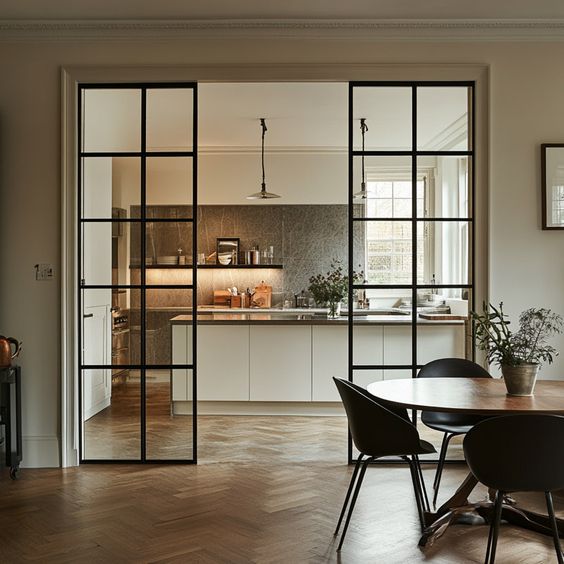
Image Source: andorwillow.com
Why Divide an Open Space?
Open concept homes are popular. They feel big and airy. But sometimes, you need a break. Noise from cooking can bother someone watching TV. Cooking smells can fill the living room. Visual clutter from the kitchen can spill out. This is why many people look for kitchen living room divider ideas.
Dividing the space helps in many ways. It creates distinct zones open concept home plans often miss. You get a clear kitchen space. You get a clear living room space. This makes each area feel special. It also makes your home feel calmer.
Think about it. When you cook, things can get messy. Pans pile up. Ingredients are out. In an open plan, everyone sees this. A divider can hide this mess. It can also block some noise. This means you can cook. Others can relax. They will not be disturbed.
A divider also adds style. It can be a design feature. It can make your home look more complete. It can add texture and color. It helps show off your personal taste. It balances open flow with private comfort.
Gauging Your Needs: What Works Best?
Before you pick a divider, think about your needs. Every home is different. Every family uses space differently.
Here are some things to think about:
- How big is your space? A small space needs different solutions than a large one.
- What is your budget? Some ideas cost more than others.
- How much light do you need? Some dividers block light. Others let it through.
- How much privacy do you want? Do you need full separation or just a hint of it?
- What is your home style? The divider should match your decor.
- What function do you need? Do you need storage? Seating? Just a visual break?
Think about these points. They will guide you to the best choice.
Creative Ways to Create Separation
Many smart ideas exist for dividing your kitchen and living room. Each offers unique benefits. They help define zones in an open concept home.
The Power of Partial Walls
A half wall kitchen living room divider is a great choice. It is also called a pony wall. This wall does not go all the way to the ceiling. It gives a clear sense of separation. But it still keeps an open feel.
Benefits of Partial Walls:
- Visual separation: It hides the lower part of the kitchen. This can be great for hiding counter clutter.
- Light flow: Since it is not a full wall, light still moves freely. Your space stays bright.
- Extra counter space: The top of the half wall can be a great spot. You can use it for serving food. You can use it for decorative items.
- Seating options: You can add bar stools to one side. This creates a casual eating area. It can be a breakfast bar.
- Built-in storage: Some half walls can have shelves built in. This offers storage space. You can store books or display items.
Things to Consider:
- Construction: Building a half wall needs some work. It involves drywall. It involves painting.
- Fixed structure: Once built, it is permanent. It cannot be moved easily.
- Noise and smell: A half wall does not block much noise or smell. If these are big concerns, you might need another option.
You can make your half wall look very stylish. Use different materials for the top. Wood, stone, or quartz can look nice. Add some art or plants. This makes it part of your home design.
Islands That Do More Than Cook
A kitchen island room divider is very popular. It is a natural fit for an open plan. The island itself acts as the divider. It clearly marks where the kitchen ends. It also offers lots of function.
Benefits of Kitchen Islands as Dividers:
- Clear zone definition: The island is a clear boundary. It shows where the kitchen space is.
- Extra workspace: You get more counter space for cooking. This is always a plus.
- Seating: Most islands have space for stools. This makes a casual eating spot. It is great for quick meals or snacks.
- Storage: Islands often have drawers and cabinets. This gives you more room for kitchen items.
- Sink or cooktop: Many people put a sink or cooktop on their island. This makes the kitchen more efficient.
- Electrical outlets: Islands can have built-in outlets. This is handy for small appliances.
Things to Consider:
- Space needed: Islands take up floor space. Make sure you have enough room for one. You need space to walk around it.
- Cost: A good kitchen island can be costly. Especially if it has plumbing or electrical work.
- Fixed element: Like a half wall, an island is usually permanent.
An island can be short or long. It can be narrow or wide. Its size should fit your kitchen. Its style should match your home. A waterfall edge island looks modern. A rustic wood island feels warm. Choose what fits you best.
Stylish Screens for Instant Zones
Room divider screens kitchen ideas are flexible. They are a good choice if you do not want permanent changes. These screens can be moved around. They can be folded up.
Benefits of Room Divider Screens:
- Flexibility: You can move them easily. Put them up when you need privacy. Fold them away when you want an open feel.
- No installation: Most screens need no tools. Just unfold them.
- Adds style: Screens come in many designs. You can find one that adds beauty to your home. Materials like wood, metal, fabric, or paper are common.
- Cost-effective: Screens are often less expensive than building a wall.
- Temporary solution: Great for renters. Or for those who are not sure about a permanent change.
Things to Consider:
- Less privacy: Screens offer visual privacy. But they do not block much sound or smell.
- Stability: Some screens can be a bit wobbly. Make sure they are safe, especially around kids or pets.
- Dust collection: Fabric screens might collect dust. They need regular cleaning.
You can find screens with beautiful patterns. Some have cut-outs. Some are solid. Choose one that adds to your decor. They are perfect privacy solutions open plan kitchen designs can use easily.
Sliding Solutions for Flexible Living
Sliding doors kitchen living room partition options give you control. You can have an open space. Or you can close it off fully. This is great for noise or smell control.
Types of Sliding Doors:
- Barn doors: These slide along a track on the wall. They look rustic or modern. They are a bold design statement.
- Pocket doors: These slide into a wall cavity. They are hidden when open. They save a lot of space. But they need more construction work.
- Bi-fold doors: These fold up like an accordion. They are good for wide openings. They can open up almost completely.
- Glass sliding doors: These can be clear, frosted, or reeded. They let light through. They offer different levels of privacy.
Benefits of Sliding Doors:
- Full separation: When closed, they block noise and smells very well.
- Space-saving: Unlike swinging doors, they do not need space to open.
- Flexible use: You can open them fully for an open feel. Close them for privacy.
- Stylish: They come in many materials and finishes. They can add a lot of charm.
Things to Consider:
- Installation: Most sliding doors need professional install. Pocket doors need major wall work.
- Cost: Can be more expensive than screens or half walls.
- Track cleaning: Tracks can collect dirt. They need to be kept clean for smooth sliding.
Sliding doors are a smart way to get open concept kitchen living room separation. They offer the best of both worlds.
Bookshelves: More Than Just Storage
A bookcase room divider open plan home is smart. It is a very practical way to divide space. It also gives you lots of storage.
Benefits of Bookcases as Dividers:
- Storage: You get shelves for books, decor, or kitchen items.
- Display: You can show off your favorite things.
- Visual separation: It creates a barrier without feeling too heavy.
- Light flow: If the bookcase has open shelves, light can still pass through. This keeps the space bright.
- Access from both sides: You can reach items from the kitchen side or the living room side.
- Cost-effective: You can buy a ready-made bookcase. Or you can build one simply.
Things to Consider:
- Stability: A tall, free-standing bookcase needs to be secured. Anchor it to the floor or ceiling for safety.
- Dusting: Open shelves can collect dust.
- Visual clutter: If filled with too many items, it can look messy. Organize it well.
Choose an open-backed bookcase for the best light flow. A closed-back one offers more solid separation. You can mix and match. Place plants, small art, or even kitchen decor on the shelves. This makes it part of both rooms.
Clear Divisions with Glass
A glass partition kitchen living space is very modern. It is a popular choice for bright, airy homes. Glass gives separation without blocking light or views.
Types of Glass Partitions:
- Fixed glass panels: These are solid walls of glass. They are permanent. They look very sleek.
- Glass sliding doors: Mentioned above, these offer flexibility.
- Frosted glass: This blurs the view. It offers more privacy than clear glass. Light still comes through.
- Reeded or fluted glass: This has vertical ridges. It distorts the view. It adds texture and style.
- Metal-framed glass: Black steel frames around glass panes are trendy. They give an industrial look.
Benefits of Glass Partitions:
- Maximum light: Glass lets all the light pass through. Your home stays bright and open.
- Open feel: You can still see through. This makes the space feel larger.
- Sound barrier: Glass is good at blocking sound.
- Modern look: It gives a clean, contemporary feel.
- Easy to clean: Glass surfaces are easy to wipe down.
Things to Consider:
- Cost: Glass partitions can be expensive. Especially custom ones.
- Privacy: Clear glass offers no privacy. Choose frosted or reeded glass if you need more.
- Fingerprints: Glass surfaces can show fingerprints easily.
- Installation: Needs professional installation.
Glass partitions are excellent for defining zones open concept home plans. They create a distinct kitchen. But they do not make it feel small or closed off.
Creative Floor and Ceiling Changes
You do not always need a physical barrier. You can define zones open concept home plans with clever design tricks.
- Floor changes: Use different flooring in each area. For example, tile in the kitchen. Wood or carpet in the living room. This visually separates the spaces. A large area rug in the living room can also define its boundary.
- Ceiling details: A dropped ceiling over the kitchen can create a cozy feel. Different ceiling heights can mark out zones. Beams can also define the space.
- Lighting: Use different light fixtures. Pendant lights over the kitchen island. A chandelier in the living room. Or different types of recessed lights. This helps signal a change in area.
These methods are subtle. They hint at division. They do not block views or light.
Furniture Layout and Rugs
The simplest way to divide space is with furniture. No building needed!
- Sofa placement: Put the back of your sofa to the kitchen. This naturally blocks off the living room.
- Console table: A long table behind the sofa can also act as a divider. Place lamps or decor on it.
- Large area rug: A big rug in the living room clearly defines that space. It tells your eye, “This is the living area.”
- Shelving units: Low, long shelving units can be used like half walls. They offer storage and separation.
These ideas are very flexible. You can move them anytime. They are good for renters. They are also good if you like to change your home often.
Choosing the Right Material
The material you choose matters. It affects the look and function of your divider.
- Wood: Warm, classic, versatile. Can be painted, stained, or left natural. Good for half walls, islands, barn doors, and bookcases.
- Metal: Modern, industrial, sleek. Good for frames, screens, or parts of islands. Black steel is very popular.
- Glass: Airy, bright, modern. Good for partitions, sliding doors, or parts of islands.
- Drywall: Common for half walls. Easy to paint and match existing walls.
- Fabric: Light, decorative. Best for screens. Can add softness and color.
Think about how easy it is to clean. Think about how it matches your home’s style.
Harmonizing Your Home’s Look
Your divider should fit your home. It should not look out of place.
- Match colors: Use colors that are already in your home. Or choose neutral colors.
- Use similar materials: If your kitchen has wood cabinets, a wood divider works well.
- Consistent style: If your home is modern, pick a sleek divider. If it is farmhouse, choose something rustic.
- Decorate: Add plants, art, or books to the divider. This makes it feel like part of your home.
The goal is a smooth flow. Even with a division, your home should feel like one whole space.
Installation Tips and Considerations
Some dividers are easy to set up. Others need more work.
- DIY vs. Pro: Small screens or furniture are DIY. Half walls, custom islands, or sliding doors need pros.
- Safety first: Always secure tall items like bookcases. Make sure walls are built to code.
- Permits: For structural changes, like moving or adding a wall, you might need a permit. Check local rules.
- Measure twice: Always measure your space carefully. Make sure the divider will fit.
Table: Comparing Divider Options
This table helps sum up the main kitchen living room divider ideas.
| Divider Option | Privacy Level | Light Flow | Cost | Installation | Key Benefit |
|---|---|---|---|---|---|
| Half Wall Kitchen Living Room | Low-Medium | High | Medium | Medium | Defines space, adds counter |
| Kitchen Island Room Divider | Low | High | Medium | Medium | Adds function, seating, storage |
| Room Divider Screens Kitchen | Medium | Medium | Low | Easy | Flexible, movable |
| Sliding Doors Kitchen Living Room Partition | High | Variable | High | Hard | Full closure, saves space |
| Bookcase Room Divider Open Plan | Medium | Medium | Low | Easy | Storage, display |
| Glass Partition Kitchen Living Space | Variable | High | High | Hard | Brightness, sound barrier |
Conclusion
Dividing your kitchen from your living room offers many benefits. It brings order. It adds comfort. It boosts style. You have many kitchen living room divider ideas to pick from. Think about what you need most. Do you want full privacy? Or just a visual break?
From simple room divider screens kitchen options to solid half wall kitchen living room structures, there is a solution for every home. A kitchen island room divider offers great function. Sliding doors kitchen living room partition options give total flexibility. A bookcase room divider open plan home is both practical and pretty. Glass partition kitchen living space ideas keep things bright.
No matter your budget or style, you can create zones. You can make your open concept home work better for you. Choose the idea that best fits your lifestyle. Enjoy your newly defined space!
Frequently Asked Questions
Is it okay to have an open concept kitchen?
Yes, it is perfectly fine. Many people like the open feel. But adding a small divider can make the space better. It helps manage noise and smells.
How much does a kitchen divider cost?
Costs vary a lot. A simple screen might be $100-$300. A custom half wall can be $1,000-$3,000. Glass partitions or full sliding doors can be $3,000 or more.
Can I divide my kitchen without major renovations?
Yes, absolutely. You can use furniture like sofas or bookcases. You can use portable screens. Large rugs also help define spaces without construction.
What are the best privacy solutions for an open kitchen?
For strong privacy, sliding doors (especially solid ones) or fixed walls are best. Frosted or reeded glass partitions also work well. They let light through but blur the view.
How do I separate my kitchen from my living room without a wall?
You can use a kitchen island as a divider. A large bookcase works great. Room divider screens are also good. Clever furniture placement, floor changes, or different lighting can also help define zones.