
Yes, you can install base cabinets in your kitchen yourself with some planning and the right tools. This guide will walk you through the entire process, from preparation to the final touches, ensuring your kitchen cabinet installation is a success. We’ll cover everything you need to know to achieve professional-looking results.
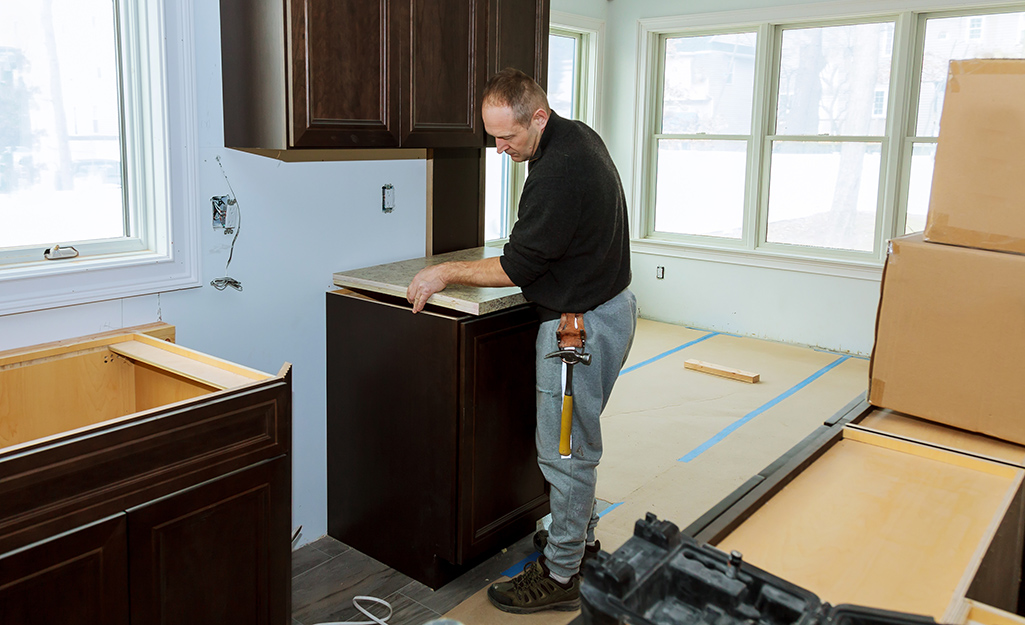
Image Source: contentgrid.homedepot-static.com
Preparing Your Kitchen Space
Before you even think about base cabinet securing, the first crucial step is preparing your kitchen space. This involves clearing the area, protecting your floors, and gathering all the necessary tools and materials. A well-prepared workspace is key to a smooth and efficient installation.
Clearing the Area
- Remove everything from the cabinets you’re replacing. This includes all contents, shelves, and doors.
- Disconnect any plumbing or electrical connections. If you’re replacing existing cabinets, ensure the water supply to your sink is shut off and any electrical outlets or wiring are safely disconnected. It’s often best to hire a plumber or electrician for this if you’re not comfortable.
- Remove old baseboards or trim that will be in the way of the new cabinets.
Protecting Your Floors and Surfaces
- Cover your floors with drop cloths or sturdy cardboard. This will protect them from scratches and debris during the installation.
- Protect countertops if they are staying in place. You can use blankets or more cardboard.
Essential Tools and Materials
Having all your tools and materials ready before you start will save you time and frustration.
Tools:
- Tape measure
- Pencil
- Level (4-foot is ideal)
- Stud finder
- Drill/driver with various bits (including pilot bits and screwdriver bits)
- Circular saw (for any necessary modifications)
- Jigsaw (for outlet cutouts)
- Hammer
- Pry bar
- Utility knife
- Caulking gun
- Safety glasses
- Work gloves
- Putty knife
- Clamps (bar clamps or pipe clamps are very useful)
- Screws (appropriate for cabinet material and wall studs)
- Wood shims
- Plumb bob (optional, but helpful for checking vertical alignment)
Materials:
- New base cabinets
- Cabinet screws (often 2.5-inch or 3-inch wood screws)
- Wood glue (if needed for repairs or joining cabinets)
- Construction adhesive (for kick plates and some mounting applications)
- Sandpaper (various grits)
- Paint or stain (if finishing raw wood)
- Caulk (paintable)
- Trim or molding (optional)
- Kick plates
Planning Your Layout and Marking Your Walls
A good plan is the backbone of successful kitchen cabinet installation. This stage involves measuring, marking, and ensuring everything is aligned before you start attaching cabinets.
Measuring and Layout
- Measure the length of the wall where the base cabinets will be installed.
- Measure the dimensions of each base cabinet.
- Map out your cabinet layout on paper. This is crucial for visualizing the final arrangement and identifying any potential issues. Consider the placement of drawers, doors, appliances, and corner cabinets.
- Account for appliance clearances. Ensure there’s enough space for refrigerator doors, oven doors, and dishwasher doors to open fully.
Finding and Marking Studs
This is a critical step for secure base cabinet securing. Cabinets need to be anchored to wall studs for stability.
- Use a stud finder to locate the vertical studs along the wall where your cabinets will go.
- Mark the center of each stud lightly with a pencil.
- Draw a level line where the top of your cabinets will sit. This is your “cabinet hanging” guideline. This line is often set at the finished height of the cabinet plus the thickness of your countertop, minus about 1/8 inch to allow for minor adjustments. The standard countertop height is 36 inches, so if your cabinets are 34.5 inches tall, your line would be at 35 7/8 inches from the floor.
- Draw another level line about 1/4 inch below the top line. This is where the back of the cabinets will rest, and it helps with initial positioning.
Checking for Level and Plumb Walls
Walls are rarely perfectly straight. Cabinet shimming methods are essential for dealing with these imperfections.
- Use a long level (4-foot or longer) to check if your walls are plumb (perfectly vertical) and if the floor is level.
- Mark any high or low spots on the wall. These marks will guide your shimming process later.
Installing the First Base Cabinet
The first cabinet is the most important as it sets the standard for the rest of the installation. Precise aligning base cabinets begins here.
Positioning the First Cabinet
- Place the first base cabinet in the corner or at the starting point of your layout.
- Use shims between the cabinet and the wall to ensure it’s plumb (perfectly vertical). Place shims at the stud locations marked on your wall.
- Use your level to check that the cabinet is plumb in both directions (front to back and side to side).
- Check that the cabinet is level from front to back using your level placed on the top edge. Add shims under the front or back as needed to achieve perfect level.
Securing the First Cabinet
Once the first cabinet is perfectly positioned and shimmed:
- Drill pilot holes through the back of the cabinet’s mounting rails (top and bottom) into the wall studs. Ensure the pilot holes are slightly smaller than your screws.
- Drive cabinet screws through the pilot holes, securing the cabinet firmly to the wall studs. Use at least two screws per stud.
- Do not overtighten the screws, as this can strip the wood or pull the cabinet out of plumb.
Installing Subsequent Base Cabinets
With the first cabinet securely in place, the process for the remaining cabinets is similar, focusing on precise alignment and secure attachment.
Aligning and Leveling
- Place the next cabinet next to the first one.
- Push the cabinets together firmly. If there’s a slight gap, use shims at the wall to push the cabinet flush with the adjacent cabinet.
- Check for plumb and level using your level. Shim as needed to ensure the cabinet is perfectly straight and level. Pay close attention to the top edge being perfectly aligned with the first cabinet.
Joining Cabinets (Cabinet Joinery Techniques)
For a seamless look and added stability, you’ll need to join adjacent cabinets. Effective cabinet joinery techniques are crucial.
- Clamping: Clamp the two cabinets together tightly. You can also place a scrap piece of wood across the front face of the cabinets and clamp through that to avoid damaging the cabinet faces.
- Drilling Pilot Holes: Drill pilot holes through the side of one cabinet into the face frame or carcass of the adjacent cabinet. Aim for at least two to three pilot holes along the height of the cabinets.
- Screwing: Drive cabinet screws through the pilot holes to join the cabinets. Use screws that are long enough to go through the side of one cabinet and into the solid material of the other, but not so long that they poke through.
Securing Subsequent Cabinets
Repeat the process of positioning, leveling, shimming, and screwing for each subsequent base cabinet, ensuring they are tightly joined and properly secured to the wall studs.
Installing Base Cabinet Securing and Kick Plates
The kick plate is a crucial element for both aesthetics and structural integrity. Proper installing kitchen kick plates completes the base cabinet installation.
Attaching the Kick Plate
The kick plate is usually a strip of wood that covers the gap between the bottom of the cabinet and the floor.
- Measure the width of the cabinet base where the kick plate will attach.
- Cut the kick plate to size, usually from plywood or solid wood. It should be the same depth as the cabinet box.
- Test fit the kick plate. It should fit snugly against the cabinet front and the floor.
- Secure the kick plate using wood glue and finishing nails or screws from the inside of the cabinet box. You can also use construction adhesive for a strong bond. Ensure it’s flush with the front of the cabinet face.
Additional Securing Methods
- Corner Brackets: For extra stability, especially in corners or for heavy cabinets, consider using metal corner brackets on the inside of the cabinet.
- Toe Kick Supports: Some cabinet systems come with adjustable feet or specific supports for the toe kick area, which help distribute weight and allow for fine-tuning level.
Working Around Obstacles
Kitchens often have pipes, electrical outlets, and vents that you’ll need to work around.
Cutting for Outlets and Pipes
- Mark the locations of outlets or pipes on the back of the cabinet before you place it against the wall.
- Use a jigsaw to carefully cut out the necessary openings in the cabinet back or bottom. Test fit the cabinet to ensure the openings are accurate.
- Leave enough clearance around pipes to prevent them from rubbing against the cabinet.
Dealing with Uneven Floors and Walls
- Cabinet shimming methods are your best friend here. Use shims liberally to fill any gaps between the cabinet and the wall or floor, ensuring the cabinet remains plumb and level.
- Build out false fronts or add trim to cover any larger gaps created by uneven walls.
Finishing Touches
Once all cabinets are installed, leveled, and secured, it’s time for the final steps.
Attaching Cabinet Hardware
- Install drawer slides and door hinges according to the manufacturer’s instructions.
- Attach cabinet doors and drawers. Adjust hinges as needed to ensure doors hang straight and drawers slide smoothly. This is part of attaching cabinet hardware.
- Install handles and knobs. Measure carefully for consistent placement.
Installing the Countertop
- Test fit the countertop before permanently attaching it.
- Apply construction adhesive to the top edges of the base cabinets.
- Carefully place the countertop onto the cabinets, aligning it properly.
- Secure the countertop from underneath by screwing through the cabinet mounting rails into the underside of the countertop, if your countertop material allows. Follow the countertop manufacturer’s recommendations.
Caulking and Trim
- Caulk along the top edge of the cabinets where they meet the wall to seal any small gaps.
- Install any desired trim or molding along the top or bottom of the cabinets for a finished look. This can also hide minor imperfections.
Frequently Asked Questions (FAQ)
Q1: How do I ensure my base cabinets are level?
A1: Use a long level (4-foot or longer) on the top edges of the cabinets, both front-to-back and side-to-side. Use wood shims underneath the cabinet base or behind the cabinet back to raise low spots until the cabinet is perfectly level and plumb.
Q2: What type of screws should I use for securing base cabinets?
A2: Use sturdy wood screws that are at least 2.5 to 3 inches long. They should be long enough to penetrate the cabinet’s mounting rail and securely anchor into a wall stud.
Q3: Can I install base cabinets directly onto drywall?
A3: No, absolutely not. Base cabinets must be securely anchored to wall studs for stability and safety. Drywall alone will not support the weight of cabinets and their contents.
Q4: How do I join two base cabinets together?
A4: Clamp the two cabinets tightly together. Drill pilot holes through the side of one cabinet into the face frame or carcass of the other. Then, use wood screws to join them. This is a key aspect of cabinet joinery techniques.
Q5: What is a kick plate and why is it important?
A5: A kick plate is the strip of wood at the very bottom of the base cabinets that covers the gap between the cabinet and the floor. It provides a finished look and protects the cabinet from kicks and scuffs. Proper installing kitchen kick plates is part of a professional finish.
Q6: What is the standard height for base cabinets?
A6: Standard base cabinets are typically 34.5 inches tall. When a countertop is added, this usually brings the total height to 36 inches, which is the standard kitchen counter height.
Q7: Do I need to consider the weight of my countertop when installing base cabinets?
A7: Yes. Heavy countertops, like granite or quartz, add significant weight. Ensure your cabinets are firmly secured to wall studs using appropriate screws and consider using additional bracing if necessary.
By following these detailed steps, you can confidently tackle the installation of your base kitchen cabinets, creating a functional and beautiful foundation for your new kitchen. Remember to prioritize safety, accuracy, and patience throughout the process.