
Can you restain a kitchen table? Yes, you absolutely can restain a kitchen table to give it a fresh new look or to match your updated kitchen decor. Restaining an old table makeover can be a rewarding DIY project that breathes new life into worn-out furniture. This guide will walk you through the process of wood table restoration, from preparation to the final coat.
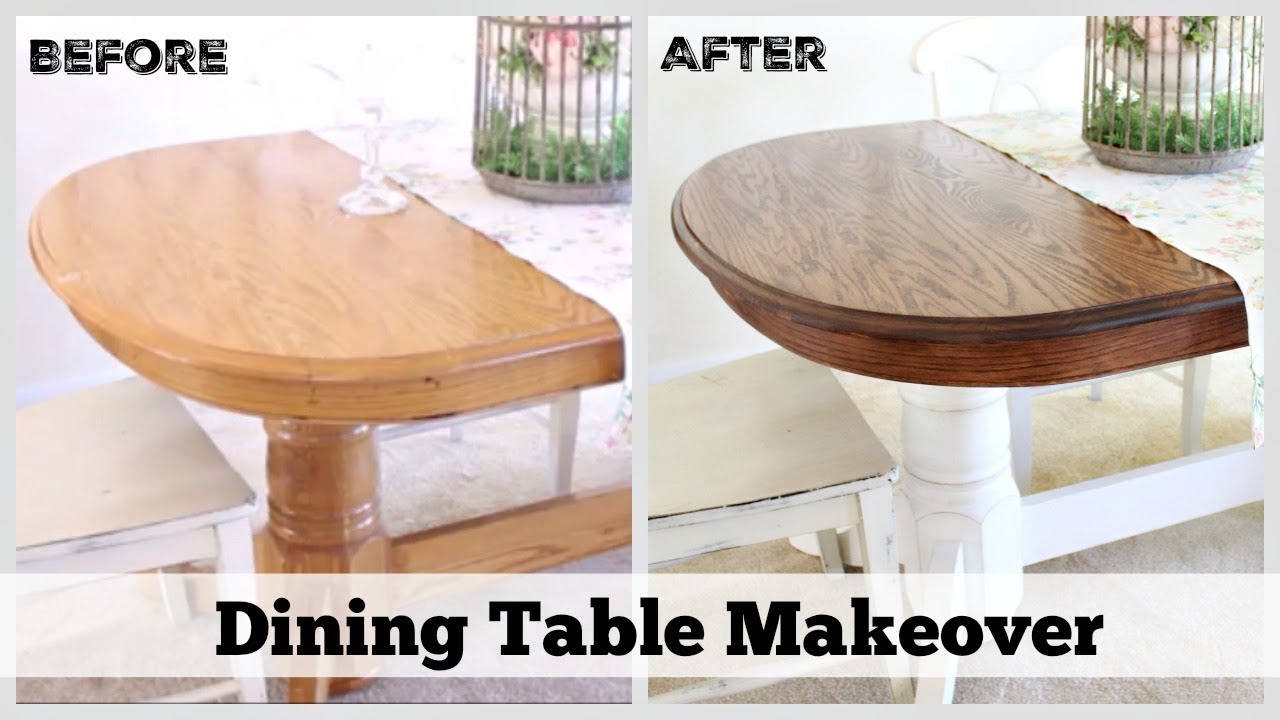
Image Source: i.ytimg.com
Getting Started: What You’ll Need
Before you begin your kitchen table refinishing project, gather all your supplies. Having everything on hand will make the process smoother and more enjoyable.
Essential Tools and Materials:
- Safety Gear: Gloves, safety glasses, a dust mask.
- Cleaning Supplies: Mild soap, water, clean rags, mineral spirits.
- Sanding Supplies: Orbital sander (optional, but recommended), sandpaper (various grits: 80, 120, 180, 220), sanding block.
- Repair Materials (if needed): Wood filler, putty knife.
- Staining Supplies: Wood stain (your chosen color), good quality brushes, foam brushes, or lint-free rags for application.
- Finishing Supplies: Polyurethane, varnish, or lacquer (for sealing), brushes or foam applicators for the topcoat.
- Tack Cloth: To remove dust after sanding.
- Drop Cloths: To protect your work area.
Step 1: Preparing Your Kitchen Table for Restaining
Proper preparation is crucial for a successful kitchen table repair and refinishing job. This involves cleaning, making any necessary repairs, and thoroughly sanding the surface.
Cleaning the Table
First, give your kitchen table a good cleaning. Use a mild soap and water solution to remove any grease, grime, or food residue. Wipe down the entire surface and let it dry completely. For stubborn residue, a bit of mineral spirits on a rag can help cut through grease, but ensure it’s fully evaporated before moving on.
Making Kitchen Table Repairs
Inspect your table for any damage. This might include:
- Dents and Scratches: Small imperfections can often be smoothed out during sanding. Deeper gouges might need wood filler.
- Loose Joints: If any parts of the table are wobbly, tighten screws or use wood glue to secure them.
- Cracks or Splits: Fill larger cracks with wood filler, following the product instructions.
Allow any wood filler or glue to dry completely before proceeding. You may need to sand the repaired areas smooth once they are dry.
Sanding Wood Table Surfaces
Sanding is a vital step in wood table restoration. It removes the old finish and creates a smooth surface for the new stain to adhere to.
Grit Progression for Sanding:
- Start with a Coarse Grit (80-120): This grit is used to remove the old finish, paint, or any significant imperfections. If your table has a thick varnish or paint, start here.
- Move to a Medium Grit (120-180): This grit smooths out the marks left by the coarser grit.
- Finish with a Fine Grit (220): This grit will create a silky smooth surface, ready for staining.
Sanding Techniques:
- Orbital Sander: This tool makes the job much faster and easier, especially for large, flat surfaces. Always move the sander with the grain of the wood.
- Sanding Block: For detailed areas or if you don’t have a sander, a sanding block is effective. Wrap sandpaper around the block and sand with the wood grain.
- Direction is Key: Always sand in the direction of the wood grain. Sanding against the grain will create visible scratches that will be difficult to remove.
- Even Pressure: Apply even pressure across the surface. Don’t press too hard, as this can create uneven sanding marks.
- Wipe Down: After each grit, wipe the table with a clean cloth or vacuum to remove dust. This ensures you are sanding the wood, not the dust.
Final Dust Removal
Once you’ve completed your sanding, it’s critical to remove all dust. Dust is the enemy of a good stain job.
- Vacuum: Use a shop vac with a brush attachment to get into corners and crevices.
- Tack Cloth: Wipe the entire table with a tack cloth. This sticky cloth will pick up even the finest dust particles. Go over the surface multiple times.
Step 2: Applying Wood Stain
Now comes the exciting part – applying the new color to your kitchen table! Applying wood stain is about achieving an even, rich finish.
Choosing Your Stain
There are many types of wood stains available:
- Oil-Based Stains: These penetrate the wood well and offer a rich, deep color. They require mineral spirits for cleanup and have longer drying times.
- Water-Based Stains: These dry faster, have low odor, and are easy to clean up with water. They may not penetrate as deeply as oil-based stains.
- Gel Stains: These are thicker and sit more on the surface, making them great for covering old finishes without heavy sanding. They offer excellent control and can be applied over existing finishes with minimal prep.
Consider the type of wood your table is made from and the look you want to achieve when selecting a stain. Always test your stain color on an inconspicuous area of the table or a scrap piece of wood from the same piece if possible.
Applying Wood Stain: The Process
Applying wood stain requires patience and a steady hand for that furniture staining guide perfection.
- Stir, Don’t Shake: If using oil-based stain, stir the can thoroughly. Shaking can create bubbles that transfer to the wood.
- Work in Sections: Tackle one section of the table at a time.
- Apply Generously: Using a good quality brush, foam brush, or lint-free rag, apply the stain generously in the direction of the wood grain. Work quickly but evenly.
- Wipe Off Excess: After letting the stain penetrate for the time recommended on the product label (usually 5-15 minutes), use a clean, lint-free rag to wipe off the excess stain. Wipe with the wood grain. The longer you leave the stain on, the darker the color will be.
- Evenness is Key: Aim for an even color. If you notice any blotchiness, you can sometimes even it out by lightly applying more stain and wiping quickly, or by using a pre-stain wood conditioner before staining.
- Second Coat (Optional): If you desire a darker or richer color, wait for the first coat to dry completely (check product instructions for drying times, usually 24-48 hours for oil-based) and then apply a second coat using the same method.
Pre-Stain Wood Conditioner
For soft woods like pine, or if you’re concerned about blotchy results, applying a pre-stain wood conditioner is highly recommended. This product evens out the wood’s porosity, allowing the stain to penetrate more uniformly. Apply it according to the manufacturer’s instructions before you start staining.
Step 3: Applying a Protective Topcoat
Once the stain has dried completely, it’s time to seal and protect your beautiful new finish. This step is crucial for the longevity and durability of your kitchen furniture renewal.
Choosing a Topcoat
Common topcoats include:
- Polyurethane: Very durable and resistant to heat, water, and scratches. Available in oil-based and water-based versions. Oil-based offers more durability but can yellow over time, while water-based is clearer and dries faster.
- Varnish: Also very durable and water-resistant. Often used for outdoor furniture, but excellent for tables as well.
- Lacquer: Dries very quickly and provides a hard, glossy finish. It can be more prone to chipping or scratching than polyurethane.
For a kitchen table, polyurethane is often the preferred choice due to its excellent protection against spills and daily wear and tear.
Applying the Topcoat
Applying a protective finish requires a light touch and multiple thin coats for the best result.
- Light Sanding (Optional but Recommended): After the stain is completely dry, lightly sand the surface with 220-grit sandpaper or a fine-grit sanding sponge. This helps the topcoat adhere better and creates a smoother final finish. Wipe away dust with a tack cloth.
- Thin Coats: Apply the topcoat in thin, even coats using a high-quality brush or foam applicator. Avoid overloading the brush.
- Work with the Grain: Apply the finish in long, smooth strokes, following the direction of the wood grain.
- Avoid Overworking: Try not to overwork the finish, as this can lead to brush marks or an uneven sheen.
- Drying Time: Allow each coat to dry completely according to the manufacturer’s instructions. This is crucial for proper curing.
- Light Sanding Between Coats: After each coat has dried, lightly sand the surface with very fine sandpaper (220-320 grit) or a fine-grit sanding sponge. This removes any dust nibs or minor imperfections and helps the next coat adhere better. Wipe thoroughly with a tack cloth after each sanding.
- Multiple Coats: Apply 2-4 coats of your chosen topcoat for adequate protection. For a kitchen table that sees heavy use, 3-4 coats is ideal.
Curing Time
Even after the topcoat feels dry to the touch, it needs time to fully cure and harden. This can take several days to a couple of weeks, depending on the product and humidity. Be gentle with the table during this period.
Refreshing Your Old Table: A Step-by-Step Summary
Here’s a quick recap of the entire process for your old table makeover:
- Gather Supplies: Ensure you have all tools and materials.
- Clean: Wash the table thoroughly.
- Repair: Fix any dents, scratches, or loose parts.
- Sand: Start with a coarse grit, then medium, then fine, working with the grain.
- Dust Removal: Vacuum and wipe with a tack cloth.
- Test Stain: Apply to a hidden area or scrap wood.
- Apply Stain: Work in sections, apply evenly, and wipe off excess.
- Dry Stain: Allow ample drying time between coats if applying more than one.
- Prepare for Topcoat: Lightly sand and dust.
- Apply Topcoat: Apply thin, even coats, allowing drying and light sanding between each.
- Cure: Let the final coat cure fully before regular use.
Troubleshooting Common Issues During DIY Table Refinishing
Even with careful planning, you might encounter a few hiccups. Here’s how to address them:
Blotchy Stain Results
- Cause: Uneven wood porosity.
- Solution: Use a pre-stain wood conditioner before staining. If already stained, you might need to sand back and reapply with conditioner. For gel stains, blotchiness is less common.
Too Many Brush Strokes
- Cause: Applying too much finish at once, or overworking the finish.
- Solution: Apply thinner coats. Use a high-quality brush or foam applicator. If the finish is still wet, you can sometimes feather out brush strokes. For dried-on strokes, light sanding and another thin coat might be necessary.
Uneven Color After Wiping Stain
- Cause: Stain wasn’t wiped off evenly or in time.
- Solution: For oil-based stains, you might be able to lightly sand the problematic area and reapply stain, wiping quickly and evenly. For stubborn issues, sanding back to bare wood and restaining might be required.
Orange Peel Effect on Topcoat
- Cause: Applying the finish too thickly, or in humid conditions.
- Solution: Lightly sand the affected area with fine-grit sandpaper and apply very thin coats of your topcoat.
Maintaining Your Restained Kitchen Table
Once you’ve completed your kitchen table refinishing, proper maintenance will keep it looking beautiful for years to come.
- Clean Spills Immediately: Use a damp cloth to wipe up any spills as soon as they happen.
- Use Coasters and Trivets: Protect the surface from heat and moisture rings.
- Avoid Harsh Cleaners: Stick to mild soap and water or a wood-specific cleaner.
- Dust Regularly: A soft cloth or feather duster will keep dust from settling.
- Reapply Topcoat if Necessary: After several years of heavy use, you might notice wear. A light sanding and another coat of polyurethane can restore the protection.
Frequently Asked Questions (FAQ)
Q1: How long does it take to restain a kitchen table?
A: The time it takes can vary greatly depending on the table’s size, condition, and your experience. However, you can typically expect the entire process to take anywhere from 2 to 5 days, with most of that time being drying and curing periods. Actual hands-on work might only be a few hours spread over those days.
Q2: Can I skip sanding if I use gel stain?
A: While gel stains require less sanding than traditional stains, it’s highly recommended to at least lightly sand the surface with a fine-grit sandpaper (like 180 or 220) and clean it thoroughly. This ensures the gel stain adheres properly and provides a smooth, even finish. Skipping sanding can lead to peeling or an uneven look over time.
Q3: What is the best type of wood stain for a kitchen table?
A: For kitchen tables, oil-based stains are often preferred for their deep penetration and durability. Gel stains are also excellent choices, especially if you want to cover an existing finish with less effort and achieve a rich, uniform color. Polyurethane or varnish is generally the best topcoat for protection against wear and tear.
Q4: How many coats of stain do I need?
A: Typically, one coat of stain is sufficient for most desired colors. However, if you want a darker or richer hue, you can apply a second coat after the first has dried completely. Always follow the manufacturer’s recommended drying times between coats.
Q5: How do I know when the stain is dry enough to apply a topcoat?
A: The stain should feel dry to the touch and no longer tacky. For oil-based stains, this usually takes 24-48 hours. Water-based stains dry faster, often within 4-6 hours. Always check the specific product’s instructions for drying times. Rushing this step can lead to an uneven topcoat or adhesion issues.
Q6: Can I restain a laminate kitchen table?
A: Restaining laminate is not the same process as restaining solid wood. Laminate has a plastic coating that stain won’t penetrate. For laminate, you’ll need to clean it thoroughly, scuff sand it with a fine-grit sandpaper to create a porous surface for paint or a specialized laminate coating to adhere to. Painting is usually the more effective method for laminate.
Q7: What’s the difference between staining and painting a table?
A: Staining enhances the natural grain of the wood, allowing it to show through while adding color. It’s a more translucent finish. Painting, on the other hand, completely covers the wood grain with an opaque color, creating a solid surface.
Q8: My table has water rings. Will restaining cover them?
A: Light water rings that haven’t damaged the wood deeply might be removed during the sanding process. However, if the rings have penetrated the wood significantly or left a dark stain, you may need to use a wood bleach to lighten the affected area before you start sanding and staining.
Q9: How often should I reapply the topcoat?
A: With proper care, the topcoat on a kitchen table can last for many years. However, if you notice signs of wear, such as dullness, minor scratches, or dull spots, it’s time to consider reapplying a new coat. This might be needed every 3-5 years with heavy use.
This comprehensive guide should equip you with the knowledge to confidently tackle your kitchen table refinishing project, transforming your old table into a beautiful centerpiece for your home. Enjoy your revitalized kitchen furniture!