
How wide are kitchen countertops? Standard kitchen counter depth is typically 25.5 inches from the wall. This size allows for a slight overhang past a standard base cabinet depth of 24 inches. What is the standard kitchen counter depth? It is 25.5 inches. Can I have custom countertop sizes? Yes, custom options are widely available for specific needs and designs. What is the minimum countertop depth? While 25.5 inches is standard, shallower depths are possible for certain uses or compact spaces. However, these are generally not ideal for main cooking or prep areas. This guide is for anyone planning a kitchen update or building a new home. It will help you pick the right countertop size for your space.
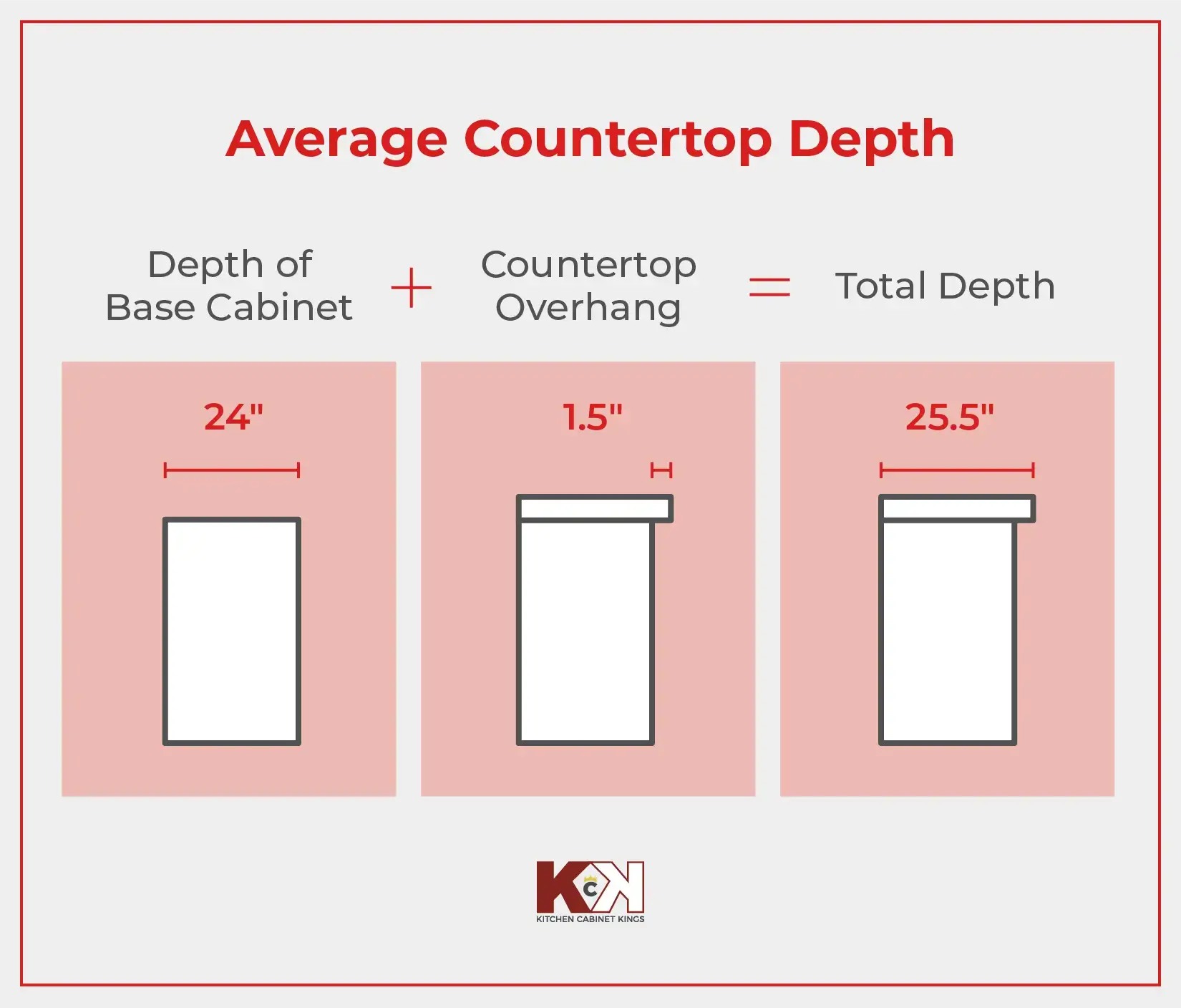
Image Source: cdn.kitchencabinetkings.com
The Basics: Standard Kitchen Counter Dimensions
When you plan a kitchen, size matters. The width of your countertops is key. It affects how you work and how the kitchen looks. Knowing the standard sizes helps a lot.
Standard Kitchen Counter Depth: Why 25.5 Inches?
The standard depth for kitchen counters is 25.5 inches. Why this specific number? It comes from the standard size of base cabinets. Most kitchen base cabinets are 24 inches deep. This 25.5-inch counter depth gives you a bit extra. It creates a small overhang at the front. This overhang is usually 1 to 1.5 inches.
This small extra bit is very useful. It protects your cabinet doors and drawers. When you lean against the counter, the overhang keeps your body from hitting the cabinet fronts. It also makes cleaning easier. Spills from the counter drip onto the floor, not into your cabinets. This standard size is very common. It works well for most kitchens. It fits common appliances too.
Standard Base Cabinet Depth: How It Impacts Countertop Size
Your countertops sit on top of your base cabinets. So, the size of your cabinets directly affects your counter depth. The standard base cabinet depth is 24 inches. This measurement is from the back of the cabinet to the front. This depth is practical. It gives good storage space. It also lets you reach things easily.
Because cabinets are 24 inches deep, counters need to be wider. This is where the 25.5-inch standard comes in. It ensures the counter covers the cabinet fully. It also adds that helpful overhang. Sometimes, you might find shallower cabinets. These are often used in small spaces. If you use them, your counter depth might change too. But for most kitchens, 24-inch deep cabinets are the norm. This sets the stage for your countertop size.
Countertop Overhang Dimensions: The Why and How
Countertop overhang dimensions are important. They are more than just looks. The front overhang is usually 1 to 1.5 inches. It serves many purposes.
* Protection: It keeps spills off your cabinet doors.
* Comfort: It lets you stand closer to the counter. You won’t bump your toes on the cabinets below.
* Looks: It gives the counter a finished look. It hides the top edge of the cabinets.
Beyond the front, side overhangs are also common. If your counter ends against a wall, there is no side overhang. But if it ends in the open, you might want a small overhang. This usually matches the front overhang. It gives a neat, finished edge. For islands or peninsulas, overhangs are vital for seating. We will talk more about that later.
Average Kitchen Counter Dimensions: A General Overview
When people talk about average kitchen counter dimensions, they mean the standard sizes. This includes a depth of 25.5 inches. The length of a counter varies a lot. It depends on your kitchen layout. A small kitchen might have only a few feet of counter space. A large kitchen can have many long sections.
Remember, these are average sizes. They fit most homes well. But every kitchen is unique. Your appliances, sink, and layout might need other sizes. That is where custom options come in handy.
Here is a simple table for common counter depths:
| Area of Kitchen | Typical Counter Depth (Inches) | Purpose |
|---|---|---|
| Main Counters | 25.5 | Standard for cooking and prep area |
| Bar/Island Seating | 12 – 18 (overhang) | Comfortable knee space for sitting |
| Shallow Counters | 18 – 22 | For tight spaces, or specific appliances |
| Deep Counters | 28 – 36 | For specialty equipment, or extra space |
Beyond the Usual: Custom Countertop Sizes
Sometimes, standard sizes just do not fit. This is when custom countertop sizes become useful. Custom work gives you freedom. You can make your kitchen truly unique.
When Do You Need Custom Sizes?
You might need custom sizes for many reasons:
* Old Homes: Older houses often have odd-sized spaces. Standard cabinets or counters might not fit well.
* Unique Appliances: If you have an extra-deep oven or a special sink, you might need a deeper counter.
* More Workspace: You might want more counter space. A deeper counter can give you this.
* Shallow Spaces: A small kitchen might need shallower counters. This helps save floor space.
* Special Designs: You might want a unique shape. This could be a curved island or an unusual corner.
* ADA Needs: If you need to follow ADA guidelines, your counters might need specific heights and depths.
Choosing custom sizes means your counters will fit perfectly. They will meet your exact needs.
Benefits of Custom Work
Custom countertops offer many good things:
* Perfect Fit: No gaps or awkward spaces. Everything lines up just right.
* Better Use of Space: Every inch of your kitchen can be used well.
* Personal Style: You can get the exact look you want.
* More Function: Counters can be designed for specific tasks. For example, a baking area might be lower or deeper.
Considerations for Special Dimensions
Before you order custom counters, think about a few things:
* Cost: Custom work costs more than standard sizes. This is because they are made just for you.
* Time: Custom orders take longer to make. Plan for this in your project timeline.
* Materials: Some materials are easier to customize than others. Large slabs of stone are good for deep counters.
* Installation: Custom shapes can be harder to install. Make sure your installer has experience.
* Kitchen counter depth guide: Get a good guide or work with a designer. They can help you pick the best depths for your needs.
Here is a table showing when custom sizes are often needed:
| Scenario | Reason for Customization | Suggested Action |
|---|---|---|
| Old Home Renovation | Walls or cabinet runs are not standard | Measure carefully, consider custom depths/lengths |
| Extra Deep Appliances | Commercial-style ranges, built-in espresso machines | Extend counter depth beyond 25.5 inches |
| Very Small Kitchen | Need to maximize floor space | Consider shallower counter depths (e.g., 20-22 inches) |
| Unique Island Shape | Curved island, multi-level island | Custom templates needed for unique shapes |
| Baking/Prep Zone | Desire for more workspace or a specific height | Deeper or varied height counters |
| Wheelchair Accessibility (ADA) | Specific heights and clearances required | Work with an expert on ADA compliant dimensions |
Specialized Areas: Islands, Peninsulas, and Breakfast Bars
Kitchens often have more than just main counters. Islands, peninsulas, and breakfast bars add space. They also add style. Their width is very important for how they work.
Typical Kitchen Island Width: What’s Common?
A typical kitchen island width varies a lot. It depends on its use.
* Working Island: If it is just for cooking or prep, it can be narrower. About 24 to 36 inches deep is common. This lets you work from one or both sides.
* Island with Seating: If you want people to sit at the island, it needs to be wider. You need space for knees. This means adding an overhang. A good depth for an island with seating is 36 to 42 inches. This includes the counter depth plus a seating overhang. Some islands can be even deeper, up to 60 inches, if they are very large. This allows seating on two sides. The length of an island also varies greatly. It can be 4 feet long or much longer. It all depends on your room size.
Kitchen Peninsula Width: Design and Function
A kitchen peninsula width is like an island. But it is attached to a wall or existing counter. It creates a U-shape or G-shape kitchen. Peninsulas also need different widths based on their use.
* Working Peninsula: If it is just for prep, a standard 25.5-inch depth is fine.
* Peninsula with Seating: Just like islands, a peninsula needs more width for seating. Add 12 to 18 inches for knee space. So, the total depth might be 37.5 to 43.5 inches.
Peninsulas are good for smaller kitchens. They give extra counter space and seating without needing as much open floor space as an island.
Breakfast Bar Dimensions: Making Space for Meals
Breakfast bar dimensions are all about comfortable seating. A breakfast bar is often a raised part of a counter or an extension.
* Overhang for Seating: For a comfortable breakfast bar, you need enough knee space. Aim for an overhang of at least 12 inches. If you want more comfort, especially for taller people, go for 15 to 18 inches.
* Height: Breakfast bars are usually higher than main counters. Standard counter height is about 36 inches. A breakfast bar is often 42 inches high. This needs bar stools, not regular chairs.
A shallow overhang will make seating very uncomfortable. People will have to sit sideways or hit their knees. Always plan for enough depth for seating areas. The average kitchen counter dimensions for main areas do not apply here. Seating needs much more depth.
Here is a table showing common dimensions for seating areas:
| Seating Type | Recommended Counter Overhang (Inches) | Total Counter Depth (Approx.) | Chair/Stool Height |
|---|---|---|---|
| Counter-Height | 12 (Minimum), 15 (Better) | 37.5 – 40.5 (from 25.5 base) | 24-26 inches (Stool) |
| Bar-Height | 12 (Minimum), 15 (Better) | 49.5 – 52.5 (from 36 base) | 28-30 inches (Stool) |
| Table-Height | 18 (Minimum) | 43.5 (from 25.5 base) | 18 inches (Chair) |
Designing Your Countertops: Key Factors
Picking the right counter width is not just about standards. Many things affect your choice. Think about these points when designing your kitchen.
Appliance Needs: Built-in vs. Freestanding
Your appliances play a big role.
* Built-in Appliances: If you have a built-in oven, microwave, or cooktop, make sure your counter depth can fit it. Some built-in cooktops need specific counter depth for proper installation.
* Freestanding Appliances: A standard range (oven and cooktop combo) usually sticks out a bit from standard 24-inch deep cabinets. This is normal. If you want a flush look, you might need a deeper counter. Or you might need to pull your cabinets out from the wall a bit. This will affect your standard kitchen counter depth.
Consider where your fridge will go. Does it stick out? Sometimes, deeper counters can make the fridge look less prominent.
Sink Placement: Edge Clearance
Your sink needs space.
* Front Clearance: Make sure there is enough counter space in front of your sink. This prevents water splashing onto the floor. It also gives you a place to rest dishes. Usually, 3-4 inches from the front edge to the sink cutout is good.
* Back Clearance: If your faucet is mounted on the counter, you need space behind the sink. This is for the faucet body and handles. Sometimes, a very deep sink can push the faucet too close to the backsplash. A slightly deeper counter can help here. This relates to minimum countertop depth around the sink.
Walkway Clearance: Space Around Counters
This is very important for safety and ease of use.
* Between Counters: How much space do you have between an island and a main counter? Or between two opposing counters? A minimum of 36 inches is needed for one person to move around. For two people to pass by, aim for 42 to 48 inches. If you have an appliance like a dishwasher that opens out, you need enough room for its door.
* Around Islands/Peninsulas: Make sure there is enough clear space around any seating area. People need room to pull out chairs and sit down. This also affects your typical kitchen island width or kitchen peninsula width.
Accessibility Needs: ADA Standards
If you need to make your kitchen accessible, there are specific rules. These come from the Americans with Disabilities Act (ADA).
* Height: Some counters need to be lower for wheelchair users. They can be 34 inches high instead of 36.
* Knee Clearance: Underneath certain counters, you need open space. This allows a wheelchair to roll under. This means no cabinets below for a certain section. This impacts your standard base cabinet depth for that area.
* Depth: For accessible counters, the depth is often still 24-25 inches. But the key is clear knee space below.
It is wise to consult an expert for ADA-compliant designs.
Aesthetics and Style
Beyond function, look matters.
* Proportion: A very deep counter in a small kitchen can look overwhelming. A shallow counter in a large kitchen can look out of place. Find a balance.
* Visual Flow: Countertop width affects the lines of your kitchen. A consistent depth often looks cleaner. But varying depths can create interest.
* Material: The thickness of your countertop material (e.g., 2cm vs. 3cm stone) can also affect the overall visual weight.
The kitchen counter depth guide you follow should balance all these points.
Materials and Their Impact on Width Choices
The material you choose for your countertops can affect the possible widths. Some materials come in larger slabs. Others are easier to join together.
Stone (Granite, Quartz, Marble): Large Slab Options
- Pros: Granite, quartz, and marble are often available in very large slabs. This means you can get deeper counters without seams. This is great for large islands or very deep custom counters. Standard slab widths allow for typical 25.5-inch counters. But larger slabs can go up to 60 inches or more in one piece.
- Cons: While large, slabs still have limits. If your custom depth is too great, you might need a seam. Stone is heavy and needs strong cabinets below.
Laminate: Cost-Effective and Versatile
- Pros: Laminate is made by bonding plastic to a particleboard core. It is often very cost-effective. Laminate can be made in many sizes. It is easy to cut and shape. You can get custom depths more easily than with stone. Laminate can also mimic the look of stone or wood.
- Cons: Laminate is not as heat or scratch-resistant as stone. Seams are usually more visible. It is not always suitable for very deep seamless counters if the base material is limited.
Solid Surface: Seamless Looks
- Pros: Solid surface materials (like Corian) are great for seamless designs. They can be joined almost invisibly. This means you can create very long or deep counters without obvious lines. This makes them ideal for custom shapes and depths. They are also non-porous and easy to repair.
- Cons: They can scratch more easily than stone. They are not as heat resistant as stone.
Wood/Butcher Block: Warmth and Depth
- Pros: Wood counters add warmth to a kitchen. They can be made to almost any custom width or length. Butcher block is especially good for large, deep islands. It can be sanded and refinished.
- Cons: Wood needs regular oiling or sealing. It can be damaged by water or heat if not cared for. It can scratch and dent.
Stainless Steel: Commercial Feel
- Pros: Stainless steel is very durable and easy to clean. It can be custom-made to exact dimensions. This makes it good for professional kitchens or very modern homes. It can be molded into sinks for a truly seamless look.
- Cons: It can show fingerprints and scratches easily. It can be noisy. It might not fit all kitchen styles.
Your choice of material affects the ease and cost of achieving your desired counter width. For truly custom, deep counters, slab materials (stone, solid surface, wood, stainless) are often preferred.
Installation Matters: From Template to Finish
Getting your countertops installed correctly is as important as choosing their width. A good installation ensures your counters are level, secure, and look their best.
Measuring Accurately
- The First Step: Accurate measurement is key. For custom counters, professionals will make a template. This is a precise pattern of your cabinets and walls. It accounts for any unevenness in your walls. This ensures a perfect fit.
- Why It Matters: Even a small error in measurement can lead to gaps or counters that do not sit flush. This is especially true for large or L-shaped counters. It also affects the countertop overhang dimensions and how well they line up.
Professional vs. DIY
- Professional Installation: For most materials, especially stone, professional installation is a must. These materials are heavy and need special tools. Pros also know how to handle seams, cutouts for sinks, and tricky corners. This ensures your kitchen counter depth guide is followed perfectly.
- DIY: Some materials, like laminate or wood, can be installed by experienced DIYers. But even then, precise cuts and leveling are critical. It is often best to leave it to the pros for a truly polished look.
Seams and Their Placement
- What are Seams? Seams are where two pieces of countertop join. They are needed when a counter is longer or wider than a single slab or sheet of material.
- Minimizing Seams: Fabricators try to place seams in less visible areas. This could be in a corner or over a dishwasher.
- Impact on Width: If you want a very long or deep counter, you might need a seam. For instance, if your desired typical kitchen island width is more than a single slab can provide, you will have seams. Good installers make seams as invisible as possible.
Maintenance and Longevity
Once your countertops are installed, proper care will help them last. This is true regardless of their width.
Keeping Counters Clean
- Daily Wipe-Downs: Clean spills right away. Use mild soap and water for most materials.
- Avoid Harsh Cleaners: Some cleaners can damage certain materials. Always check the manufacturer’s advice.
- Protect from Stains: Be mindful of acidic foods, oils, and strong dyes. They can stain some surfaces if left for too long.
Protecting Surfaces
- Hot Pads: Always use hot pads or trivets for hot pots and pans. High heat can damage many counter materials, even stone.
- Cutting Boards: Do not cut directly on your countertops. Use a cutting board. Knives can scratch surfaces and dull quickly.
- Heavy Objects: Avoid dropping heavy objects on your counters. This can chip or crack them.
When to Replace
- Damage: If your counters are badly scratched, chipped, or stained, it might be time for a change.
- Updating Style: Sometimes, counters are replaced simply to update the look of the kitchen.
- Functionality: If your counters no longer meet your needs (e.g., you need more prep space, or a different kitchen counter depth guide), replacement can solve that.
Your countertops are a big investment. Taking good care of them will keep them looking great for many years. Choosing the right width and material is the first step to a kitchen you will love.
Frequently Asked Questions (FAQ)
Q1: What is the most common depth for kitchen counters?
A1: The most common depth for kitchen counters is 25.5 inches. This includes a small overhang past standard 24-inch base cabinets.
Q2: How much overhang should a countertop have?
A2: A standard countertop usually has a front overhang of 1 to 1.5 inches. For seating areas like islands or breakfast bars, an overhang of 12 to 18 inches is needed for knee space.
Q3: Can I make my kitchen island wider than standard?
A3: Yes, you can make your kitchen island wider. Custom island widths are common, especially when you want seating on one or more sides. Just be sure to leave enough clear walking space around the island.
Q4: Is there a minimum countertop depth for a small kitchen?
A4: While 25.5 inches is standard, shallower counters (e.g., 18-22 inches) can be used in very small kitchens. This saves floor space. However, these are less practical for main cooking tasks.
Q5: Do deeper countertops cost more?
A5: Yes, generally deeper countertops cost more. This is because they use more material. Custom depths also often cost more due to specialized cuts and installation.
Q6: How wide should a breakfast bar be for comfortable seating?
A6: For a comfortable breakfast bar, you need an overhang of at least 12 inches for knee room. If possible, aim for 15 to 18 inches. The total depth of the bar will include this overhang.
Q7: What is the difference between standard kitchen counter depth and standard base cabinet depth?
A7: Standard base cabinet depth is 24 inches. Standard kitchen counter depth is 25.5 inches. The extra 1.5 inches for the counter creates a protective overhang at the front.
Q8: How wide can a single slab of granite or quartz be?
A8: The width of a single slab of granite or quartz varies. Many can be up to 60 inches wide or more. This allows for very deep counters without seams. Always check slab sizes with your supplier.
Q9: What happens if my countertop is too deep or too shallow?
A9: If a countertop is too deep, it can reduce walking space. It might also make it hard to reach things at the back. If it is too shallow, it can feel cramped. It might not fit appliances well. It also offers less work surface.
Q10: Is there a guide for all kitchen counter depths?
A10: Yes, general guidelines exist. The kitchen counter depth guide often suggests 25.5 inches for main counters. It recommends 36-42 inches total for islands with seating. For deeper or shallower needs, consult a kitchen designer.