
Kitchen cabinets come in many sizes. They are not one-size-fits-all. Standard kitchen cabinet dimensions are common. But you can get custom cabinet dimensions too. Knowing these sizes helps you plan a good kitchen. This guide will show you the usual sizes. You will learn about base cabinet sizes, wall cabinet sizes, and pantry cabinet dimensions. We will also talk about kitchen cabinet depth, kitchen cabinet height, and corner kitchen cabinet sizes. We will even give you a kitchen cabinet size chart. This information makes your kitchen planning much easier.
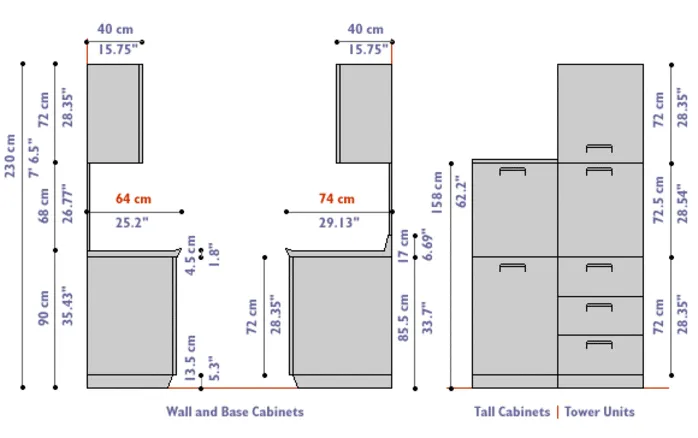
Image Source: guilincabinets.com
Why Knowing Cabinet Sizes Matters
Choosing the right cabinets is key for your kitchen. Size matters a lot. It changes how your kitchen looks. It changes how well it works. Correct sizes make sure things fit. They make sure you have enough storage. They help your kitchen feel right.
Think about your daily tasks. Do you cook a lot? Do you need space for big pots? Do you want a clean look? Cabinet sizes affect all these things. They can make your kitchen easy to use. Or they can make it hard. Also, size affects cost. Standard cabinets usually cost less. Custom cabinets cost more. They are made just for you.
Knowing sizes helps avoid big mistakes. You will not order cabinets that are too big. You will not order ones that are too small. This saves time and money. It makes your kitchen project go smoothly.
Standard Kitchen Cabinet Dimensions: A First Look
What are standard kitchen cabinet dimensions? They are common sizes that most cabinet makers offer. Using standard sizes has many benefits.
First, they are easy to find. Many stores carry them. Second, they are often cheaper. This is because they are made in large batches. Third, they fit most kitchens. They work well with common appliances.
These standard sizes make planning simple. You can use them to sketch out your kitchen. You can see what fits where. Standard sizes include set heights, widths, and depths. We will look at these in more detail. Each type of cabinet has its own set of standard sizes.
Base Cabinet Sizes: The Foundation of Your Kitchen
Base cabinets sit on the floor. They form the base of your counters. They hold heavy items. They also house your sink and many appliances. Knowing base cabinet sizes is very important. They are the backbone of your kitchen.
Typical Kitchen Cabinet Height for Base Units
The standard kitchen cabinet height for base units is 34.5 inches. This is the height of the cabinet box itself. It does not include the countertop. Most countertops are 1.5 inches thick. So, the total height from the floor to the top of the counter is 36 inches. This height is good for most adults. It lets them work comfortably.
Base cabinets also have a toe kick area. This is a small recessed space at the bottom. It measures 4.5 inches high. This space lets you stand closer to the counter. It helps you keep your balance. It is part of the 34.5-inch cabinet height.
Common Kitchen Cabinet Depth for Base Units
The standard kitchen cabinet depth for base units is 24 inches. This depth is from the front of the cabinet to the back. It does not include the countertop overhang. Most countertops hang over by about 1 inch. This gives you extra counter space. It also protects your cabinet doors from spills.
A 24-inch depth works well for most kitchen items. It fits dishes, pots, and pans. It also fits built-in appliances like dishwashers. Some base cabinets may be shallower. These are often used for small islands. Or they are used in tight spaces. But 24 inches is the most common.
Varying Widths for Base Cabinets
Base cabinet sizes come in many widths. Width is the most varied dimension. This lets you fit cabinets into different kitchen layouts. Common widths start at 9 inches. They go up in 3-inch increments. For example, you can find 9, 12, 15, 18, 21, 24, 27, 30, 33, 36, 42, and 48 inches wide.
- Small widths (9-18 inches): These are good for spice racks or narrow storage.
- Medium widths (21-36 inches): These fit most sinks and dishwashers. They are also common for drawer bases.
- Large widths (39-48 inches): These are useful for large drawer banks or corner units.
Remember to measure your space carefully. You can combine different widths to fill a wall. Or you can use filler strips. Filler strips are small pieces of wood. They are used to close gaps between cabinets or walls.
Here is a table for common base cabinet sizes:
| Dimension Type | Standard Measurement (Inches) | Notes |
|---|---|---|
| Height | 34.5 | Without countertop. Add 1.5 for total. |
| Depth | 24 | Without countertop overhang. |
| Widths | 9, 12, 15, 18, 21, 24, 27, 30, 33, 36, 42, 48 | Common increments of 3 inches. |
Wall Cabinet Sizes: Reaching for Storage
Wall cabinets hang on the wall. They are also called upper cabinets. They store dishes, food, and glassware. They keep things off the counter. This makes your kitchen look neat. Knowing wall cabinet sizes is vital for good storage.
Standard Upper Cabinet Dimensions for Height
Upper cabinet dimensions have more height options than base cabinets. This is because they can be placed in different ways. The most common heights are 12, 15, 18, 24, 30, 36, and 42 inches.
- 12-18 inches: These are often placed above refrigerators or microwaves. They are also used as short accent cabinets.
- 24-30 inches: These are common above sinks or stoves. They leave room for a backsplash. They also allow space for range hoods.
- 36-42 inches: These are full-height wall cabinets. They reach closer to the ceiling. They offer maximum storage. Many people like the look of tall cabinets.
The bottom of wall cabinets should be 18 inches above the countertop. This clearance is important. It gives enough space for appliances. It also makes it easy to work on the counter. So, if your counter is 36 inches high, the bottom of your wall cabinet will be 54 inches from the floor (36 + 18).
Kitchen Cabinet Depth for Wall Units
The standard kitchen cabinet depth for wall units is 12 inches. This depth is good for most dishes and food items. It keeps items easy to reach. It also stops the kitchen from feeling too crowded.
Some wall cabinets might be shallower. For example, decorative cabinets might be 6 inches deep. Others might be deeper. If you have very large plates, you might need 15 or 18 inches of depth. But 12 inches is the most common. It balances storage and open space.
Wall Cabinet Sizes: Width Options
Just like base cabinets, wall cabinet sizes come in many widths. They also follow the 3-inch increment rule. Common widths include 12, 15, 18, 21, 24, 27, 30, 33, 36, and 42 inches.
- Small widths (12-18 inches): Good for narrow spaces. Use for spice storage or small pantry items.
- Medium widths (21-30 inches): Perfect for above dishwashers or sinks. Good for general plate and bowl storage.
- Large widths (33-42 inches): Use these for large sets of dishes. Or for grouping items together.
When planning, match the width of your wall cabinets to your base cabinets. This creates a balanced look. But it is not a strict rule. You can mix and match.
Here is a table for common wall cabinet sizes:
| Dimension Type | Standard Measurement (Inches) | Notes |
|---|---|---|
| Height | 12, 15, 18, 24, 30, 36, 42 | Bottom should be 18 inches above counter. |
| Depth | 12 | Most common. |
| Widths | 12, 15, 18, 21, 24, 27, 30, 33, 36, 42 | Common increments of 3 inches. |
Pantry Cabinet Dimensions: Tall Storage Solutions
Pantry cabinet dimensions are different. These are tall cabinets. They usually go from the floor to near the ceiling. They are great for food storage. They also hold small appliances. They are like a mini pantry in your kitchen.
Kitchen Cabinet Height for Pantry Units
Pantry cabinets come in various heights. The most common heights are 84, 90, and 96 inches. These heights are chosen to fit standard ceiling heights.
- 84 inches (7 feet): Good for kitchens with 8-foot ceilings. They leave a small gap at the top. This gap can be covered with crown molding.
- 90 inches (7 feet 6 inches): Good for slightly taller ceilings.
- 96 inches (8 feet): Best for 8-foot ceilings. They go almost to the top. This gives a built-in look. It also maximizes storage.
Some pantry cabinets might be shorter. These are sometimes called “utility cabinets.” They are often used to store brooms or cleaning supplies.
Kitchen Cabinet Depth for Pantry Units
Pantry cabinet depth can vary. The most common depths are 12, 18, and 24 inches.
- 12 inches deep: These are good for food cans and jars. They make items easy to see and reach. Nothing gets lost in the back.
- 18 inches deep: These offer more space. They can hold larger boxes or small appliances.
- 24 inches deep: These match the depth of base cabinets. They offer the most storage. They are ideal for bulky items. They can also house pull-out shelves or drawers. This makes deep storage more useful.
The choice of depth depends on what you plan to store. Also, think about how much floor space you have.
Pantry Cabinet Widths
Pantry cabinet dimensions for width are usually 18, 24, 30, and 36 inches.
- 18 inches wide: A compact option. Good for small kitchens.
- 24 inches wide: A very popular size. It balances storage and space.
- 30 and 36 inches wide: These are large pantry units. They offer a lot of storage. They work well in bigger kitchens.
Many pantries have adjustable shelves. This lets you change the space for different items. Some also have pull-out drawers. These are very handy for deep pantries.
Here is a table for common pantry cabinet sizes:
| Dimension Type | Standard Measurement (Inches) | Notes |
|---|---|---|
| Height | 84, 90, 96 | Chosen to fit ceiling height. |
| Depth | 12, 18, 24 | 12 for food, 24 for bulkier items. |
| Widths | 18, 24, 30, 36 | Most common widths. |
Corner Kitchen Cabinet Sizes: Making the Most of Angles
Corner kitchen cabinet sizes are special. Kitchen corners can be tricky. They often waste space. But special cabinets are made for these spots. They help you use every inch.
There are two main types of corner cabinets:
-
Blind Corner Cabinets: These are base cabinets. They extend into the corner. Part of the cabinet is “blind” or hidden. It is hard to reach. They need a filler space next to them. This allows the door to open fully.
- Dimensions: Blind corner base cabinets usually need 36 to 48 inches of wall space on one side. They need 24 inches on the other. They are 24 inches deep. Their height is 34.5 inches.
- Access: People often add pull-out shelves. Or they use a “kidney-shaped” lazy Susan. These help you reach the hidden items.
-
Lazy Susan Cabinets: These are base cabinets too. They have a rotating shelf system. It is usually round or kidney-shaped. These shelves spin. This makes everything inside easy to reach.
- Dimensions: Lazy Susan base cabinets are often 33 or 36 inches wide. This means they fit into a 33×33 inch or 36×36 inch corner space. They are 24 inches deep. Their height is 34.5 inches.
- Function: These are very popular. They are great for pots, pans, and small appliances.
There are also corner wall cabinets.
* Wall Corner Cabinets: These are often L-shaped or have a diagonal front.
* Dimensions: They usually measure 24×24 inches or 27×27 inches along the wall. Their depth is 12 inches. Their heights match standard wall cabinets (30, 36, 42 inches).
* Usage: They are good for storing dishes or glassware. They make use of the upper corner space.
When planning for corner cabinets, measure carefully. The angles can be tricky. Make sure there is enough room for doors to open.
Cabinets for Appliances: Built-In Needs
Some cabinets are designed for specific appliances. These cabinets have special dimensions. They are made to fit ovens, microwaves, or refrigerators.
- Oven Cabinets: These are tall cabinets. They look like pantry cabinets. But they have an opening for a built-in oven.
- Dimensions: They are usually 30 or 33 inches wide. Their height matches pantry cabinets (84, 90, 96 inches). Their depth is 24 inches. The oven opening size depends on the oven model. Always check your oven’s specs first.
- Microwave Cabinets: These can be wall cabinets or base cabinets.
- Wall mount: A common wall cabinet is built for a microwave. It sits above the range or in a specific spot. The opening size varies.
- Base cabinet (drawer microwave): Some base cabinets have a special drawer for a microwave. These are 24 or 30 inches wide.
- Refrigerator Cabinets: These are large, open cabinets. They go above the fridge. They often have doors for extra storage.
- Dimensions: They are usually 30, 33, or 36 inches wide. This matches common fridge widths. Their height varies (12, 15, 18, 24 inches). Their depth can be 12, 18, or 24 inches. It depends on the fridge depth. Some fridges need a deeper cabinet.
- Dishwasher Spaces: Dishwashers usually fit between two base cabinets. No special cabinet is needed. The standard opening for a dishwasher is 24 inches wide. This space is usually 34.5 inches high.
Always get your appliance dimensions first. Then, pick cabinets that fit them. This avoids big problems during install.
Custom Cabinet Dimensions: Made Just For You
Sometimes standard kitchen cabinet dimensions do not work. Your kitchen might be unique. Or you might have special needs. This is where custom cabinet dimensions come in.
When to Choose Custom Cabinets
- Oddly shaped kitchens: If your walls are not straight. Or if you have strange angles.
- Unique appliances: If you have very large or very small appliances.
- Specific storage needs: You might need extra deep drawers. Or very tall cabinets.
- Accessibility needs: If you need counters lower or higher for comfort.
- High-end look: Custom cabinets offer unique finishes and designs. They fit perfectly. This gives a very polished look.
Pros of Custom Cabinets
- Perfect Fit: Every inch of space is used. No wasted gaps.
- Personalization: You choose every detail. From material to finish to drawer type.
- Quality: Often, custom cabinets are built with higher quality materials. They last longer.
- Unique Design: Your kitchen will be one of a kind.
Cons of Custom Cabinets
- Higher Cost: Custom work costs much more than standard.
- Longer Wait Time: They are built to order. This takes more time.
- Harder to Replace: If one cabinet gets damaged, replacing it might be harder.
If your budget allows, custom cabinet dimensions can give you a dream kitchen. If not, standard sizes are still excellent. You can often mix standard sizes with a few custom pieces. This balances cost and fit.
Key Factors When Choosing Cabinet Sizes
Choosing the right cabinet sizes means thinking about many things. It is more than just measuring walls.
Kitchen Layout Matters
The shape of your kitchen affects cabinet choices.
- Galley Kitchens: These are long and narrow. They have cabinets on two opposing walls. You need to make sure there is enough walk space between them. A standard 24-inch depth for base cabinets works. But avoid too many deep wall cabinets.
- L-Shape Kitchens: Cabinets run along two walls. Corner cabinets are important here.
- U-Shape Kitchens: Cabinets run along three walls. You will have two corner areas to plan for.
- Kitchen Islands: Islands can have base cabinets on one or both sides. Their depth might be less than standard. Often, 18 inches deep for an island with seating.
Your Height and Ergonomics
Think about who uses the kitchen.
- Counter Height: Standard 36-inch counter height is good for most. But if you are very tall or short, adjust it. Custom cabinets can change this.
- Upper Cabinet Height: If you are short, 42-inch tall wall cabinets might be too high. You might need a step stool often. Or choose shorter wall cabinets.
- Drawer vs. Door: Drawers are easier to access than shelves in base cabinets. They mean less bending.
Storage Needs
What do you need to store?
- Pots and Pans: Deep, wide drawers in base cabinets are best. Or a lazy Susan in a corner.
- Small Appliances: A deep pantry cabinet is good. Or a large countertop appliance garage.
- Food: Pantry cabinets are key. Think about pull-out shelves for easy access.
- Dishes: Wall cabinets or deep drawers.
Make a list of what you own. Then, think about where each item will go. This helps you choose the right types and sizes of cabinets.
Appliance Integration
We talked about appliance cabinets. Always double-check. The exact model of your oven or fridge matters. An older fridge might be wider or deeper than a new one. This means your cabinet opening needs to be right.
Budget
Your budget is always a big factor. Standard sizes are budget-friendly. Custom sizes add cost. Think about what you can afford. Sometimes, mixing and matching works best. Use standard sizes where possible. Then, use custom for tricky spots or special needs.
Kitchen Cabinet Size Chart: All in One Place
Here is a comprehensive kitchen cabinet size chart. It pulls together the standard kitchen cabinet dimensions we have discussed. Use this chart as a quick reference.
Base Cabinet Sizes
| Feature | Standard Measurement (Inches) | Notes |
|---|---|---|
| Height | 34.5 | Add 1.5 for a 36-inch countertop height. |
| Depth | 24 | From front to back of cabinet box. |
| Widths | 9, 12, 15, 18, 21, 24, 27, 30, 33, 36, 42, 48 | In 3-inch increments. |
| Toe Kick Height | 4.5 | Recessed area at bottom. |
Wall Cabinet Sizes (Upper Cabinet Dimensions)
| Feature | Standard Measurement (Inches) | Notes |
|---|---|---|
| Height | 12, 15, 18, 24, 30, 36, 42 | Bottom of wall cabinet usually 18 inches above countertop. |
| Depth | 12 | Most common. |
| Widths | 12, 15, 18, 21, 24, 27, 30, 33, 36, 42 | In 3-inch increments. |
Pantry Cabinet Dimensions
| Feature | Standard Measurement (Inches) | Notes |
|---|---|---|
| Height | 84, 90, 96 | Choose based on ceiling height. |
| Depth | 12, 18, 24 | 12 inches for food, 24 inches for larger items/appliances. |
| Widths | 18, 24, 30, 36 |
Corner Kitchen Cabinet Sizes (Base)
| Type | Measurement along Wall (Inches) | Depth (Inches) | Height (Inches) | Notes |
|---|---|---|---|---|
| Blind Corner | 36-48 (one side) x 24 (other side) | 24 | 34.5 | Needs filler for door to open. |
| Lazy Susan | 33×33 or 36×36 (for the corner space) | 24 | 34.5 | Rotating shelves for easy access. |
Appliance Cabinet Dimensions (Openings)
| Appliance | Standard Opening Width (Inches) | Notes |
|---|---|---|
| Dishwasher | 24 | Fits between two base cabinets. |
| Range (Stove) | 30, 36 | Space between base cabinets. Not a cabinet itself. |
| Built-in Oven | 30, 33 (for oven cabinet) | Oven cabinet typically 24 inches deep, 84-96 inches high. Check oven specs. |
| Refrigerator | 30, 33, 36 (for cabinet above) | Cabinet above fridge matches fridge width. Depth varies (12-24″). |
This kitchen cabinet size chart gives you a good starting point. Always check specific product details. Sizes can vary a little by brand.
Measuring for New Cabinets: Getting It Right
Accurate measurements are vital. Even small errors can cause big problems. Here are tips for measuring your kitchen:
- Draw a Sketch: Make a rough drawing of your kitchen layout. Show doors, windows, and existing appliances.
- Measure Walls: Measure each wall from corner to corner. Do this at different heights. Walls are not always perfectly straight.
- Mark Obstructions: Note where outlets, light switches, and pipes are. Measure their height and distance from corners.
- Measure Windows and Doors: Get the width and height of all windows and doors. Measure their distance from corners and the floor.
- Measure Appliances: If you are keeping old appliances, measure them. If buying new, get their exact specs.
- Measure Ceiling Height: Measure from floor to ceiling in a few spots. This is important for tall cabinets.
- Consider Walkways: Make sure there is enough space to walk. Also, ensure doors and drawers can open fully. A main walkway should be at least 36 inches wide.
Measure everything twice. Or even three times. “Measure twice, cut once” applies to cabinets too.
Common Mistakes to Avoid
Even with good planning, mistakes can happen. Here are common ones to avoid:
- Forgetting Filler Strips: Cabinets are in 3-inch steps. Your wall might be 38 inches. You cannot fit a 36-inch cabinet and fill the 2-inch gap. Cabinets need filler strips at the ends. This helps doors open. A 3-inch filler strip is common. Account for these in your plan.
- Ignoring Appliance Clearances: Don’t just measure the appliance. Think about opening oven doors. Or pulling out a fridge for cleaning. Give extra space for this.
- Not Planning for Future Needs: Will you buy a bigger fridge later? Plan for that. Will you add a bigger microwave? Think ahead.
- Overlooking Plumbing and Electrical: These often dictate where sinks and appliances go. Plan around them. Moving them can be costly.
- Forgetting the Countertop Overhang: Remember, counters add depth. They hang over the base cabinets. This affects walkways and nearby walls.
- Not Accounting for Uneven Floors or Walls: Old houses often have uneven surfaces. Check with a level. You might need shims to make cabinets sit straight. Shims are thin pieces of wood.
Careful planning saves headaches later.
Final Thoughts on Cabinet Dimensions
Knowing how big are kitchen cabinets is a powerful tool. It helps you design a kitchen that works for you. You can choose standard kitchen cabinet dimensions for most needs. Or you can use custom cabinet dimensions for a perfect fit.
Always use a kitchen cabinet size chart as your guide. Measure everything carefully. Think about how you use your kitchen every day. This will lead to a space that is both beautiful and useful. Your new kitchen will be a joy to use.
Frequently Asked Questions (FAQ)
Q1: What is the standard kitchen cabinet height?
A: The standard kitchen cabinet height for base cabinets is 34.5 inches. With a standard countertop, this makes the total height 36 inches from the floor. For wall cabinets, common heights are 12, 15, 18, 24, 30, 36, and 42 inches.
Q2: What is the standard kitchen cabinet depth?
A: The standard kitchen cabinet depth for base cabinets is 24 inches. For wall cabinets, it is typically 12 inches. Pantry cabinet depth can be 12, 18, or 24 inches.
Q3: Can I mix different kitchen cabinet depths?
A: Yes, you can mix depths. For example, some people use shallower wall cabinets above a deeper base cabinet. Or they use a deeper pantry. Mixing depths can add visual interest. It can also improve function in certain areas. Just make sure the overall design looks good.
Q4: How much space should be between the countertop and upper cabinets?
A: Most kitchens have 18 inches of space between the countertop and the bottom of the wall cabinets. This is the standard clearance. It allows enough room for most small appliances, like coffee makers. It also leaves space for a backsplash.
Q5: Are kitchen cabinet dimensions different for frameless cabinets?
A: The basic kitchen cabinet dimensions (height, width, depth) are similar for both framed and frameless cabinets. Frameless cabinets (also called European style) do not have a face frame around the opening. This means the opening is wider. It offers slightly more storage space inside. But the outside sizes are often the same.
Q6: How do I measure for corner kitchen cabinet sizes?
A: For corner kitchen cabinet sizes, you measure the wall space needed along each wall that forms the corner. A blind corner cabinet might need 36-48 inches on one wall and 24 inches on the other. A lazy Susan cabinet usually fits into a 33×33 or 36×36 inch corner space. It is often best to consult a kitchen designer for complex corners.