
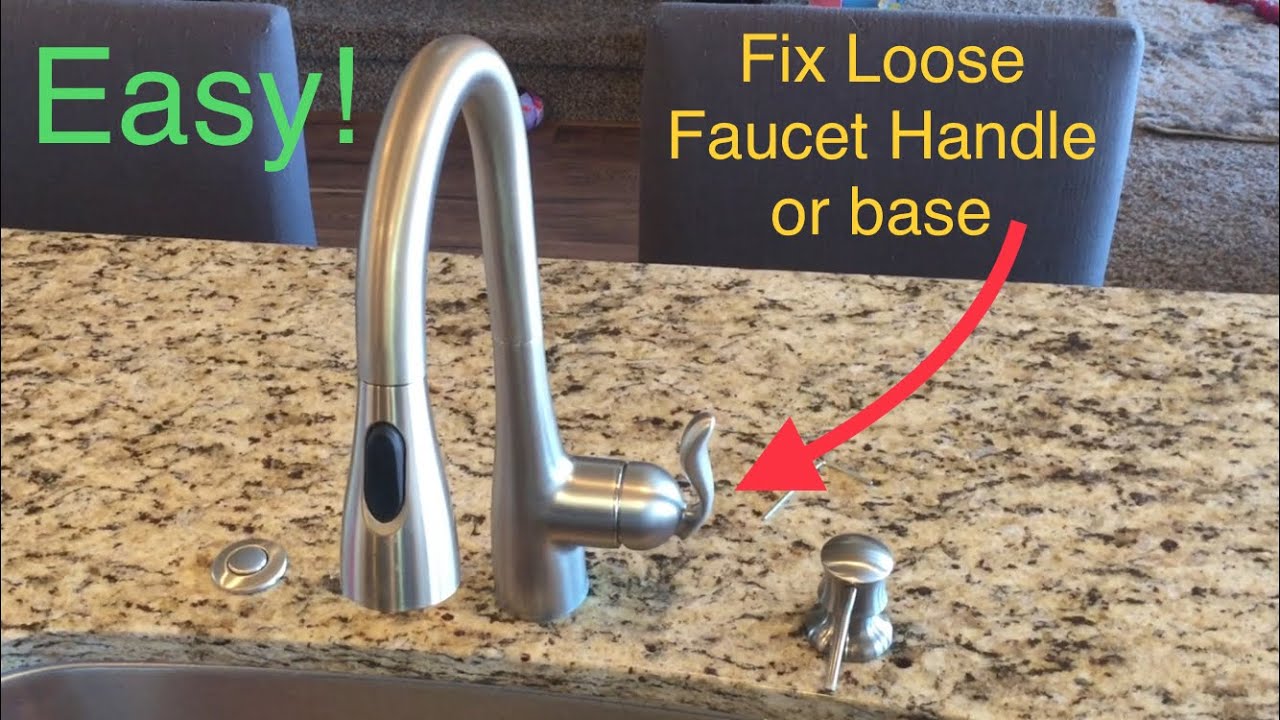
Image Source: i.ytimg.com
How to Fix Handle on Kitchen Faucet: Easy Steps
Is your kitchen faucet handle loose, wobbly, or even broken? Don’t worry! Fixing a loose faucet handle or addressing a drip from the faucet handle is a common household repair that most people can tackle themselves. A leaky faucet handle can lead to wasted water and increased utility bills, so learning how to repair a faucet handle is a valuable skill. This guide will walk you through the simple steps to get your kitchen faucet working perfectly again, whether you need to tighten faucet handle components or completely replace faucet handle parts. We’ll cover everything from identifying the problem to a full faucet handle replacement.
Why is My Faucet Handle Loose?
A faucet handle can become loose for a few main reasons. Over time, the screws that hold the handle in place can vibrate loose from regular use. The internal parts within the faucet, such as the cartridge or stem, might also wear out or become damaged, leading to a wobbly or loose faucet handle. Sometimes, a worn-out O-ring or packing can cause leaks around the handle, which can indirectly make it feel loose. If you’re experiencing a drip from the faucet handle, it’s a clear sign that something internal needs attention.
Gathering Your Tools and Materials
Before you start your kitchen faucet repair, it’s important to have the right tools on hand. This will make the job much smoother and prevent frustration.
Here’s a list of common tools and materials you might need:
- Screwdriver Set: You’ll likely need both Phillips head and flathead screwdrivers.
- Adjustable Wrench: Useful for tightening or loosening various nuts and bolts.
- Pliers: Needle-nose pliers can be helpful for gripping small parts.
- Allen Wrench Set (Hex Keys): Many modern faucet handles are secured with a small set screw that requires an Allen wrench.
- Replacement Parts: Depending on the issue, you might need a new O-ring, cartridge, or even a complete faucet handle replacement. It’s a good idea to have a faucet handle repair kit handy, as these often contain common replacement parts.
- Penetrating Oil (e.g., WD-40): Can help loosen stubborn or corroded parts.
- Rag or Towel: To protect your sink and catch any drips.
- Bucket: To catch any residual water.
- Plumber’s Grease: A silicone-based lubricant to help seal and protect moving parts.
- Safety Glasses: Always a good idea to protect your eyes.
Identifying Your Faucet Type
The first step in fixing your faucet handle is to know what type of faucet you have. Most kitchen faucets fall into one of these categories:
- Compression Faucets: These are older types where you turn a handle to compress a rubber washer against a valve seat. They are known for being reliable but can develop leaks if the washer wears out.
- Cartridge Faucets: These are very common. They use a removable cartridge that controls the flow of water. When the handle feels loose or there’s a drip from the faucet handle, the cartridge is often the culprit.
- Ball Faucets: These have a single handle that moves over a rounded cap. Inside, a metal or plastic ball with slots controls water flow.
- Ceramic Disc Faucets: These are the most durable and use two ceramic discs that slide against each other to control water flow. They are less likely to develop a loose handle issue unless the internal components are damaged.
Knowing your faucet type will help you determine which parts you might need for a faucet handle replacement or repair.
Step-by-Step Guide to Fixing a Loose Faucet Handle
Let’s get down to fixing that faucet handle. This process generally involves removing the handle, checking and tightening the components underneath, and then reassembling.
Step 1: Shut Off the Water Supply
This is the most crucial step before starting any kitchen faucet repair. You don’t want to be dealing with spraying water!
- Locate the Shut-Off Valves: Look under your sink for two small valves, usually with oval or round handles, connected to the pipes leading to your faucet. One is for hot water, and one is for cold.
- Turn Off the Valves: Turn both valve handles clockwise until they are snug. Don’t overtighten.
- Test: Turn on the faucet to drain any remaining water in the lines and confirm that the water is indeed shut off.
Step 2: Remove the Faucet Handle
Faucet handles are typically attached in one of a few ways.
Locating and Removing the Decorative Cap or Cover
Most faucet handles have a decorative cap or cover that hides the screw.
- Look for a Small Cap: This cap might be on the top of the handle, on the front, or on the side. It can be made of plastic or metal.
- Pry it Off Gently: Use a flathead screwdriver or a thin knife to carefully pry off the cap. Be gentle to avoid scratching the faucet or the cap itself. For some faucets, you might need to unscrew this cap.
Removing the Handle Screw
Once the cap is off, you’ll see the screw holding the handle in place.
- Identify the Screw Type: Most commonly, you’ll find a Phillips head screw. However, some newer faucets use a small set screw, often requiring an Allen wrench.
- Unscrew It: Use the appropriate screwdriver or Allen wrench to remove the screw. Turn it counter-clockwise. If the screw is stuck, a drop of penetrating oil can help.
Detaching the Handle
With the screw removed, the handle should now lift off.
- Pull Upward: Gently pull the handle straight up. It might be a snug fit. If it’s difficult to remove, try wiggling it gently or tapping it lightly with the handle of your screwdriver. Avoid excessive force, as you could damage the faucet body.
- If It’s Stuck: Sometimes, mineral deposits can cause the handle to seize. You can try gently tapping around the base of the handle with the handle of your screwdriver, or applying a bit more penetrating oil.
Step 3: Accessing the Internal Components
Once the handle is off, you’ll see the internal mechanism of the faucet. The exact components will vary depending on your faucet type (cartridge, ball, etc.).
- For Cartridge Faucets: You’ll likely see a retaining nut or clip holding the cartridge in place.
- Retaining Nut: This is usually a large brass nut. Use an adjustable wrench to unscrew it counter-clockwise.
- Retaining Clip: Some cartridges have a small metal clip that needs to be pulled out with needle-nose pliers.
- For Ball Faucets: You’ll see a cap and a cam assembly. You’ll need to unscrew the cap to access the ball and seals.
- For Compression Faucets: You’ll see a packing nut and the valve stem.
Step 4: Tighten Loose Components or Replace Worn Parts
This is where you address the reason your faucet handle was loose in the first place.
Tightening a Loose Faucet Handle by Tightening the Packing Nut or Retaining Nut
If your issue is simply a loose faucet handle, tightening these nuts can often fix the problem.
- Packing Nut (Compression Faucets): This nut is located around the valve stem. Gently tighten it clockwise with a wrench. Don’t overtighten, as this can make the handle hard to turn or damage the stem.
- Retaining Nut (Cartridge Faucets): If the handle itself is loose but the faucet isn’t leaking, sometimes the retaining nut that holds the cartridge in place can be slightly loosened. Gently tighten this nut clockwise with your adjustable wrench.
Addressing a Drip from the Faucet Handle or a Leaky Faucet Handle
If you have a drip from the faucet handle or a general leak around it, worn-out internal parts are usually the cause.
- Replace O-rings: Small rubber O-rings are used to create seals. They can wear out over time. If you see a drip from the faucet handle, replacing the O-rings on the stem or cartridge is often the solution.
- Carefully remove the old O-rings with a small screwdriver or pick.
- Apply a bit of plumber’s grease to the new O-rings to help them seat properly and last longer.
- Install the new O-rings in the same grooves as the old ones.
- Replace the Cartridge: For cartridge faucets, the entire cartridge might need replacing.
- Once the retaining nut or clip is removed, you can usually pull the old cartridge straight out. Some might require a slight twist.
- Take the old cartridge to a hardware store to ensure you get an exact match.
- Insert the new cartridge, making sure it’s oriented correctly (there’s usually a specific way it needs to sit).
- Secure the cartridge with the retaining nut or clip.
- Replace Ball or Ceramic Disc Components: For ball and ceramic disc faucets, you’ll need to replace the specific worn parts, which could include seals, springs, or the ball itself. These repairs often involve a faucet handle repair kit specific to your faucet model.
Step 5: Reassemble the Faucet
Once you’ve tightened components or replaced parts, it’s time to put everything back together.
- Place the Handle Back: Align the handle with the stem and push it down firmly. Ensure it’s seated correctly.
- Reinsert the Handle Screw: Screw the handle back into place, turning it clockwise.
- Replace the Decorative Cap: Snap or screw the decorative cap back into place.
Step 6: Turn the Water Supply Back On
- Slowly Open Valves: Turn the hot and cold water shut-off valves back on slowly by turning them counter-clockwise.
- Check for Leaks: Turn on the faucet and check carefully for any drips or leaks around the handle or spout. Let the water run for a minute to flush out any debris.
- Test Handle Operation: Move the handle to ensure it operates smoothly and controls the water flow correctly.
Troubleshooting Common Faucet Handle Issues
Even with careful steps, you might encounter a few hiccups.
- Faucet Handle Still Loose: If the handle is still loose after tightening the visible screw and retaining nut, the issue might be deeper. The faucet’s internal stem or splines where the handle attaches could be worn. In this case, you might need a new handle or to consider replacing the entire faucet.
- Drip from Faucet Handle Persists: If you replaced O-rings or the cartridge and the drip from the faucet handle continues, double-check that you used the correct parts and that they are installed properly. A cracked valve seat in a compression faucet can also cause leaks, requiring a special tool to resurface or replace it.
- Handle is Difficult to Turn: Overtightening a packing nut or retaining nut is the usual culprit. Loosen it slightly until the handle moves smoothly. If you replaced a cartridge, ensure it’s seated correctly and not binding.
When to Call a Professional
While many faucet handle repairs are DIY-friendly, there are times when it’s best to call a plumber:
- Unsure of Faucet Type: If you can’t identify your faucet or the parts needed for a faucet handle replacement.
- Corroded or Stuck Parts: If components are heavily corroded and won’t budge, forcing them could cause more damage.
- Persistent Leaks: If you’ve tried several fixes and the leak or loose faucet handle issue persists.
- Damage to Faucet Body: If you notice cracks or damage to the faucet itself.
- Lack of Time or Comfort: If you’re not comfortable with plumbing work or simply don’t have the time, a professional can efficiently complete the kitchen faucet repair.
Frequently Asked Questions (FAQ)
Q: How do I know if I need to replace faucet handle or just tighten faucet handle?
A: If the handle just feels wobbly but doesn’t leak, try tightening the visible screw or the retaining nut underneath the handle first. If there’s a drip from the faucet handle or it feels gritty and hard to move, you likely need to replace internal parts like O-rings or the cartridge, which is effectively a faucet handle repair. If the handle itself is cracked or stripped, you’ll need to replace faucet handle.
Q: Can I fix a leaky faucet handle without shutting off the water?
A: It is highly recommended to shut off the water supply before attempting any faucet repair. While you might be able to access the handle components, you risk water spraying out when you disassemble parts, creating a mess and potentially causing water damage.
Q: What is a faucet handle repair kit?
A: A faucet handle repair kit typically contains common replacement parts like O-rings, springs, washers, and sometimes a new cartridge or cam assembly. These kits are designed for specific faucet brands or types and can be a convenient way to get all the necessary parts for a repair.
Q: My faucet handle is stuck. What can I do?
A: If your handle is stuck, first ensure the water is off. Apply a penetrating oil (like WD-40) around the base of the handle and let it sit for 15-30 minutes. Then, try gently wiggling the handle up and down or side to side while pulling. Avoid using excessive force, which can break parts. If it still won’t budge, it might require professional attention.
Q: How often should I expect to repair faucet handle components?
A: The lifespan of faucet components can vary greatly depending on water quality, usage frequency, and the quality of the faucet itself. However, it’s not uncommon to need to replace O-rings or cartridges every 5-10 years. Regular maintenance, like checking for leaks and tightening loose components, can prolong the life of your faucet.
By following these detailed steps, you can confidently tackle a loose or leaky faucet handle and restore your kitchen faucet to full working order. This simple kitchen faucet repair can save you water, money, and the hassle of a malfunctioning fixture.