
Do you need to measure your kitchen sink drain size? Yes, you can do this at home! You will need to measure the kitchen sink drain diameter to replace a faulty part or upgrade your system. This guide will show you how. Knowing the correct sink drain opening size is very important. It helps you pick the right parts. This keeps your kitchen running smoothly.
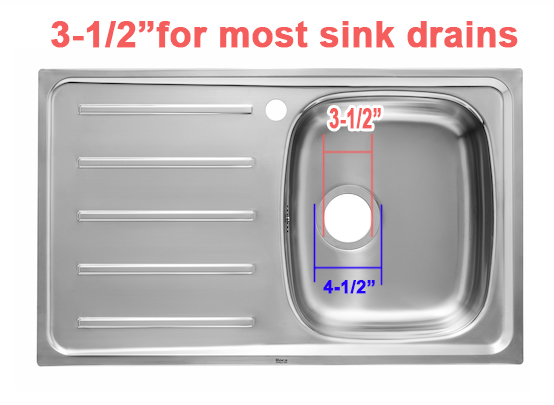
Image Source: www.aresheng.com.tw
Why Measure Your Sink Drain Size?
Measuring your sink drain is very important. It helps you get the right parts. Think about replacing an old basket strainer. Or maybe you want a new garbage disposal. Perhaps you have a leak under your sink. Or you just want to update your kitchen. Knowing the exact size makes sure new parts fit well. This saves you time. It also saves you money. You won’t buy parts that do not fit.
Tools You Will Need
You do not need many tools. Most are common household items. Gather these before you start:
- Measuring Tape or Ruler: A flexible tape measure is best. A rigid ruler works too. Make sure it has clear markings.
- Flashlight or Headlamp: This helps you see under the sink. It can be dark there.
- Pen and Paper: Write down your measurements right away. Do not trust your memory.
- Old Towels or Bucket: Drips might happen. Place them under the drain area. This keeps things clean.
- Gloves (Optional): Keep your hands clean.
Grasping the Basics: Parts of Your Kitchen Sink Drain System
Before you measure, know the parts. Your kitchen sink drain system has many pieces. Each piece has a specific job. Knowing these parts makes measuring easier.
The Main Sink Drain Opening
This is the hole in the bottom of your sink. It is where water drains.
* Sink Drain Opening: This is the actual hole. It is where the water goes.
* Sink Flange: This metal ring sits in the sink opening. It holds the basket strainer or disposal in place. It forms a seal.
* Basket Strainer: This sits inside the flange. It catches food bits. It stops them from going down the drain. It also holds water in the sink.
Below the Sink: The Drain Assembly
These parts are under your sink. They carry water away.
* Drain Tailpiece: This is a short pipe. It connects to the flange. It goes down to the P-trap.
* P-Trap: This pipe looks like the letter “P” on its side. It holds a small amount of water. This water creates a seal. It stops bad smells from coming up from the sewer.
* Waste Line: This is the main drain pipe. It connects to the P-trap. It carries wastewater to your home’s main drain system.
Special Addition: The Garbage Disposal
Many kitchens have a garbage disposal. It grinds food waste.
* Disposal Mounting Flange: This part connects the disposal to the sink opening. It replaces the standard sink flange.
* Disposal Drain Connection: This is where the disposal connects to the drain tailpiece or P-trap.
Knowing these parts helps you measure correctly. You will know what each measurement is for.
Measuring Your Sink Drain Opening
This is often the most important measurement. It is the size of the hole in your sink. This size tells you what basket strainers or garbage disposals will fit.
Step-by-Step for the Main Opening
- Clear the Area: Remove any items from your sink. Make sure the drain area is clean.
- Look at the Flange: The sink flange is the metal ring inside the drain hole. This is what you will measure.
- Measure the Inner Diameter: Place your ruler or tape measure across the very inside of the flange. Measure from one edge of the hole to the opposite edge. Measure across the center. This gives you the kitchen sink drain diameter.
- Measure the Outer Diameter (Optional but helpful): Also, measure the outside edge of the flange. This is where it meets the sink basin. This helps with kitchen sink flange dimensions.
- Write It Down: Note both measurements. Write them down clearly.
Common Sink Drain Opening Sizes
Most kitchen sinks use standard sizes. Knowing these helps you confirm your measurement. The most common standard kitchen sink drain sizes are:
| Drain Type | Common Inside Diameter (Approximate) | Common Outside Diameter (Approximate) | Notes |
|---|---|---|---|
| Standard Kitchen Sink Drain | 3.5 inches | 4.5 inches | Most common for basket strainers and disposals. |
| Bar/Prep Sink Drain | 2 inches | 2.5 inches | Smaller sinks often have smaller drains. |
| Older/Unusual Sinks | Varies | Varies | Always measure these carefully. |
A 3.5-inch kitchen sink drain diameter is the most widely used. This means the opening in your sink is about 3.5 inches across. The flange that fits into this opening typically has an outer rim of about 4.5 inches.
Specifics for Kitchen Sink Basket Strainer Size
When you buy a new basket strainer, you need the inner drain opening size. A standard kitchen sink basket strainer size is designed for a 3.5-inch drain opening. The strainer itself will fit snugly into this 3.5-inch hole. The metal rim of the strainer will rest on the sink. So, if your sink drain opening is 3.5 inches, a standard basket strainer will fit.
Measuring Other Key Drain Components
The main drain opening is just one part. You also need to measure the pipes below the sink. These measurements are for the P-trap dimensions kitchen sink, drain tailpiece diameter, and waste line diameter kitchen sink.
Measuring the Drain Tailpiece Diameter
The drain tailpiece connects right below the sink. It goes from the flange to the P-trap.
1. Locate the Tailpiece: Find the pipe directly below the sink drain. It might be chrome, white plastic, or another material.
2. Measure the Diameter: Measure the outer diameter of this pipe. Use your measuring tape. Wrap it around the pipe. Or measure straight across the end if you can remove it.
3. Common Sizes: Most kitchen sink tailpieces are 1.5 inches in diameter. Some older or smaller sinks might have 1.25-inch tailpieces.
Measuring P-Trap Dimensions Kitchen Sink
The P-trap is the curved pipe. It stops sewer gases.
1. Locate the P-Trap: It is the “P”-shaped pipe after the tailpiece.
2. Measure the Pipe Diameter: Measure the outer diameter of the pipes that form the P-trap. These should be the same size as your tailpiece. So, usually 1.5 inches.
3. Measure the Distance from Wall (Optional): Sometimes you need to know how far the P-trap sticks out. Measure from the wall to the center of the trap’s curve. This is not always needed for parts replacement. But it helps if you are moving things around.
Measuring the Waste Line Diameter Kitchen Sink
The waste line is the main drain pipe. It goes into the wall or floor.
1. Find the Connection: Look where the P-trap connects to the larger pipe. This larger pipe is the waste line.
2. Measure the Diameter: Measure the outer diameter of this pipe.
3. Common Sizes: Kitchen waste lines are usually 1.5 inches in diameter. Some larger homes or older systems might have 2-inch waste lines. This is less common for typical kitchen sink connections. But it is good to check. The measuring sink drain pipe process for the waste line is the same as for other pipes.
Special Case: Measuring for a Garbage Disposal
If you have a garbage disposal, or plan to get one, measurements are slightly different.
Garbage Disposal Drain Connection Size
A garbage disposal replaces the standard basket strainer. It connects to the same 3.5-inch sink drain opening.
* The disposal uses a special mounting flange. This flange fits into the 3.5-inch hole.
* The garbage disposal drain connection size refers to the pipe coming out of the disposal. This usually connects to a 1.5-inch drain tailpiece or directly to the P-trap.
* Most disposals are made to fit the standard 3.5-inch opening. You do not usually need to measure the disposal itself. You just need to know your sink has a 3.5-inch opening.
Steps for Measuring for a Disposal
- Confirm Sink Opening: Make sure your sink drain opening is 3.5 inches. This is the main requirement.
- Measure Under Sink Space: Disposals are bulky. Measure the height from the bottom of your sink to the floor of the cabinet. Also, measure the width and depth. Make sure there is enough room for the disposal unit.
- Check Power Outlet: Does your sink cabinet have a power outlet? Disposals need one.
Tips for Accurate Measurements
Getting the right numbers is very important. Here are some tips:
- Double-Check Everything: Measure each part at least twice. Make sure you get the same number both times.
- Measure From Inside to Inside (for openings): For the sink drain opening, measure the actual hole. Do not measure the entire flange.
- Measure Outside Diameter (for pipes): For pipes like the tailpiece, P-trap, and waste line, measure the outside of the pipe. This is where fittings connect.
- Write It Down Immediately: Do not rely on memory. Write down each measurement right after you take it.
- Take Pictures: Take photos of your current drain setup. This helps you remember where things go. It also helps if you need to ask for help at a hardware store.
- Use Good Light: A flashlight is a must. Seeing clearly prevents mistakes.
- Empty the Cabinet: Remove items from under your sink. This gives you more room to work.
Common Drain Sizes and Their Uses
Let’s look closer at those standard sizes.
The 3.5-Inch Sink Drain Opening
This is the king of kitchen sink drains.
* Where you find it: Almost all modern kitchen sinks have this size opening. This includes stainless steel, cast iron, composite, and even farmhouse sinks.
* Why it’s common: It is big enough for good drainage. It is also the perfect size for both standard basket strainers and garbage disposals. This makes replacement easy.
The 1.5-Inch Drain Pipes
This is the common size for most pipes under the sink.
* Tailpieces: The pipe coming right out of the sink or disposal.
* P-Traps: The curved pipe that stops odors.
* Waste Lines: The main pipe that goes into the wall.
* Why it’s common: This size balances flow and space. It is big enough to handle kitchen water and small food bits. It is also small enough to fit neatly under most sinks.
The 1.25-Inch Drain Pipes
You might see this size, but it is less common in kitchens.
* Where you find it: More often in bathroom sinks. Sometimes in very old or small kitchen sinks. Or for bar/prep sinks.
* Fitting: If your tailpiece or P-trap is 1.25 inches, you will need special adapters. These let you connect to larger 1.5-inch waste lines.
The 2-Inch Waste Line
Sometimes, the waste line going into the wall is 2 inches.
* Where you find it: In some newer homes. Or where local plumbing codes ask for larger drain lines.
* Fitting: Your 1.5-inch P-trap will connect to this larger 2-inch pipe using a special fitting. This fitting expands the connection.
Why Exact Measurements Matter
You might wonder, “Do I really need to be exact?” Yes, you do!
- Prevents Leaks: Even a small difference in size can cause leaks. A loose fit lets water escape. A too-tight fit can crack parts. Exact measurements make sure everything seals tightly.
- Ensures Proper Fit: Plumbing parts are made to very specific sizes. A 3.5-inch strainer will not fit into a 3-inch hole. A 1.5-inch pipe will not fit into a 1.25-inch fitting. The right size ensures all parts connect smoothly.
- Saves Money: Buying the wrong part means a trip back to the store. It means buying the right part later. This wastes time and money. Getting it right the first time is cheaper.
- Avoids Frustration: Imagine starting a project. Then you find out your new part does not fit. This is very frustrating. Proper measurement avoids this headache.
- Maintains Drain Efficiency: Correctly sized pipes and parts allow water to flow freely. This prevents clogs. It keeps your drain working well.
Troubleshooting Common Drain Size Issues
What if your measurements do not match the standard sizes? Or you have trouble fitting parts?
Drain Opening Too Small
- Problem: Your sink opening is, say, 3 inches, not 3.5 inches.
- Solution: You cannot enlarge a sink drain hole easily. This often means buying a different sink. Or, if it is a bar sink, buying a smaller strainer. Some very old sinks might have unusual sizes. You might need to order a custom-made part. Or search for specialty plumbing suppliers.
Drain Opening Too Large
- Problem: Your sink opening is slightly larger than 3.5 inches.
- Solution: This is rare for kitchen sinks. If it happens, you might need a different type of flange. Or use more plumber’s putty/silicone to seal the gap. But usually, standard parts fit openings very well.
Pipe Sizes Do Not Match
- Problem: Your old tailpiece is 1.25 inches, but your new P-trap is 1.5 inches.
- Solution: Use an adapter. Plumbing stores sell plastic or metal reducers. These connect pipes of different diameters. For example, a 1.25-inch to 1.5-inch adapter will connect a smaller pipe to a larger one. Always check local plumbing codes before making major changes.
Leaks After Installation
- Problem: You put everything together, but it leaks.
- Solution:
- Check Connections: Are all connections tight? Do not overtighten plastic pipes. They can crack.
- Check Seals: Did you use plumber’s putty or silicone caulk where needed? This is very important for the sink flange.
- Correct Size: Did you use the right size parts? Re-measure everything if unsure.
- Damaged Parts: Is any part cracked or faulty? A tiny crack can cause a big leak.
Fathoming the Need for Precision
Measuring your kitchen sink drain size is a key step. It makes any plumbing project easier. From replacing a simple basket strainer to installing a new garbage disposal, accuracy truly matters. Take your time. Measure carefully. Use the right tools. With these tips, you can confidently measure your kitchen sink drain. You will be ready for any repair or upgrade. This will keep your kitchen running smoothly.
Frequently Asked Questions (FAQs)
Q1: What is the standard kitchen sink drain size?
The standard kitchen sink drain diameter is 3.5 inches. This is the size of the opening in the sink itself. Most basket strainers and garbage disposals are made to fit this size.
Q2: Can a 4-inch drain fit a standard sink?
No, a 4-inch drain is too big for a standard kitchen sink. Standard kitchen sink openings are 3.5 inches. You would need a different type of sink if you had a 4-inch drain.
Q3: Do all kitchen sinks have the same size drain?
Most modern kitchen sinks have the standard 3.5-inch drain opening. However, bar sinks or very old sinks might have smaller or different sizes. Always measure to be sure.
Q4: How do I measure for a new garbage disposal?
First, check if your sink has a 3.5-inch drain opening. This is the most important size. Then, measure the space under your sink. Make sure there is enough room for the disposal unit. Most disposals fit standard 3.5-inch openings. The garbage disposal drain connection size will usually be 1.5 inches for the pipe connecting to the P-trap.
Q5: What is the P-trap for?
The P-trap is a curved pipe under your sink. It holds a small amount of water. This water creates a seal. It stops bad sewer gases from coming up into your home. It also catches small items that might fall down the drain.
Q6: What is the difference between inner and outer diameter?
- Inner diameter: This is the measurement across the inside of a hole or pipe. You measure from one inside edge to the opposite inside edge. This is what you need for the sink drain opening.
- Outer diameter: This is the measurement across the outside of a pipe. You measure from one outside edge to the opposite outside edge. This is what you need for drain pipes like the tailpiece or P-trap.
Q7: Can I use plumber’s tape instead of plumber’s putty for the sink flange?
No, plumber’s tape (Teflon tape) is for threaded pipe connections. It helps prevent leaks there. For the sink flange (where it meets the sink), you need plumber’s putty or silicone caulk. These create a watertight seal between the metal flange and the sink basin.
Q8: My drain pipe looks different. How do I know its size?
You can measure the outer diameter of the pipe. You can also look for markings on the pipe itself. Plastic pipes often have the size printed on them. If unsure, take a picture to a hardware store. Ask for help there.