
Can you remove a single handle Moen kitchen faucet without calling a plumber? Yes, absolutely! With the right tools and a little patience, you can successfully remove your single handle Moen kitchen faucet. This guide will walk you through the process step-by-step and help you tackle common issues you might encounter. Whether you’re upgrading your kitchen or need to perform a Moen kitchen faucet repair, knowing how to take apart Moen kitchen faucet is a valuable skill.
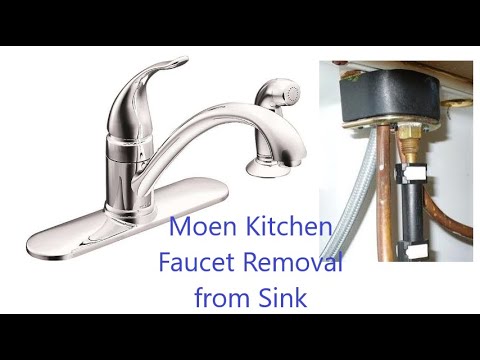
Image Source: i.ytimg.com
Gathering Your Tools: What You’ll Need
Before you start, having the right tools makes the job much easier. Here’s a list of what you’ll likely need for Moen faucet disassembly:
- Adjustable Wrench: Essential for loosening and tightening various nuts.
- Basin Wrench: A specialized tool with a long handle and swiveling head, perfect for reaching nuts in tight spaces under the sink.
- Phillips Head Screwdriver: For removing any screws holding parts together.
- Flathead Screwdriver: Useful for prying or loosening small parts.
- Pliers: Standard pliers can be helpful for gripping stubborn parts.
- Bucket or Towels: To catch any residual water and protect your cabinets.
- Safety Glasses: To protect your eyes from debris.
- Gloves: For a better grip and to keep your hands clean.
- Penetrating Oil (e.g., WD-40): For loosening corroded or stuck parts.
- Flashlight or Headlamp: To see clearly in the often-dim space under your sink.
Step-by-Step Guide: Removing Your Single Handle Moen Kitchen Faucet
Removing a Moen kitchen faucet spout or the entire faucet assembly follows a general pattern, though specific models may have slight variations.
Step 1: Turn Off The Water Supply
This is the most crucial first step.
- Look under your sink for the two water supply lines that connect to the faucet. They typically come from the wall or the floor.
- You’ll find shut-off valves on each line, usually with a handle.
- Turn these handles clockwise until they are fully closed.
- To confirm the water is off, turn on the faucet. No water should come out, or only a small trickle.
Step 2: Relieve Water Pressure
- After turning off the main supply, turn the faucet handle to the “on” position to drain any remaining water in the lines and the faucet itself.
- Let the water run until it stops completely.
Step 3: Prepare the Work Area
- Place a bucket or some old towels directly under the sink where the water supply lines and faucet connections are. This will catch any drips and keep your cabinet dry.
Step 4: Remove the Faucet Handle
This is where you’ll start the Moen kitchen faucet disassembly.
- Most Moen single handle faucets have a decorative cap or button, often on the front or side of the handle. This cap usually hides a small set screw.
- Use a small flathead screwdriver or even a coin to gently pry off this cap or button. Some may just pull off, while others might have a small indentation to push.
- Once the cap is off, you’ll see a set screw. This is usually a Phillips head screw.
- Use your Phillips head screwdriver to loosen this set screw. You don’t need to remove it completely, just loosen it enough so the handle can slide off.
- With the set screw loosened, grip the faucet handle firmly and pull it straight up and off the faucet body. If it’s stuck, a gentle rocking motion might help. Avoid excessive force.
Step 5: Remove the Decorative Cap or Bonnet Nut
After replacing Moen kitchen faucet handle or if you are removing the whole unit, you’ll need to address the next layer.
- Once the handle is off, you’ll see a decorative cap or a metal bonnet nut that covers the cartridge.
- This cap might screw off by hand. Try turning it counter-clockwise.
- If it’s too tight to turn by hand, use your adjustable wrench. Place the jaws of the wrench around the bonnet nut and turn it counter-clockwise. Be careful not to scratch the finish by placing a cloth or tape around the nut before using the wrench.
Step 6: Remove the Faucet Cartridge
This is the core of Moen faucet cartridge replacement and a key part of Moen kitchen faucet disassembly.
- After removing the decorative cap, you’ll expose the cartridge. It’s usually a cylindrical piece, often made of brass or plastic, with a stem sticking out.
- There might be a retaining clip or nut holding the cartridge in place.
- Retaining Clip: If there’s a small U-shaped or horseshoe-shaped clip at the base of the cartridge stem, use pliers or a flathead screwdriver to pull it straight up and out.
- Bonnet Nut/Retaining Nut: Some cartridges are held in by another nut. Use your adjustable wrench to unscrew this nut counter-clockwise.
- Once the clip or nut is removed, you should be able to pull the cartridge straight up and out.
- If the cartridge is stuck, you might need to use pliers to grip the stem and gently wiggle it while pulling upwards. Be firm but avoid bending or breaking the stem.
- This is a common point for fixing Moen kitchen faucet leak issues, as a worn cartridge is often the culprit.
Step 7: Disconnect the Supply Lines
Now you need to detach the water connections from the faucet body.
- Look under the sink where the flexible water supply lines connect to the faucet shanks.
- You’ll see a nut on each supply line.
- Use your adjustable wrench to loosen these nuts by turning them counter-clockwise.
- Have your bucket or towels ready, as there might be a little residual water in the lines.
- Once loosened, pull the supply lines away from the faucet shanks.
Step 8: Remove the Mounting Hardware
This is often the trickiest part, requiring the basin wrench for how to take apart Moen kitchen faucet.
- Look up under the sink at the base of the faucet. You’ll see where the faucet mounts to the sink or countertop.
- There are usually mounting nuts or brackets holding the faucet in place. These are often in a hard-to-reach spot.
- This is where your basin wrench shines. Its long reach and angled head are designed for this exact purpose.
- Position the basin wrench onto the mounting nut and turn it counter-clockwise to loosen and remove it. You may need to loosen several nuts or brackets depending on your faucet model.
- Be patient, as these nuts can be corroded or difficult to access.
Step 9: Lift the Faucet Assembly Out
- Once all the mounting hardware is removed, the entire faucet assembly should be free.
- Carefully lift the faucet unit up and out from the top of the sink.
Step 10: Clean Up
- Wipe down the sink area and ensure all old plumber’s putty or caulk is removed from the mounting surface for a clean installation of a new faucet or for proper Moen faucet installation guide readiness.
Troubleshooting Common Issues During Removal
Even with careful planning, you might run into a few snags. Here’s how to handle them:
Stubborn Handles or Caps
- Problem: The handle or decorative cap won’t budge.
- Solution: Apply a small amount of penetrating oil around the set screw or the base of the handle. Let it sit for 10-15 minutes to work its magic. Then, try again with your screwdriver or by gently wiggling.
Stuck Cartridge
- Problem: The faucet cartridge won’t pull out.
- Solution: This is common due to mineral buildup.
- Penetrating Oil: Apply penetrating oil around the base of the cartridge where it meets the faucet body. Let it soak.
- Cartridge Puller Tool: Moen makes specific cartridge puller tools for their faucets. These are designed to grip the cartridge securely and provide leverage. If you plan on doing Moen kitchen faucet repair regularly, this is a worthwhile investment. You can usually rent these from a hardware store if you only need it for one job.
- Gentle Tapping: Sometimes, gently tapping the faucet body with the handle of your screwdriver near the cartridge base can help break the seal.
Corroded Mounting Nuts
- Problem: The mounting nuts are rusted or corroded and won’t turn.
- Solution:
- Penetrating Oil: Soak the nuts generously with penetrating oil. Give it plenty of time to work – sometimes overnight is best.
- Wire Brush: Use a wire brush to clean away as much rust as possible from the threads before attempting to turn the nuts.
- Heat (Use with extreme caution): In very stubborn cases, a heat gun (not a torch, which can damage surrounding materials) can help expand the metal slightly, breaking the corrosion bond. Be extremely careful not to melt plastic parts or damage countertops.
Leaking After Reassembly (If you’re just repairing)
- Problem: The faucet leaks after you’ve replaced the cartridge or reassembled it.
- Solution:
- Check Cartridge Installation: Ensure the new cartridge is seated correctly and that any O-rings or gaskets are properly in place.
- Tightness: Make sure all nuts and connections are snug, but not overtightened, which can damage parts.
- Handle Alignment: The handle might not be perfectly aligned with the cartridge stem. Try removing the handle again and reattaching it, ensuring it’s seated correctly.
- Cracked Parts: Inspect the cartridge and other components for any visible cracks or damage.
Frequently Asked Questions (FAQ)
How often should I replace a Moen faucet cartridge?
There’s no set schedule for Moen faucet cartridge replacement. It depends on water quality and usage. If you experience dripping, reduced water flow, or difficulty operating the handle, it’s a good indicator the cartridge may need replacing. This is a common cause for fixing Moen kitchen faucet leak issues.
Do I need a special tool to remove a single lever Moen faucet handle?
Typically, you only need a Phillips head screwdriver to loosen the set screw and a flathead screwdriver or a coin to pop off the decorative cap. A special Moen kitchen faucet repair tool isn’t usually needed for the handle itself, but a cartridge puller can be very useful for Moen kitchen faucet disassembly.
Can I remove the spout without removing the whole faucet?
Yes, in many Moen faucet models, you can remove the spout separately. After removing the handle and decorative cap, you’ll usually see a set screw or a clip holding the spout in place. Loosening this will allow you to lift the removing Moen kitchen faucet spout straight up. Consult your specific faucet’s manual for precise instructions.
What is the most common problem with single handle Moen faucets?
The most common issue is a worn-out or mineral-encrusted Moen faucet cartridge. This leads to leaks, difficulty in controlling water temperature, or a stiff handle. Replacing the cartridge is often the solution for Moen kitchen faucet troubleshooting.
Where can I find a Moen faucet installation guide for my specific model?
You can usually find the exact Moen faucet installation guide on the official Moen website. Enter your faucet’s model number, which is often found on the underside of the faucet or on the original packaging, into their support or product section. This will provide model-specific diagrams and instructions for both installation and Moen kitchen faucet disassembly.
Is it difficult to replace a Moen kitchen faucet handle?
No, replacing Moen kitchen faucet handle is generally a straightforward process. It primarily involves removing a decorative cap, loosening a set screw, and pulling the handle off. Reattaching a new handle follows the same simple steps in reverse.
What is involved in single lever Moen faucet maintenance?
Routine single lever Moen faucet maintenance typically involves checking for leaks, ensuring smooth handle operation, and occasionally cleaning aerators. If leaks develop or the handle becomes stiff, Moen faucet cartridge replacement is the most common maintenance task.
By following these steps and utilizing the right tools, you can confidently tackle the removal of your single handle Moen kitchen faucet. This knowledge empowers you for future repairs and upgrades, making Moen kitchen faucet troubleshooting less intimidating. Remember to work patiently, and don’t hesitate to refer to your specific faucet’s manual if you get stuck.